
In February 2021, Oscar Ryndziewicz was standing in his kitchen in Glasgow, surrounded by gym clothes that didn't fit right, didn't flatter, and didn't last.
His wife Eilidh, an NHS orthoptist, maxed out her credit card to help him build something better.
Four years later, DFYNE topped the Sunday Times Hundred list as the UK's fastest-growing private company, with £66.8 million in sales and 517% average annual growth over three years.
That kind of growth doesn't come from paid media alone. We tore apart the two parts of DFYNE's site doing the quietest work: the fit-confidence system built into every product page, and the pipeline that turns 1.3 million Instagram followers into homepage merchandising. Here's how both are built.
Sizing uncertainty is the single biggest driver of returns in apparel ecommerce, and most product pages do almost nothing to close it. A size chart tells a shopper what a brand calls a "Medium." It doesn't tell them how that Medium sits on an actual body.
DFYNE's Model Size panel does. Height, hips, waist, bust, and cup size sit against the exact size the model is photographed in, turning a product photo into a sizing tool. A shopper with a 26-inch waist doesn't have to guess whether they're a Small. They can check it against a real number.
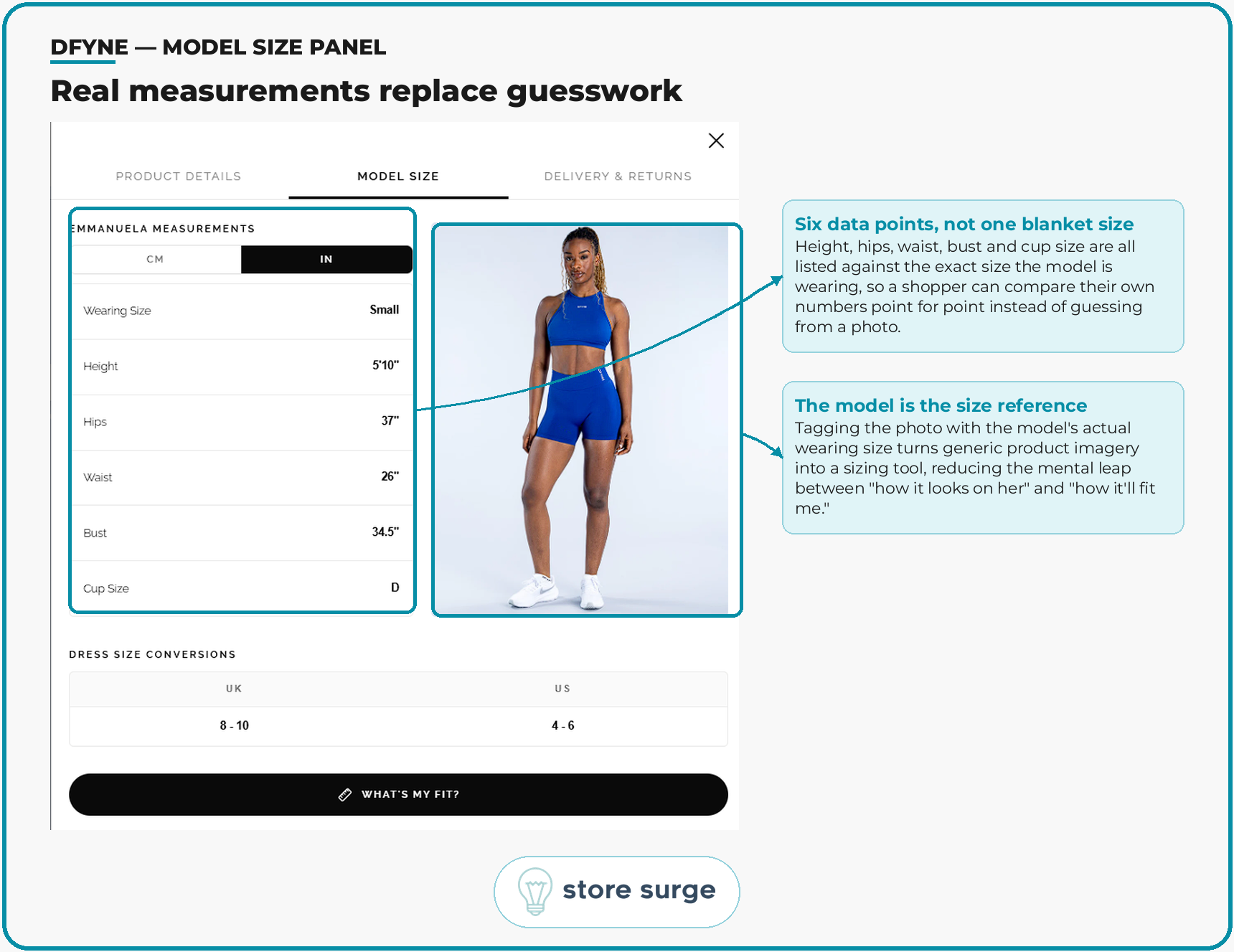
This is the kind of detail that never shows up in a redesign brief but shows up directly in the return rate. It's the same logic behind good conversion rate optimization work generally: the objection that kills a sale is rarely the one a brand thinks to address on the page.
DFYNE backs the model-size panel with a second layer: a size guide modal with two tabs. One is a calculator that takes age, weight, and height and returns a recommended size. The other is a plain bust-size chart with UK and US conversions.
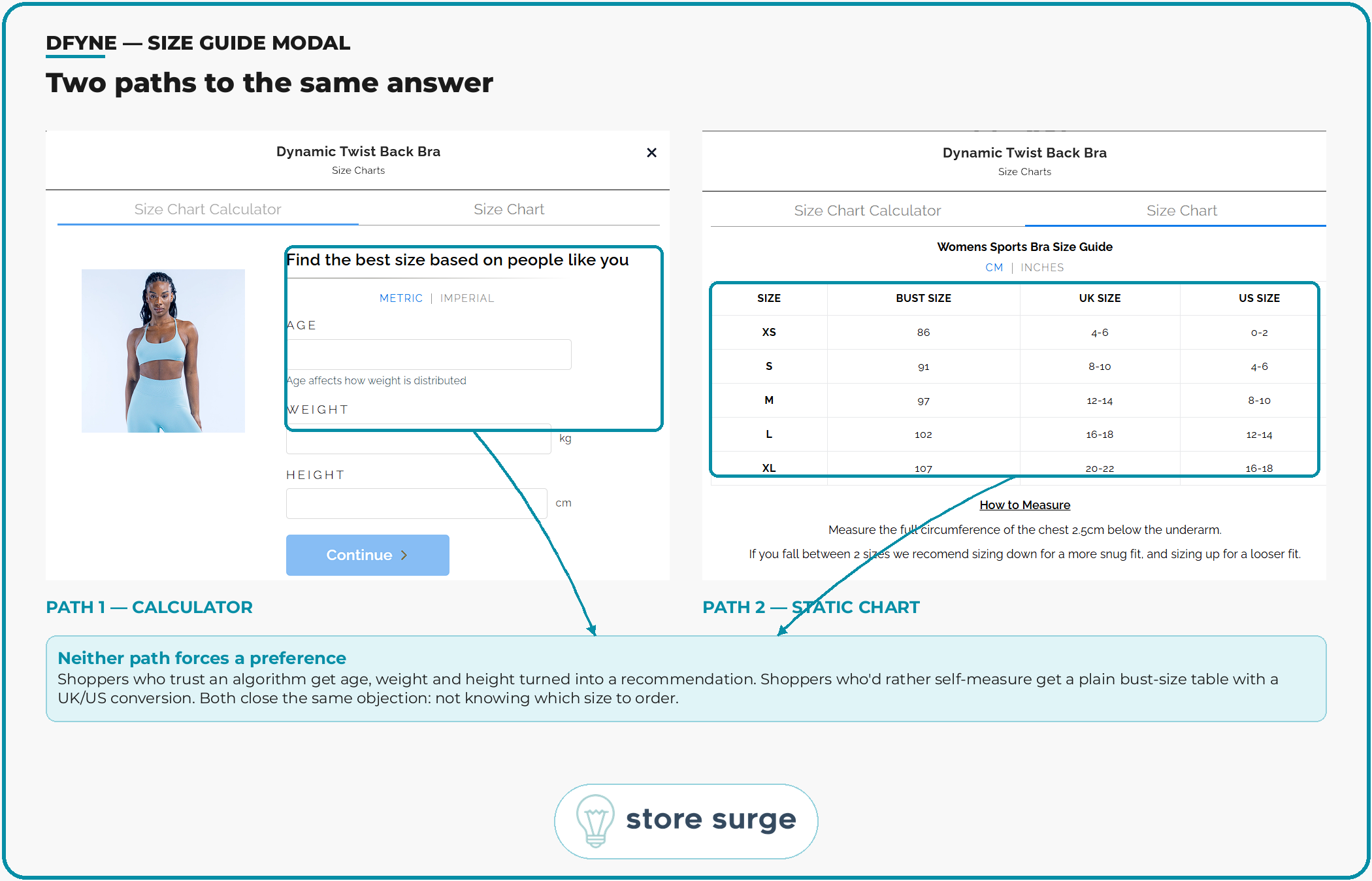
Neither path is forced on the shopper. Someone who trusts an algorithm gets a recommendation. Someone who'd rather self-measure gets a table. Both close the same gap: not knowing which size to order before checkout, not after a package arrives and gets sent back.
Most product pages stop sizing feedback at a star average. DFYNE splits it into four separate sliders, sourced from 2,123 reviews: Product Quality, Sizing, Fit, and Supportiveness. A shopper can see at a glance that sizing runs true and fit leans snug, without reading a single written review.
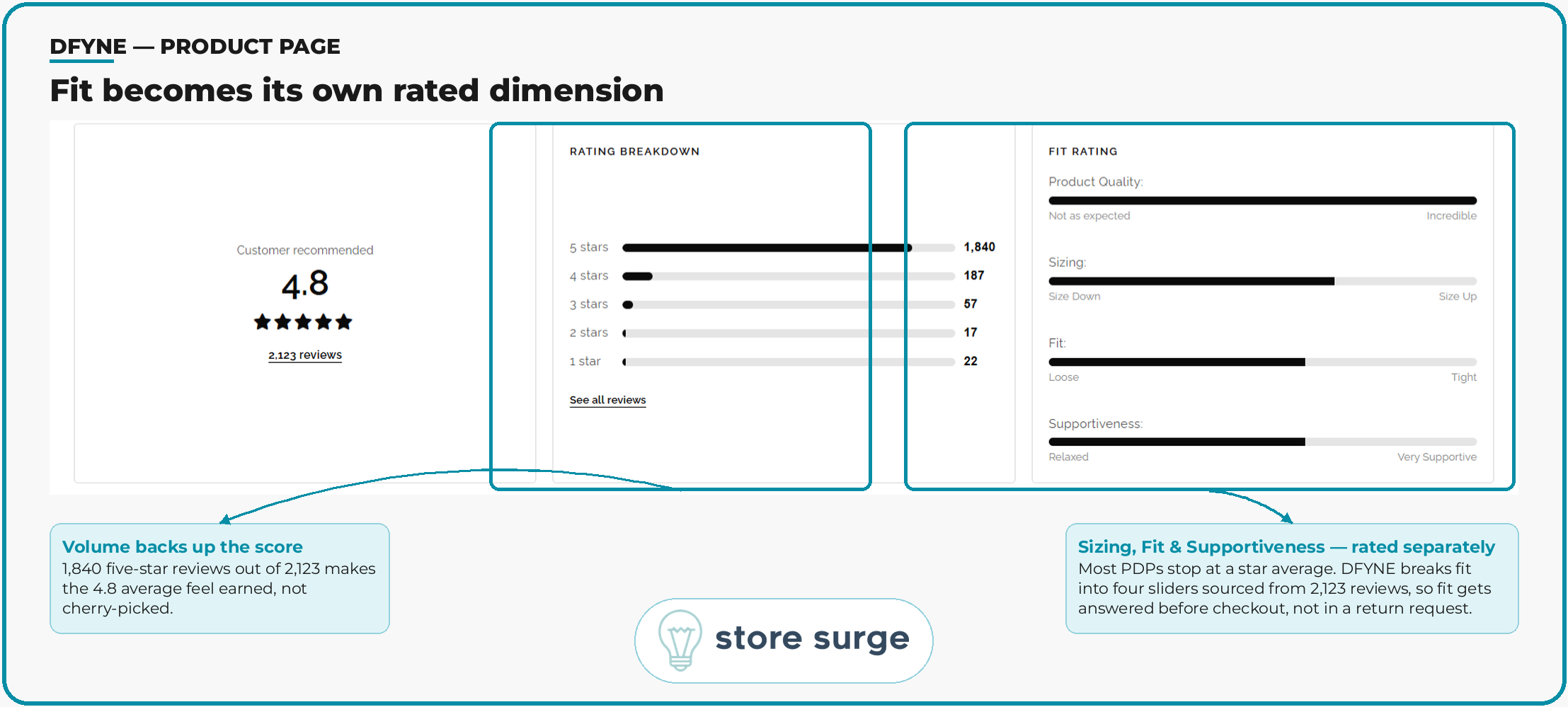
The volume backs up the signal. 1,840 of those 2,123 reviews are five-star, which makes the 4.8 average feel earned rather than cherry-picked. Getting that volume in the first place is a retention problem as much as a product one: it depends on review requests landing in the right post-purchase email at the right time, not just a generic "how was your order" blast three weeks later.
DFYNE's "Complete The Look" modal surfaces the other pieces in a range, with sizing built into each row, without sending the shopper to a new page. Nobody leaves the product they came for to build a set.
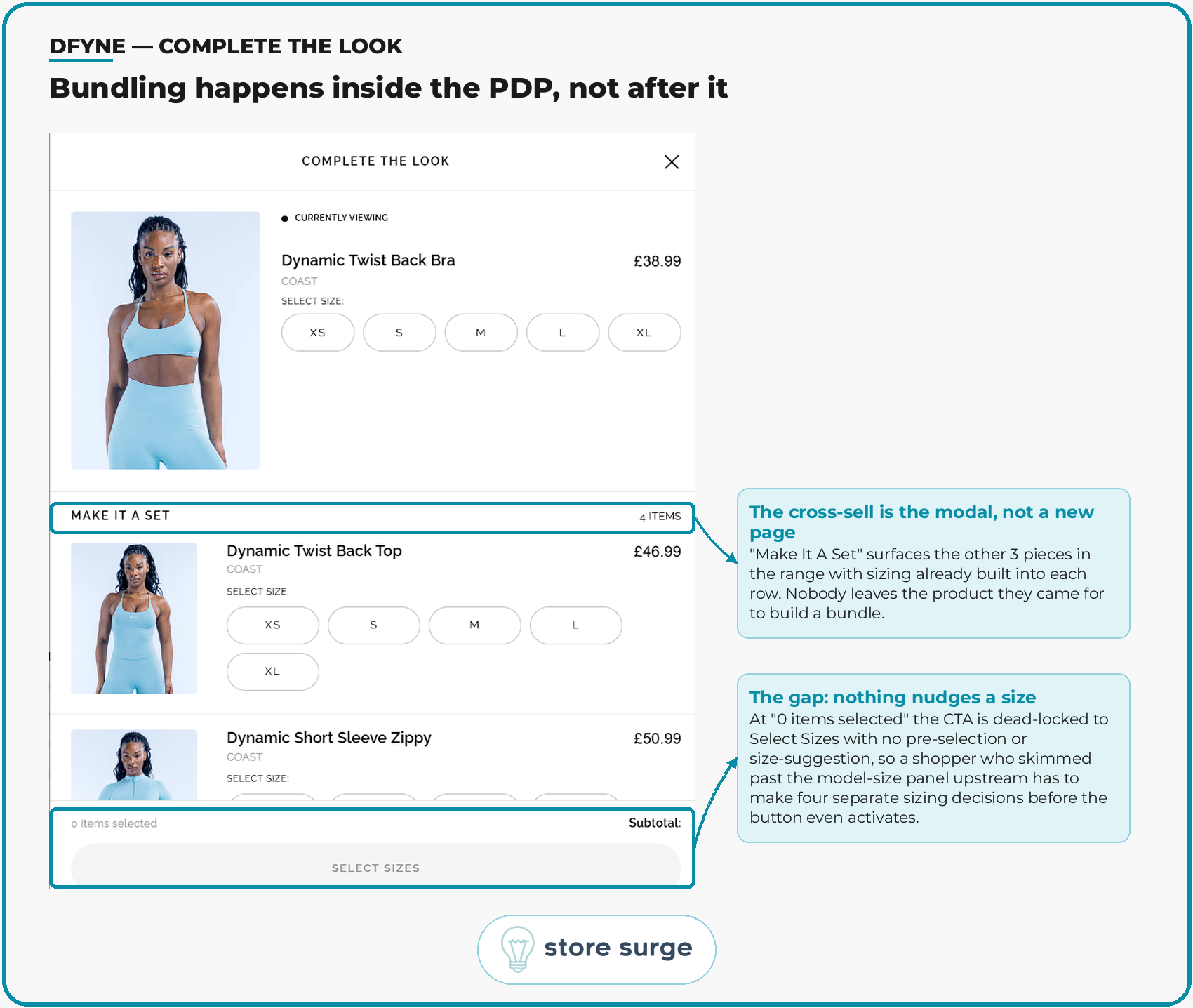
It's not flawless. At "0 items selected," the CTA is locked to Select Sizes with no pre-selection and no size-suggestion carried over from the model-size panel a few scrolls up. A shopper who already told the site their measurements has to make four separate sizing decisions from scratch before the button activates. The mechanism is smart. The connective tissue between it and the sizing data collected upstream is missing.
1.3 million followers is the headline number on DFYNE's Instagram, but the city-specific highlights, MCR, AMS, MIA, LA, MLB, are what turn a follower count into a community people actually check in on.
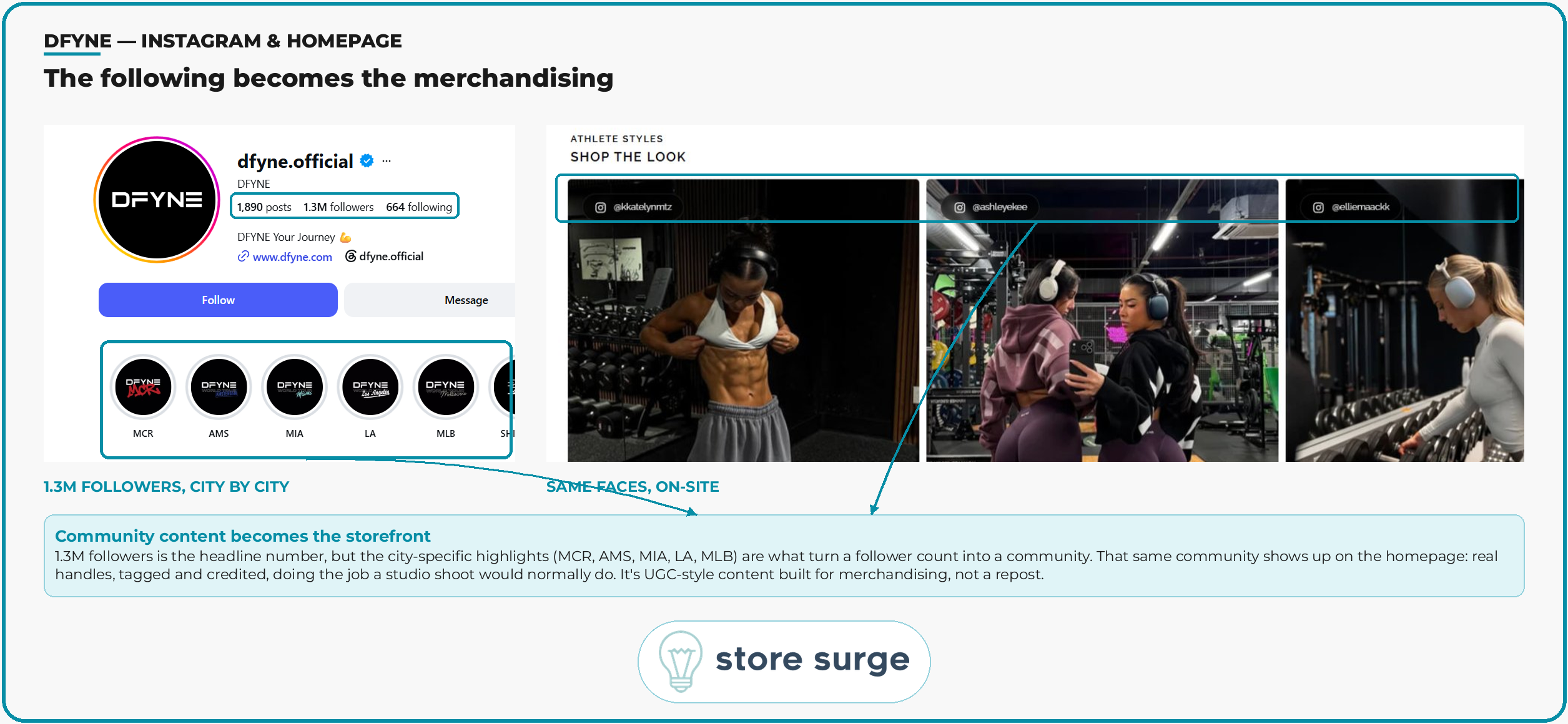
That same community shows up on the homepage. The "Shop The Look" section pulls in real handles, tagged and credited, doing the job a studio shoot would normally do. It's not a repost of organic content, it's UGC-style content built specifically for merchandising, and it's a cheaper, more scalable creative pipeline than most brands run through paid social alone. The same instinct that makes DFYNE's community worth following is what makes its product pages worth trusting.
Five hundred and seventeen percent growth in three years isn't won on ad spend. It's held onto by a site that answers the one question every apparel shopper actually has, and then backs it up with a community that makes the brand worth coming back to.
