
Subscription models work particularly well for products customers need to replace regularly, but only if the buying journey makes the recurring option feel worthwhile.
Wild’s lip balm funnel is a strong example of how ecommerce brands can combine personalisation, product bundling and progressive discounts to encourage larger, recurring orders. From its interactive pop-up to the cart and checkout, each stage gives the customer another reason to share their details, add another product or choose a subscription.
In this breakdown, we’ll look at how Wild uses its pop-up to segment visitors, how its product journey encourages customers to build a bundle, and how its cart and checkout continue increasing average order value without making the process feel overly complicated.
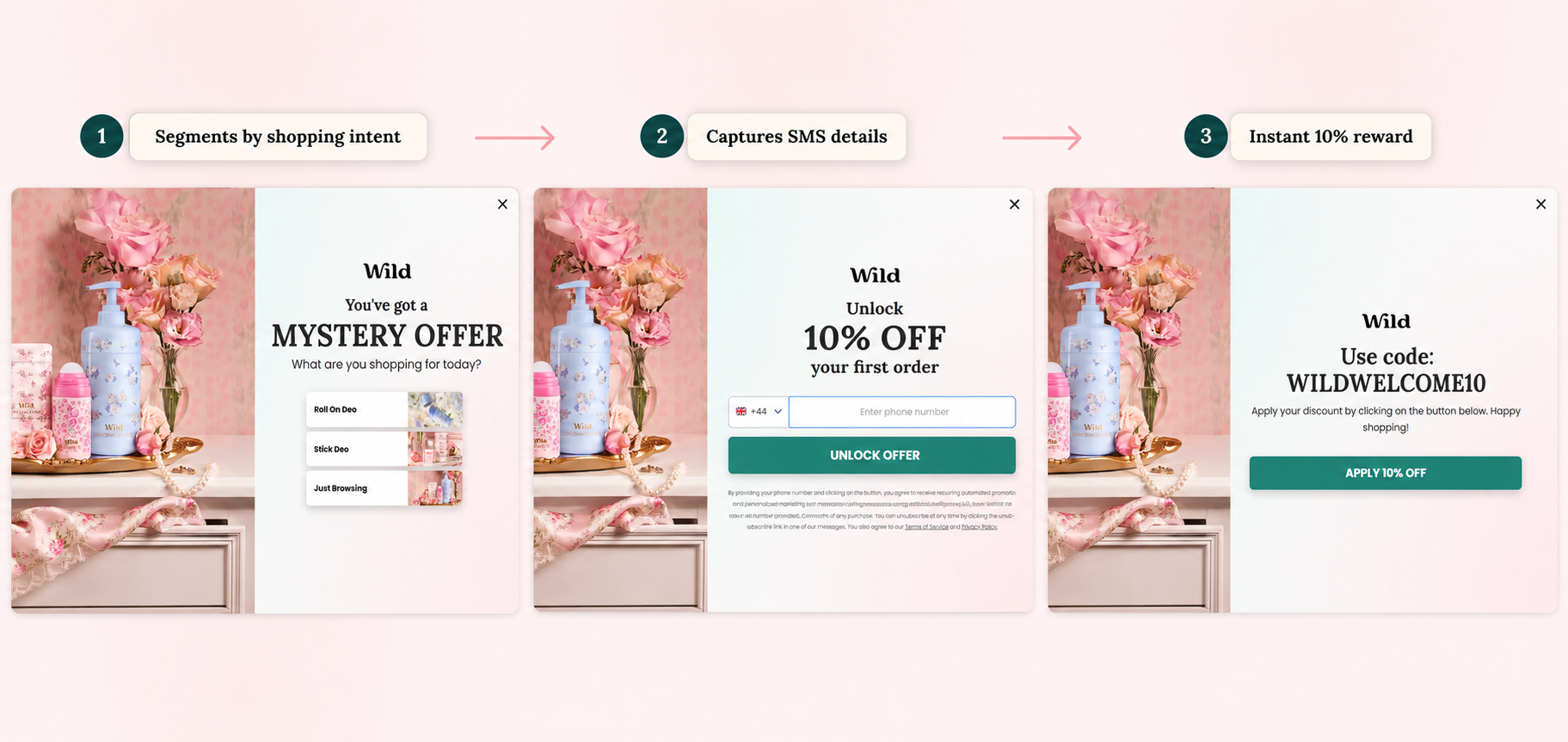
Most ecommerce pop-ups immediately ask visitors for an email address in exchange for a discount. Wild begins with a more engaging question: “What are you shopping for today?”
Visitors can choose between roll-on deodorant, stick deodorant or simply browsing. This small interaction makes the pop-up feel more like part of the shopping experience while giving Wild useful information about the visitor’s interests. That data could then be used to personalise future emails, SMS messages and product recommendations.
The next step reveals the offer—10% off a first order—in exchange for a mobile number. Breaking the process into stages reduces the perceived effort: the visitor makes an easy, low-commitment choice before being asked to provide their details.
Once submitted, the discount code appears immediately alongside a prominent “Apply 10% Off” button. Customers do not need to remember or manually copy the code, removing friction and giving them a clear next action.
It is a simple but effective sequence: Wild captures valuable first-party data, learns what the visitor may be interested in and then directs them back into the buying journey with an immediate financial incentive.
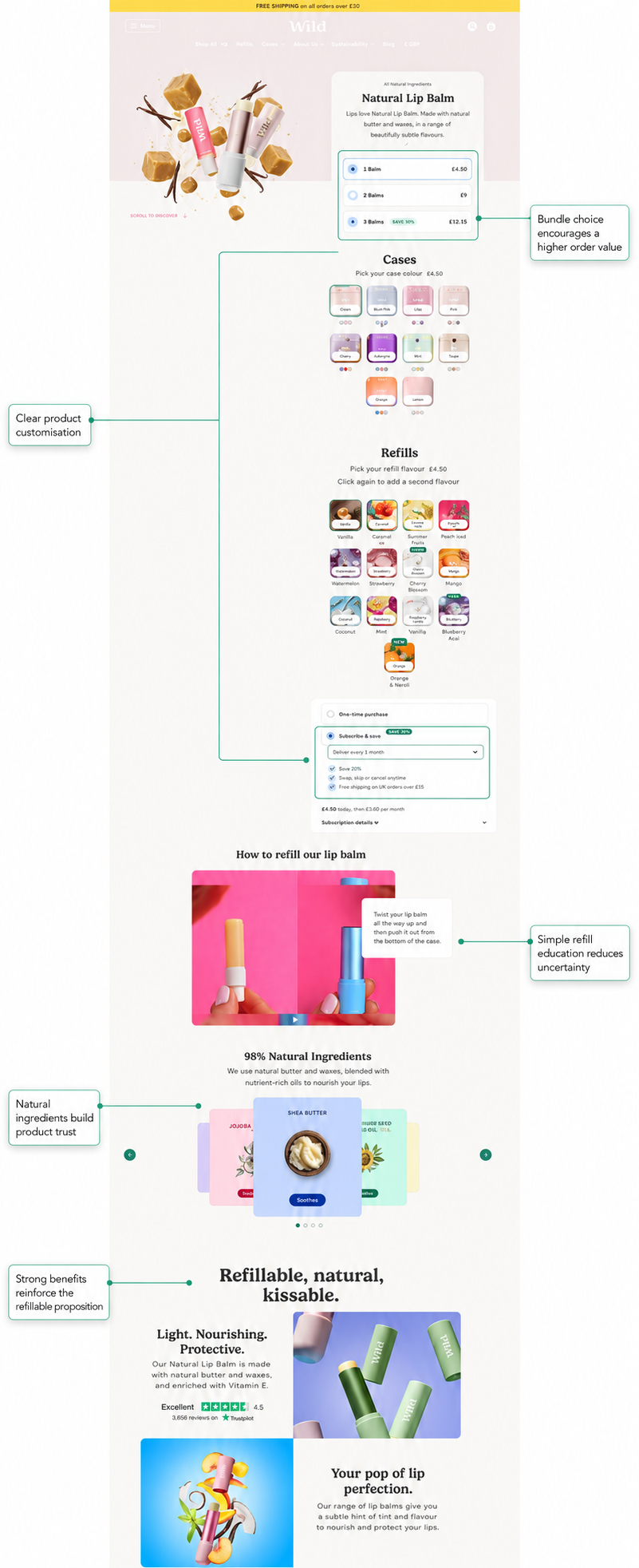
Wild’s homepage is built around a clear product customisation journey. Customers first choose how many lip balms they want, before selecting their cases and refill flavours. Each decision is presented visually, making a potentially complicated refillable product feel straightforward and enjoyable to configure.
The bundle options immediately introduce an average order value incentive. While customers can purchase one lip balm, choosing three unlocks a 10% saving. This establishes the value of buying more before the customer has even started selecting colours and flavours.
Subscription is then positioned as the most attractive way to complete the purchase. The page clearly compares a one-time order with the subscribe-and-save option, offering a 20% discount alongside free shipping on UK orders over £15. Reassurance such as “swap, skip or cancel anytime” reduces the sense of commitment, while the lower recurring price makes subscription feel like the financially sensible choice.
Importantly, Wild does not rely on the discount alone. A short refill demonstration shows exactly how the reusable case works, removing uncertainty for customers unfamiliar with the format. The page then reinforces product quality through its 98% natural ingredients message, ingredient explanations and prominent Trustpilot rating.
The final benefit-led sections bring the proposition together: the lip balm is presented as refillable, natural and desirable—not simply an environmentally friendly alternative. This combination of customisation, education, social proof and subscription savings helps Wild turn a relatively inexpensive product into a higher-value recurring purchase.
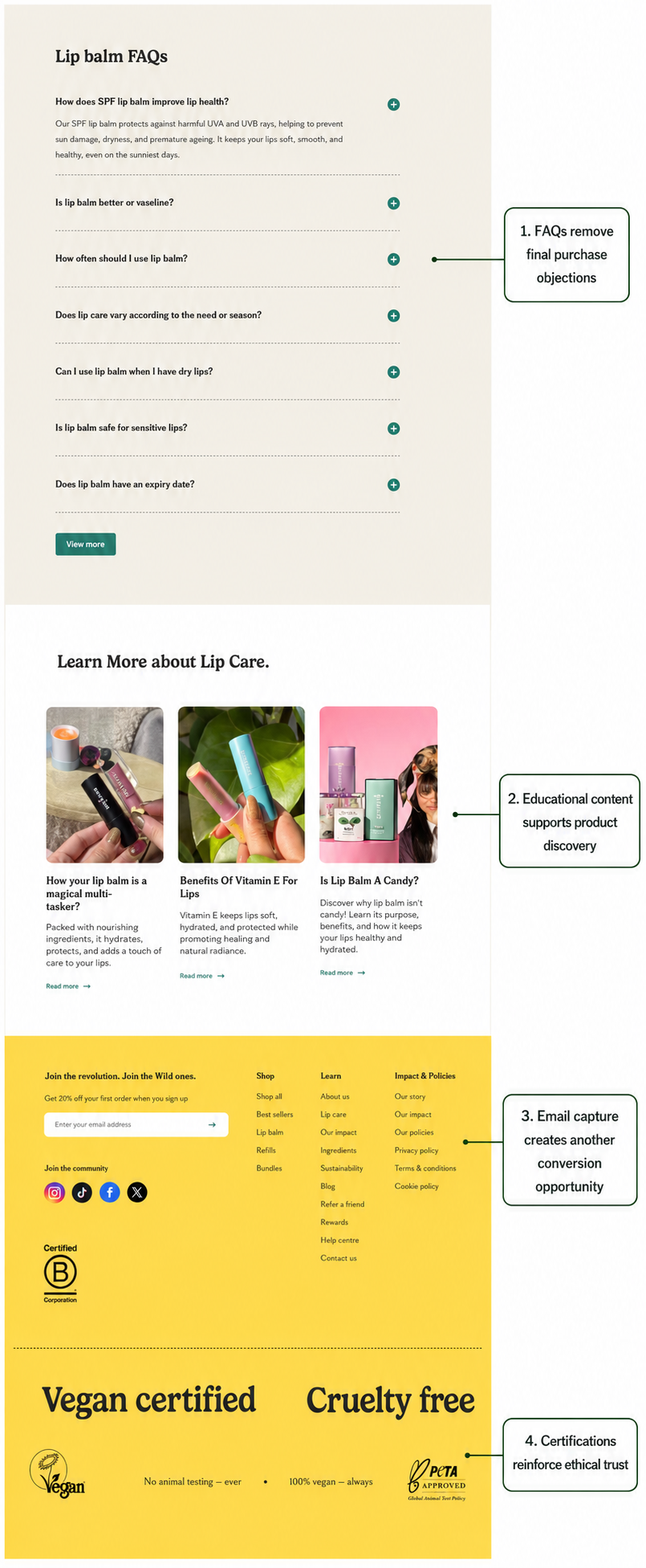
The lower half of Wild’s homepage continues addressing the questions and concerns that might prevent a purchase. Its FAQ section covers practical topics such as SPF protection, sensitive lips, dryness and expiry dates. Presenting these answers directly on the page helps customers make a decision without leaving to search elsewhere or contact support.
Wild then links to educational articles about lip care, ingredients and product benefits. This content supports organic search visibility, but it also helps customers discover more reasons to use the product. Rather than treating the blog as a separate part of the website, Wild uses it to strengthen product understanding and guide visitors back towards a purchase.
The footer creates another conversion opportunity through an offer of 20% off a first order in exchange for an email address. Visitors who are not ready to buy can therefore enter Wild’s email marketing funnel instead of leaving anonymously.
Finally, the prominent vegan, cruelty-free, B Corp and PETA-approved messaging reinforces the ethical credentials underpinning the brand. These certifications provide independent reassurance and help Wild appeal to customers who want their purchasing decisions to align with their values.
Together, these sections ensure that even after the main product journey ends, the homepage continues removing objections, educating visitors, capturing leads and building trust.
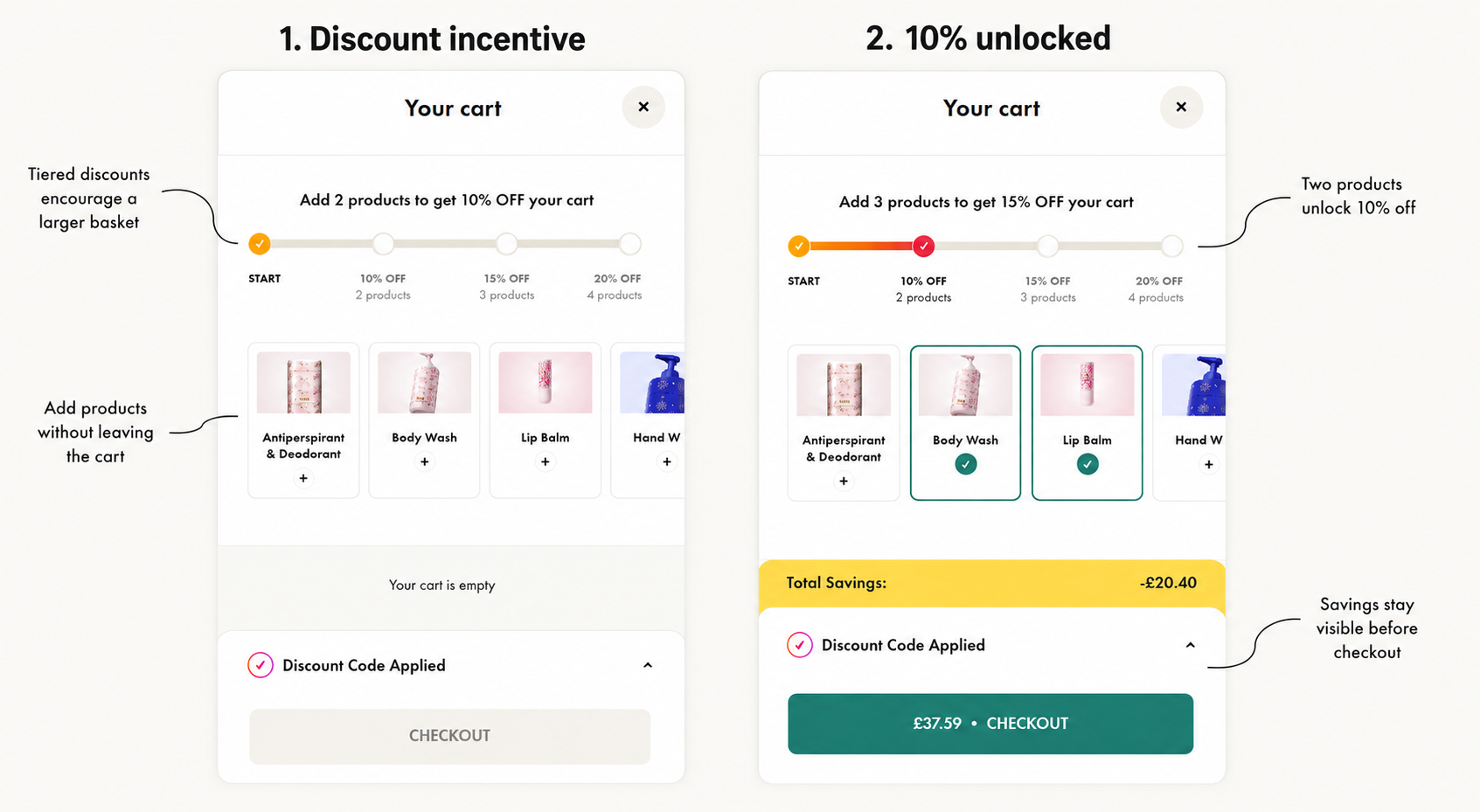
Wild’s cart does far more than simply hold the products a customer has selected. It actively encourages them to increase the size—and potential lifetime value—of their order.
A clear progress bar shows that adding two products unlocks 10% off, while three products earns 15% and four products earns 20%. Suggested products sit directly beneath it, allowing shoppers to add another item without returning to the website. This makes the next discount feel both visible and easy to reach.
Importantly, the selected products are automatically added as subscriptions. The discount therefore encourages more than a one-off increase in average order value: it helps Wild acquire customers on recurring plans. Although the subscription terms are explained at checkout, automatically selecting this option introduces some risk of customers overlooking the recurring commitment, so clarity is especially important.
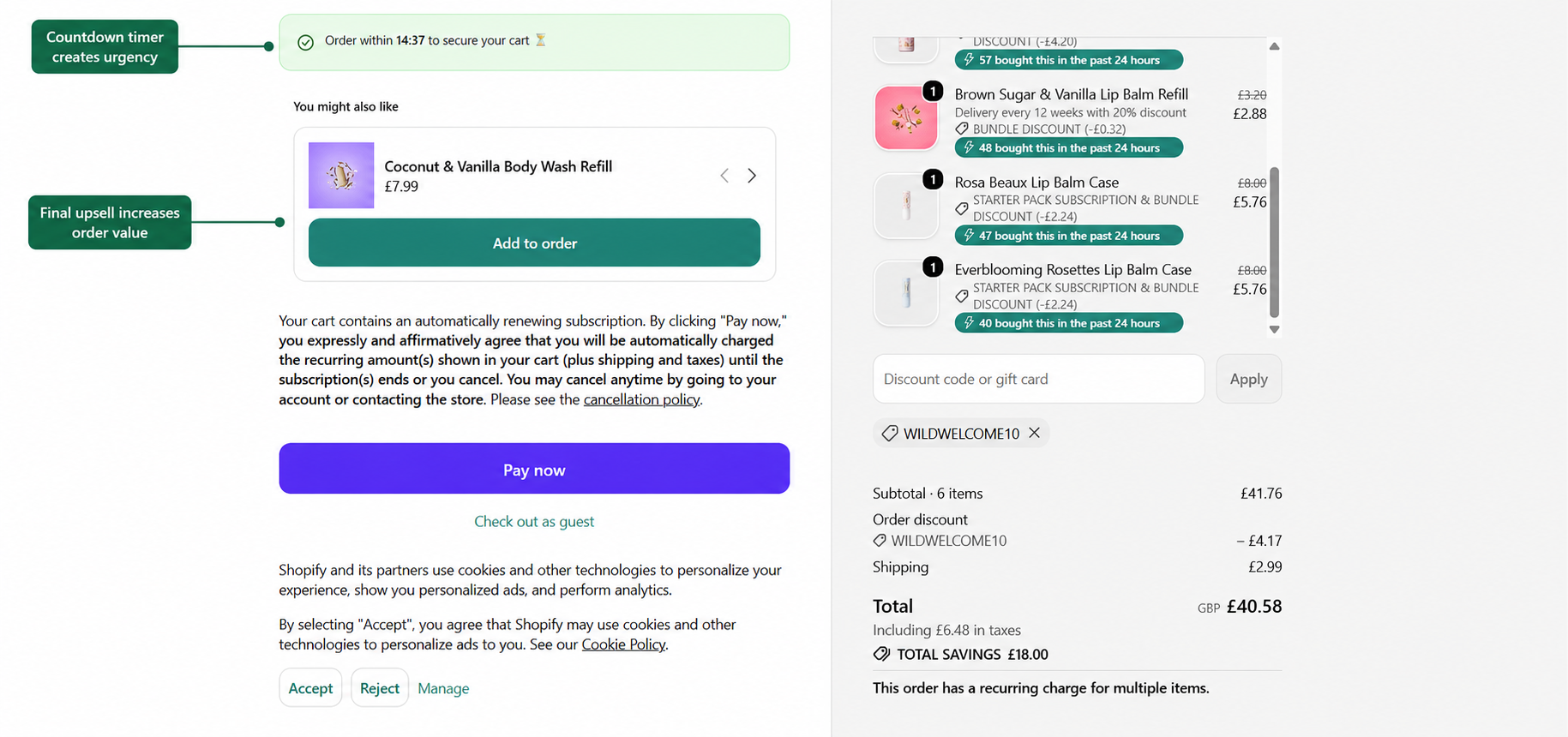
Wild also continues optimising after the customer reaches checkout. An “Add to order” widget presents another relevant refill, creating one final upselling opportunity without interrupting the payment process.
Other widgets add urgency and reassurance. A countdown asks customers to complete the order to secure their cart, while recent-purchase messages show how many people bought each product in the past 24 hours. The checkout also keeps the value of the offer visible by clearly displaying the discounts and total savings.
Rather than treating checkout as a purely functional payment page, Wild uses it to reinforce value, provide social proof and create further opportunities to increase the order total.
Wild’s lip balm funnel shows how several relatively simple conversion rate optimisation tactics can work together to create a more valuable customer journey. The pop-up captures first-party data, the homepage makes bundling and subscribing feel rewarding, and the cart uses progressive discounts to encourage customers to add more products. Even at checkout, Wild continues selling through relevant upsells and urgency messaging. The main lesson for ecommerce brands is clear: increasing average order value and generating recurring revenue rarely comes from one feature—it comes from giving customers compelling reasons to spend more at every stage of the journey.
