
Choosing skincare online can be difficult. Shoppers may understand the problem they want to solve, but not which ingredients, products or combinations are right for their skin. Too much choice can quickly lead to uncertainty, and uncertainty often leads to abandoned purchases.
Trinny London’s Match2Me quiz addresses this by replacing traditional product discovery with a guided consultation. It asks shoppers about their skin, concerns and preferences before building a personalised routine around their answers.
From a conversion perspective, the quiz does several jobs at once. It simplifies the buying decision, introduces shoppers to relevant products, creates opportunities to sell complete routines and collects valuable customer data that can be used for future marketing.
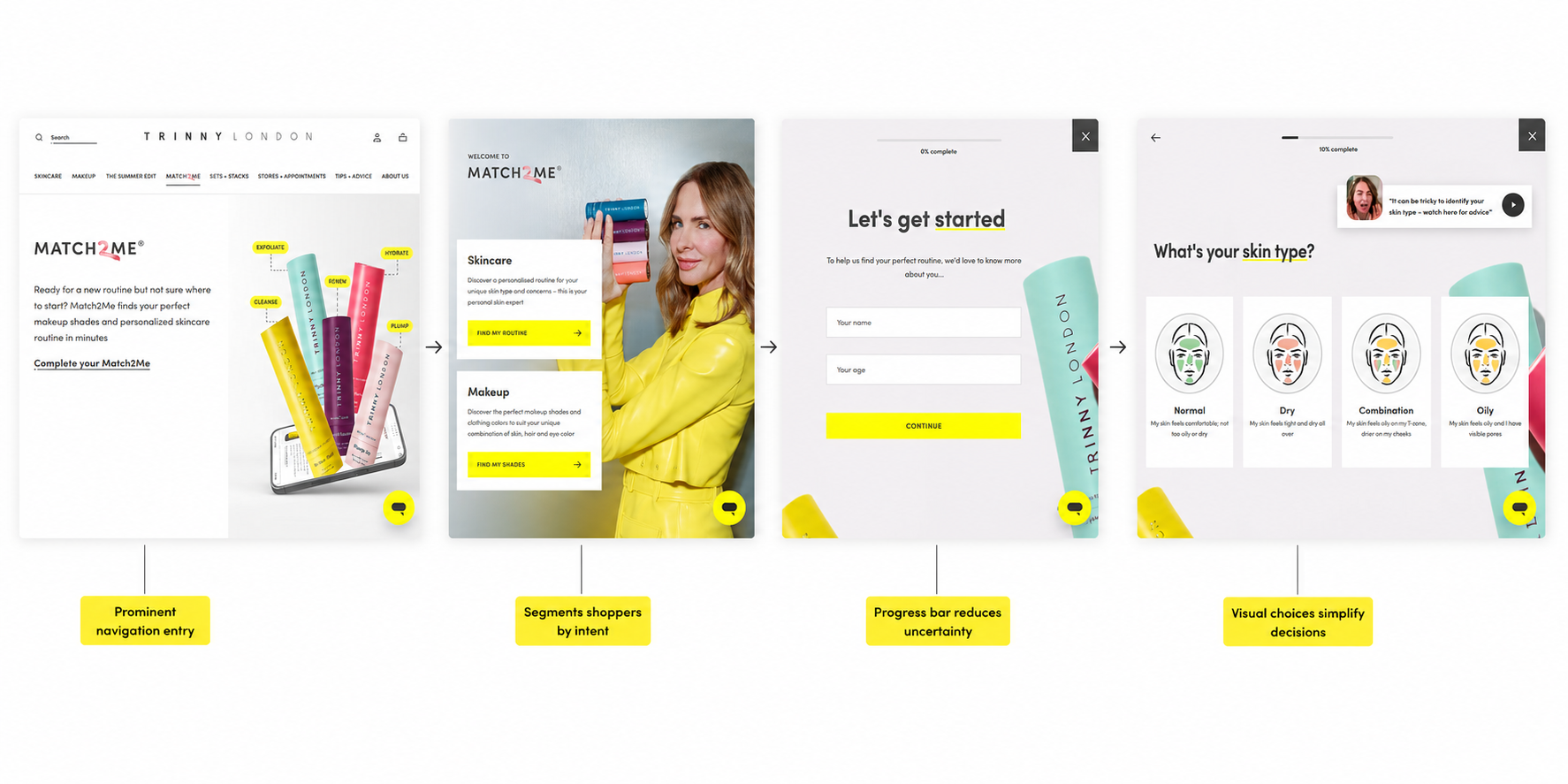
Trinny London does not hide Match2Me in the footer or expect shoppers to find it while browsing individual products. It is given a prominent position within the main navigation, immediately presenting the quiz as one of the primary ways to shop.
The opening page clearly explains the benefit: shoppers can receive personalised makeup shades and skincare recommendations in minutes. This frames the quiz as a useful service rather than another obstacle standing between the customer and the products.
Before asking detailed questions, Match2Me separates visitors according to their intent. Shoppers can choose between skincare recommendations and makeup shade matching, ensuring that each person enters the most relevant journey. This reduces unnecessary questions and allows Trinny London to personalise the experience from the beginning.
Once the skincare quiz starts, the interface continues to reduce friction. A visible progress bar tells shoppers how far they have travelled, while large visual answer cards make questions such as skin type easy to understand and answer. Instead of relying on technical descriptions, the quiz combines illustrations with short explanations of normal, dry, combination and oily skin.
There is also optional video guidance from Trinny herself. This adds a human element to the experience and provides extra reassurance to anyone who is unsure which answer best describes their skin.
These details make the quiz feel closer to an assisted consultation than a conventional form. The customer is not simply entering information; they are being guided towards a more confident and commercially valuable purchase decision.
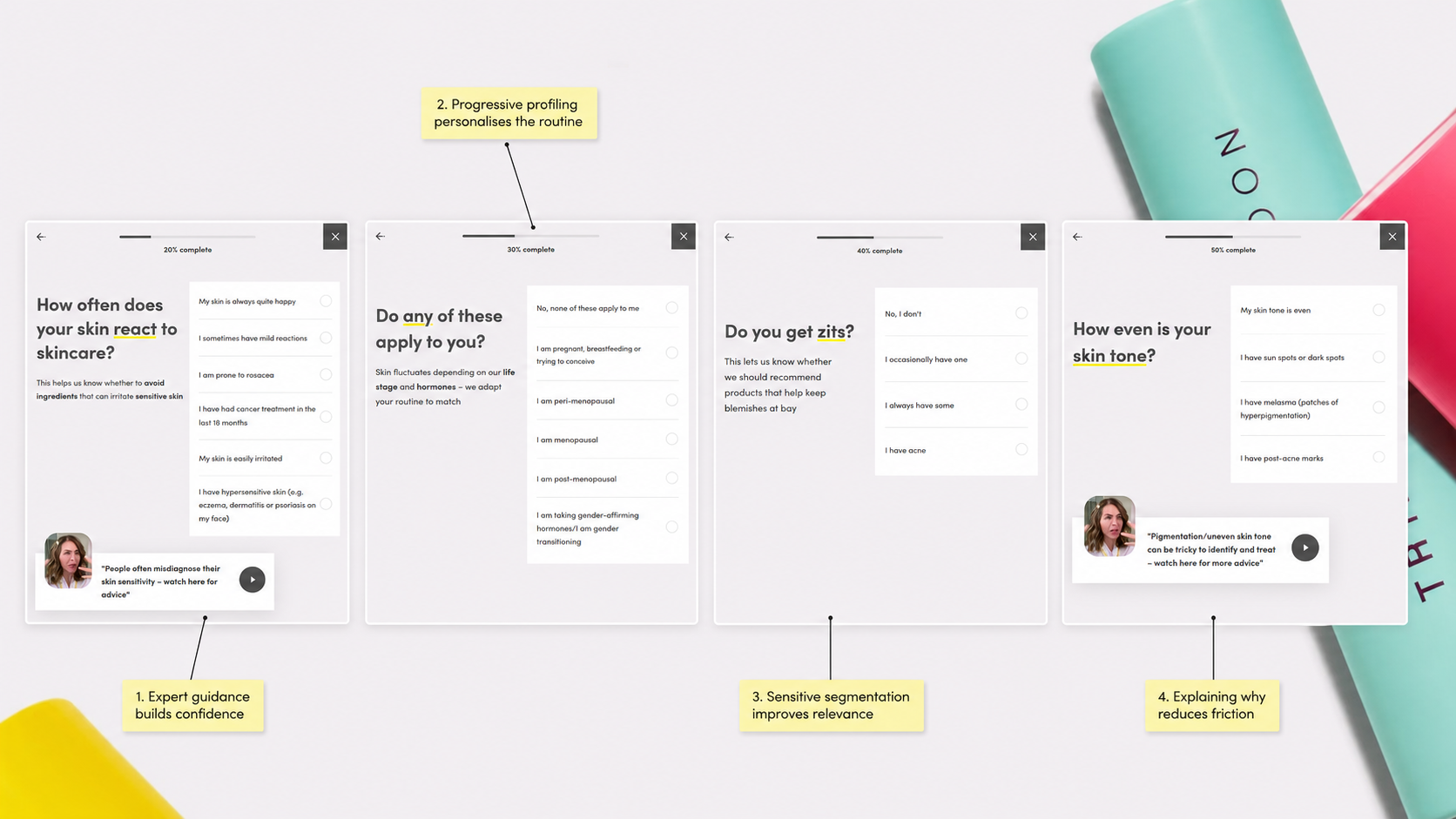
As the quiz progresses, Trinny London moves beyond basic skin type and begins collecting information that can meaningfully improve its recommendations. Shoppers are asked about sensitivity, hormonal changes, blemishes and uneven skin tone—all factors that may influence which products are suitable.
This is progressive profiling done well. Rather than presenting one long, clinical-looking form, the questions appear individually and the progress bar moves steadily from 20% to 50%. Each answer feels like a small, manageable step towards a more personalised result.
Importantly, the quiz explains why this information is needed. Short descriptions show how each answer will affect the eventual routine, such as avoiding ingredients that may irritate sensitive skin or recommending products designed to address blemishes. This makes potentially personal questions feel relevant rather than intrusive.
Optional videos from Trinny add another layer of reassurance. They help shoppers assess their skin more accurately while borrowing trust from the person behind the brand. This is particularly useful when customers may be unsure whether they have sensitive skin, pigmentation or another concern.
Commercially, these answers allow Trinny London to do more than recommend a generic “best-selling” routine. The brand can segment shoppers according to specific concerns and life stages, present more relevant products and potentially personalise future email campaigns.
The result is a strong exchange of value: the customer provides increasingly detailed information, but receives guidance, reassurance and the promise of recommendations that should genuinely fit their needs.
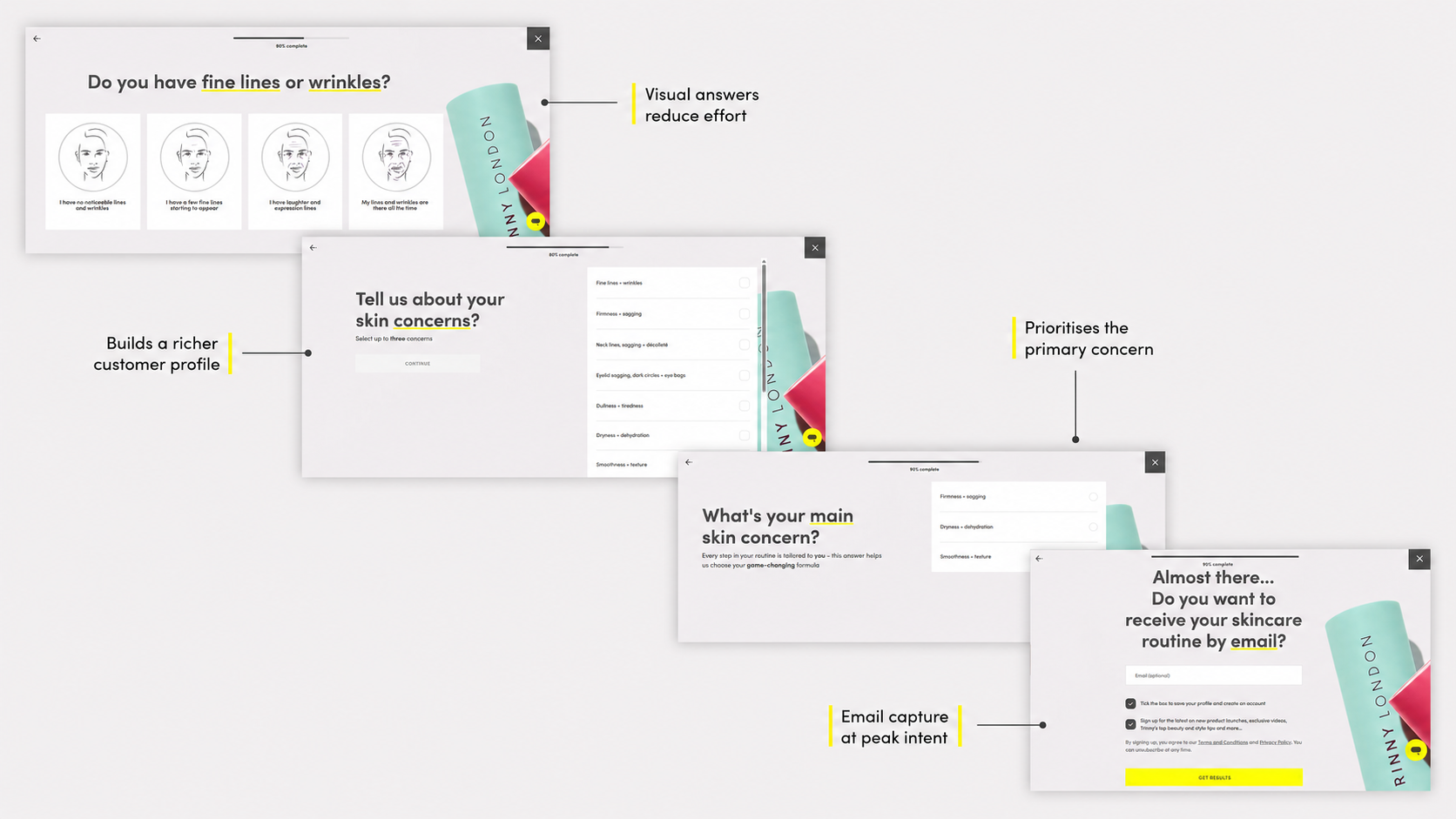
Towards the end of the quiz, Trinny London asks shoppers to identify the visible signs of ageing and skin concerns most relevant to them. Illustrated answer cards make potentially subjective questions easier to interpret, reducing the effort required to choose an accurate response.
Customers can initially select up to three concerns, allowing Trinny London to build a richer profile without forcing them into a single category too early. The quiz then asks which concern matters most. This extra step is commercially important because it gives the final routine a clear priority rather than treating every issue equally.
It also helps Trinny London understand the shopper’s strongest purchase motivation. Someone primarily concerned about dryness may require a different routine—and respond to different marketing messages—than someone focused on firmness, fine lines or uneven texture.
By this point, the customer has completed almost the entire quiz and invested time in receiving their recommendation. Trinny London uses this moment of peak intent to request an email address immediately before revealing the results.
The email is presented as a practical way to receive and save the personalised routine, rather than as a generic newsletter sign-up. This makes the value exchange much clearer. Trinny London can then continue the conversation through tailored follow-up emails, remind shoppers about their recommended products and recover potential customers who view their results without purchasing immediately.
Crucially, the email field is optional, which avoids creating a hard barrier at the final step. The quiz can still deliver its conversion benefit while giving higher-intent shoppers a compelling reason to join the brand’s marketing database.
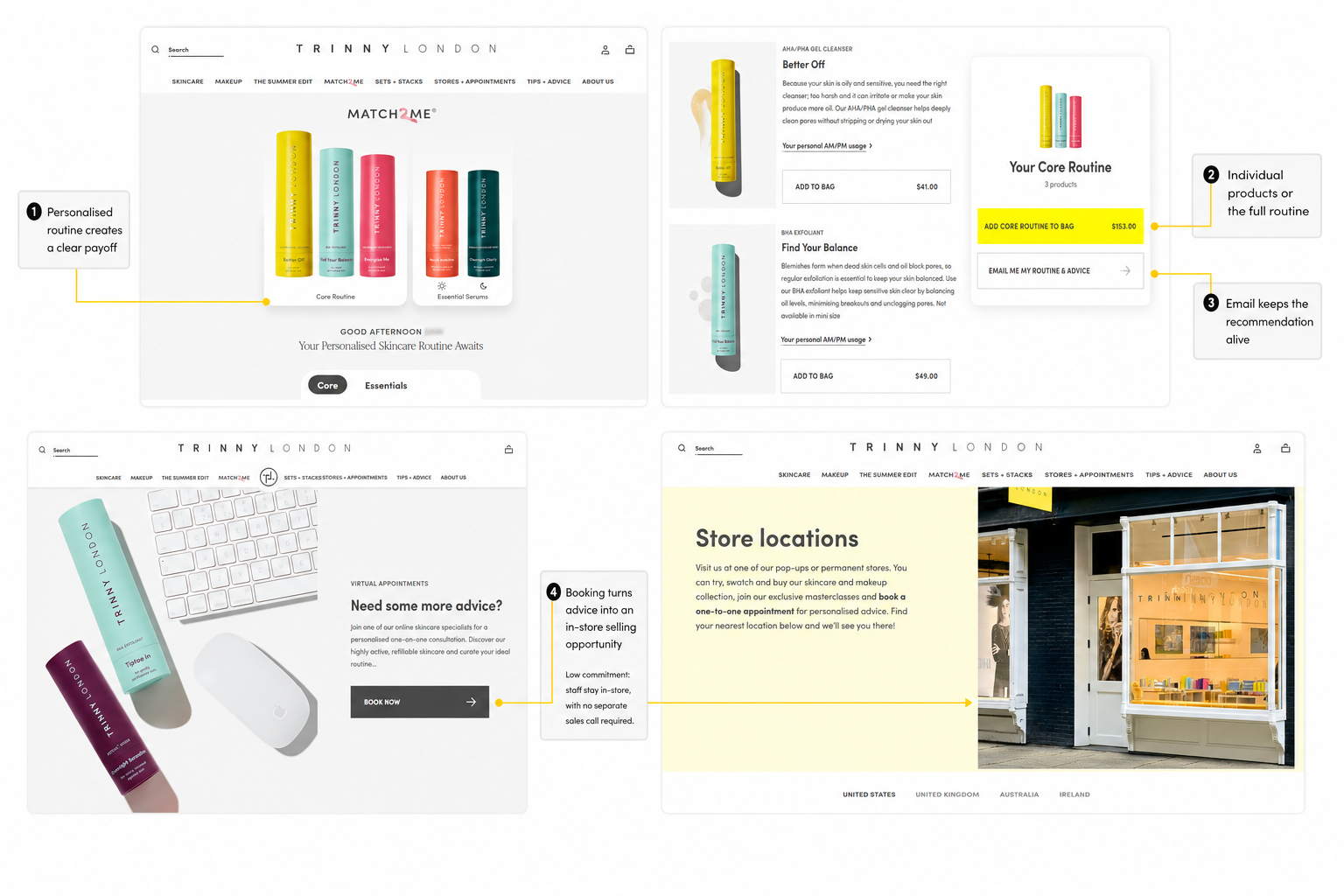
The results page is where Trinny London converts the information collected throughout the quiz into a clear commercial outcome. Rather than presenting a generic collection of products, it creates a personalised skincare routine divided into core products and optional extras.
Each recommendation includes an explanation of why the product suits the shopper’s skin and concerns. This connects the recommendation directly to their earlier answers, making it feel considered rather than simply promotional.
Customers can add products individually or purchase the complete core routine in one click. The individual options preserve flexibility, while the bundle encourages a larger initial order and removes the effort of building a routine manually. Trinny London also displays the combined price clearly, making the full regimen feel like the natural next step.
For shoppers who are not ready to buy immediately, the routine can be sent by email. This keeps the recommendation accessible and gives Trinny London an opportunity to follow up with product education, reminders and more personalised marketing.
The results page also offers virtual appointments that can lead shoppers into one of Trinny London’s stores. This creates another valuable sales opportunity: customers can receive personalised advice, test products and potentially purchase a wider routine in person. Operationally, it is relatively low commitment for the business because store staff remain in their normal working environment rather than travelling or conducting separate sales calls.
Trinny London’s Match2Me quiz succeeds because it does more than recommend products. It guides uncertain shoppers through a structured consultation, collects useful first-party data and turns multiple skincare concerns into a clear purchase decision.
Every stage contributes to conversion. Visual answers reduce effort, explanatory content builds trust, the progress bar encourages completion and the final email request captures shoppers when their intent is highest. The results page then creates several routes to revenue through individual products, a complete routine, email follow-up and appointments.
For other ecommerce brands, the lesson is not simply to add a quiz. The real value comes from connecting each answer to a genuinely useful outcome—and making that outcome easy to purchase.
