
Few skincare brands have experienced the rise of Drunk Elephant. Founded in 2012 and acquired just seven years later for around $845 million, the brand has built a loyal global following by doing far more than simply selling moisturisers and serums. Instead, it sells a skincare philosophy centred around ingredient education, simple routines and premium formulations, helping to transform everyday skincare into a lifestyle.
But with enormous success has also come controversy.
Over the past few years, Drunk Elephant has become one of the most talked-about brands on TikTok, particularly following the rise of the "Sephora Kids" trend. Millions of younger consumers began purchasing products originally designed for adult skincare routines, sparking debate among dermatologists, parents and beauty enthusiasts about whether social media had fuelled unrealistic skincare habits. At the same time, others have questioned whether the brand's premium pricing is justified or whether its popularity has been driven more by clever marketing than superior formulations.
Regardless of where you stand, one thing is difficult to argue with: Drunk Elephant has built one of the most recognisable skincare brands in ecommerce.
In this ecommerce audit, we'll analyse how Drunk Elephant attracts customers through Meta, TikTok and Google Ads, converts visitors with high-performing product pages, increases average order value through strategic merchandising, nurtures customers using email and SMS marketing, and creates an online shopping experience that's helped turn the brand into a household name.
Whether you're running a skincare business or any Shopify store, there are plenty of lessons to take from Drunk Elephant's approach to branding, customer education and conversion optimisation.
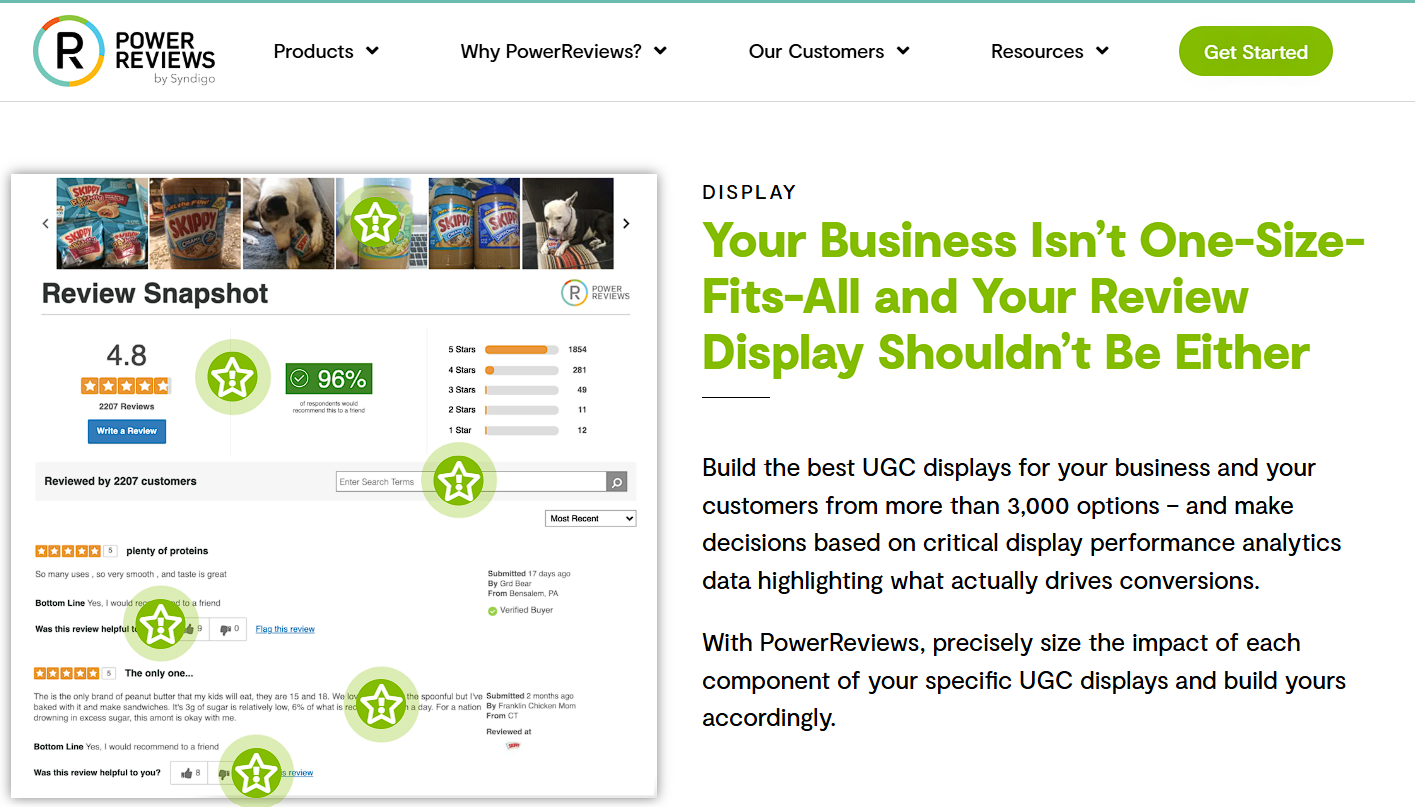
One of the key technologies helping to power Drunk Elephant's ecommerce experience is PowerReviews, a platform designed to build trust through authentic customer feedback and user-generated content. For premium skincare brands, where customers often have questions about product performance, ingredients and suitability for different skin types, social proof plays a major role in the buying decision.
PowerReviews allows Drunk Elephant to showcase verified customer reviews, star ratings and customer-submitted photos directly on its product pages. Rather than relying solely on the brand's own marketing claims, shoppers can see how products have performed for real customers, helping to reduce uncertainty before making a purchase.
The platform also enables detailed ratings summaries and customer questions, allowing visitors to quickly identify common benefits or concerns without having to leave the website. This keeps customers engaged while reinforcing confidence in the products.
For ecommerce brands, PowerReviews demonstrates how authentic user-generated content can become one of the most powerful conversion tools available. Every review helps answer potential objections, strengthens trust and makes purchasing decisions easier.
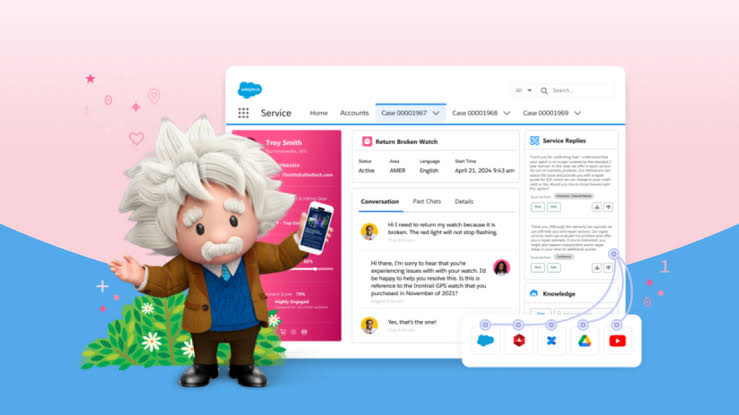
Behind the scenes, Drunk Elephant also uses Salesforce Service Cloud to power its website messaging and customer support experience. Rather than relying on a basic live chat widget, Salesforce provides an enterprise-grade customer service platform that integrates conversations with the wider customer relationship management (CRM) system.
For a skincare brand, this is particularly valuable. Customers frequently have questions about ingredients, skin concerns, product compatibility and routines before committing to a purchase. By providing instant access to support, Drunk Elephant can help shoppers find the right products without leaving the website, reducing friction throughout the buying journey.
Because Salesforce Service Cloud is connected to a central CRM, support agents can access previous conversations and customer information, creating a more personalised experience across multiple interactions. As brands grow, this type of connected customer service becomes increasingly important, helping to improve both customer satisfaction and long-term loyalty.
While customer support isn't always considered part of conversion optimisation, fast and knowledgeable assistance can often be the difference between a visitor abandoning their basket and completing their purchase. Drunk Elephant's investment in enterprise customer service technology highlights how every touchpoint contributes to the overall ecommerce experience.
Unlike many brands that rely heavily on polished product adverts, Drunk Elephant's TikTok strategy feels much closer to creator content than traditional advertising. While the brand publishes content through its own account, much of its reach appears to come from influencers and skincare creators demonstrating products within their everyday routines.
One example is the paid partnership shown below. Rather than feeling like a scripted advert, the creator shares how they personally use the Babyfacial treatment as part of their Sunday skincare routine. The language is conversational, the filming is simple and the recommendation feels much closer to advice from a friend than a sales pitch.
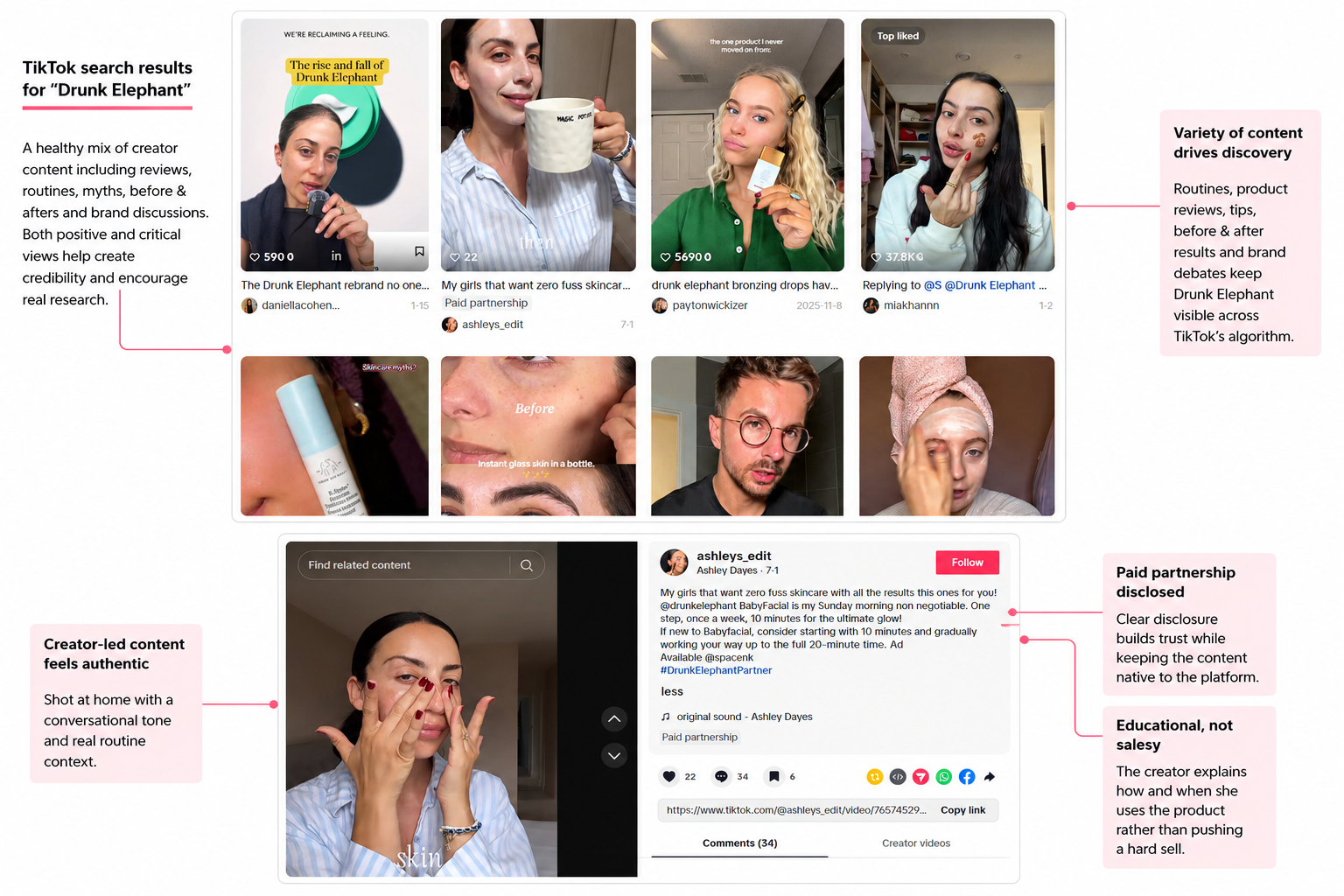
What's particularly interesting is how naturally sponsored content blends alongside organic discussion about the brand. Searching for Drunk Elephant on TikTok reveals product reviews, skincare routines, before-and-after results, tutorials and even conversations around the brand's changing reputation. Some creators praise favourite products they've continued using for years, while others discuss topics such as the "Sephora Kids" trend or whether the products justify their premium price.
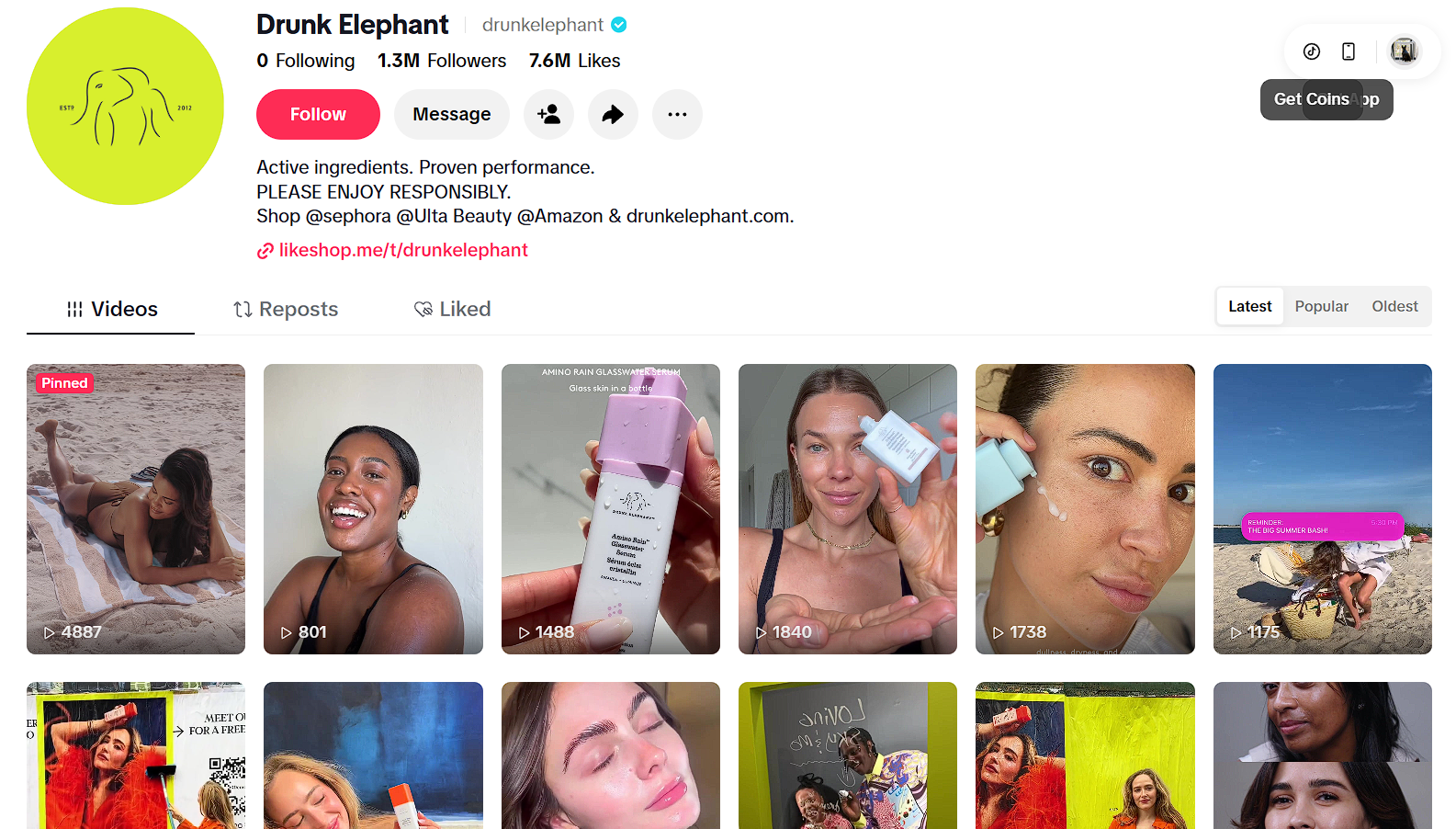
This mix of paid and organic content creates a healthy ecosystem around the brand. Paid partnerships help introduce products to new audiences, while independent reviews, tutorials and debates keep Drunk Elephant visible in TikTok's recommendation algorithm long after campaigns have ended. For shoppers researching the brand, they're exposed to a wide range of opinions and use cases rather than polished marketing alone.
Store Surge Analysis
Drunk Elephant's TikTok strategy isn't centred on producing the most cinematic adverts. Instead, it focuses on making products feel like part of a real skincare routine. By partnering with creators who already have credibility within the beauty community, the brand benefits from authentic demonstrations that viewers are more likely to trust than traditional advertising. Combined with the large volume of organic discussion surrounding the brand, this creates a powerful feedback loop where influencer campaigns generate awareness, and user-generated content reinforces trust and keeps the conversation going.
When searching for Drunk Elephant on Google, the brand immediately dominates the results page with a sponsored Search Ad supported by a Shopping product carousel. Rather than competing aggressively on price, the advert focuses on reinforcing the brand's identity while making it as easy as possible for customers to discover products, promotions and key collections.
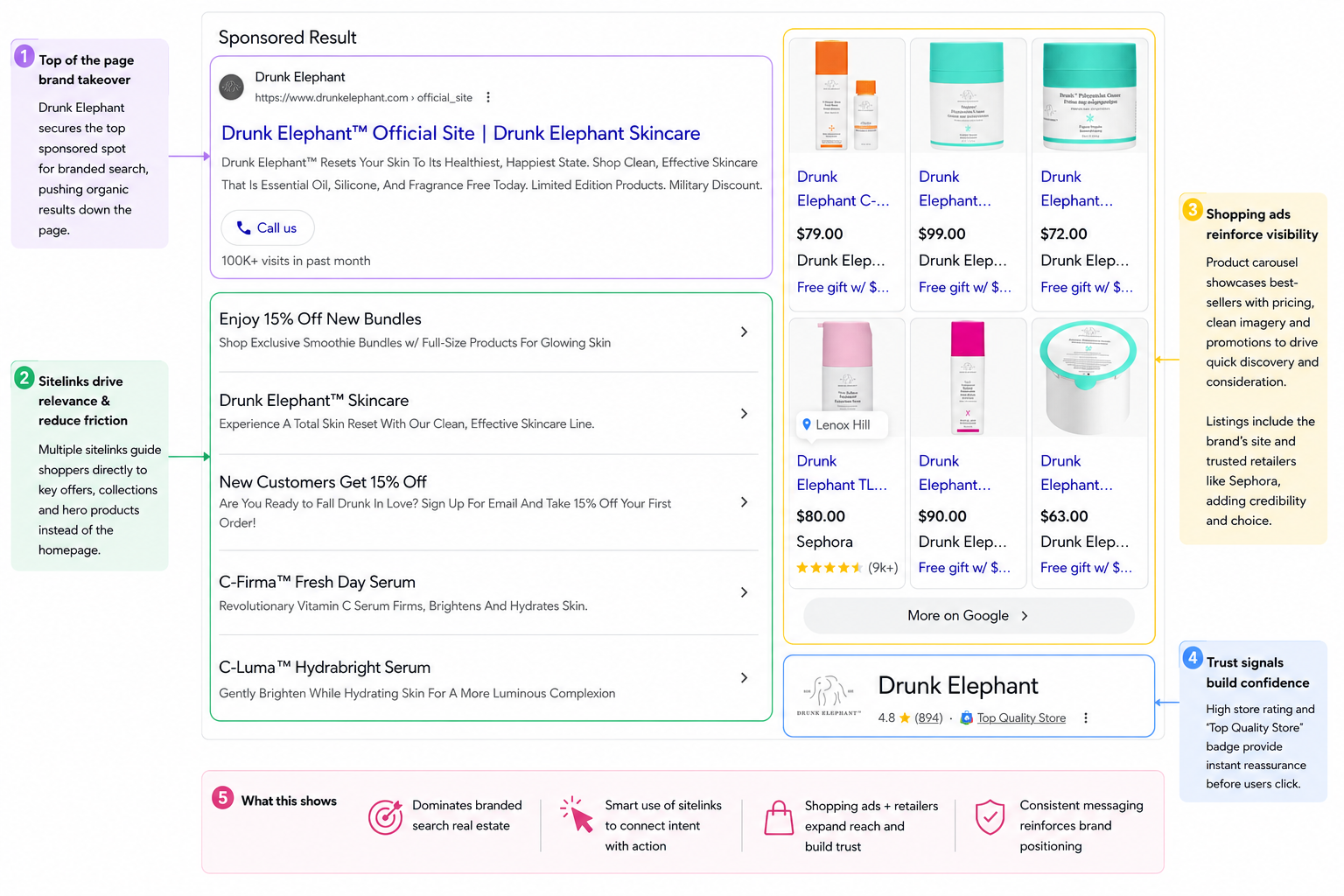
One of the first things that stands out is how much information is packed into the Search Ad. Alongside the main advert, Google displays multiple sitelinks directing shoppers to bundle offers, the full skincare range, new customer discounts and hero products such as the C-Firma™ Fresh Day Serum and C-Luma™ Hydrabright Serum. Instead of sending every visitor to the homepage, Drunk Elephant shortens the customer journey by allowing people to navigate directly to the pages they're most interested in.
The ad copy also reinforces the brand's positioning rather than relying solely on discounts. Messaging such as "Resets Your Skin To Its Healthiest, Happiest State" and references to clean, fragrance-free skincare continue the educational approach seen throughout the brand's website and social channels. This creates a consistent message regardless of where customers first discover the brand.
Alongside the Search Ad, Google's Shopping carousel showcases some of Drunk Elephant's best-known products with clean pack photography, pricing and review ratings where available. Interestingly, the carousel isn't dominated exclusively by the brand's own website. Retailers such as Sephora also appear, giving customers multiple purchasing options while increasing the overall visibility of Drunk Elephant products across the search results page.
Rather than viewing retailer listings as competition, this approach helps reinforce the brand's credibility. Seeing Drunk Elephant stocked by trusted beauty retailers alongside its official website provides additional reassurance that customers are purchasing genuine products from recognised retailers.
Store Surge Analysis
Drunk Elephant's Google Ads strategy demonstrates that branded search is about much more than simply appearing at the top of the page. Every element of the results has been designed to reduce friction and guide shoppers towards the most relevant destination. Promotional sitelinks, product-specific landing pages, Shopping Ads and trusted retail partners all work together to maximise visibility while reinforcing the brand's premium positioning. It's a good example of how ecommerce brands can use Google Ads not only to generate clicks, but to control the entire branded search experience before a customer even reaches the website.
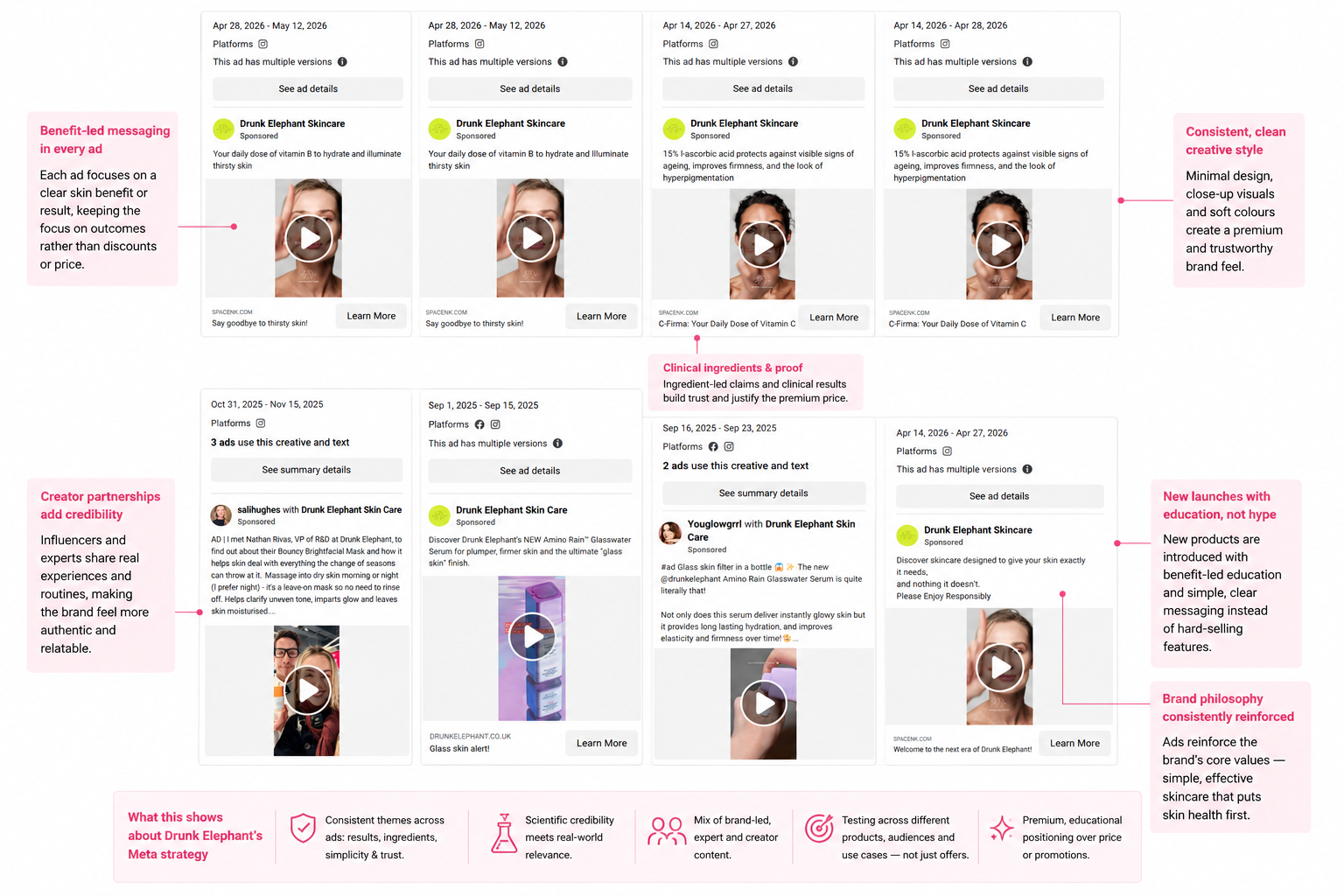
After reviewing Drunk Elephant's Meta Ad Library, one thing becomes immediately clear: the brand rarely relies on flashy promotions or aggressive discounts. Instead, almost every advert is designed to educate customers while reinforcing the brand's premium skincare philosophy.
Some of the messaging currently being tested includes:
Rather than producing dramatically different-looking adverts, Drunk Elephant keeps its creative remarkably consistent. Soft backgrounds, clean product photography, close-up skincare demonstrations and minimal design all reinforce the brand's premium yet approachable identity.
Another noticeable feature is the heavy use of creator partnerships. Several adverts feature influencers explaining how they use products in their own routines, while others include interviews with members of Drunk Elephant's research and development team. This combination of creator content and scientific expertise allows the brand to appeal to both emotional and rational buying motivations.
Unlike many beauty brands that rely heavily on aspirational imagery alone, Drunk Elephant frequently supports its messaging with measurable claims. References to clinical studies, improvement percentages and active ingredient concentrations help justify the brand's premium pricing while building confidence in product performance.
Store Surge Analysis
Drunk Elephant's Meta strategy appears to focus on reinforcing credibility rather than constantly searching for new creative angles. The brand consistently combines educational messaging, scientific evidence and creator-led storytelling to build trust before asking for the sale. Even when promoting offers or new launches, the emphasis remains on healthier skin rather than discounts.
This level of consistency strengthens brand recognition across campaigns while allowing Meta's algorithm to optimise around different products, audiences and customer concerns without diluting the overall brand identity. For premium ecommerce brands, it's a good reminder that effective advertising isn't always about creating completely different adverts—sometimes it's about repeating the same core message in multiple, highly credible ways.
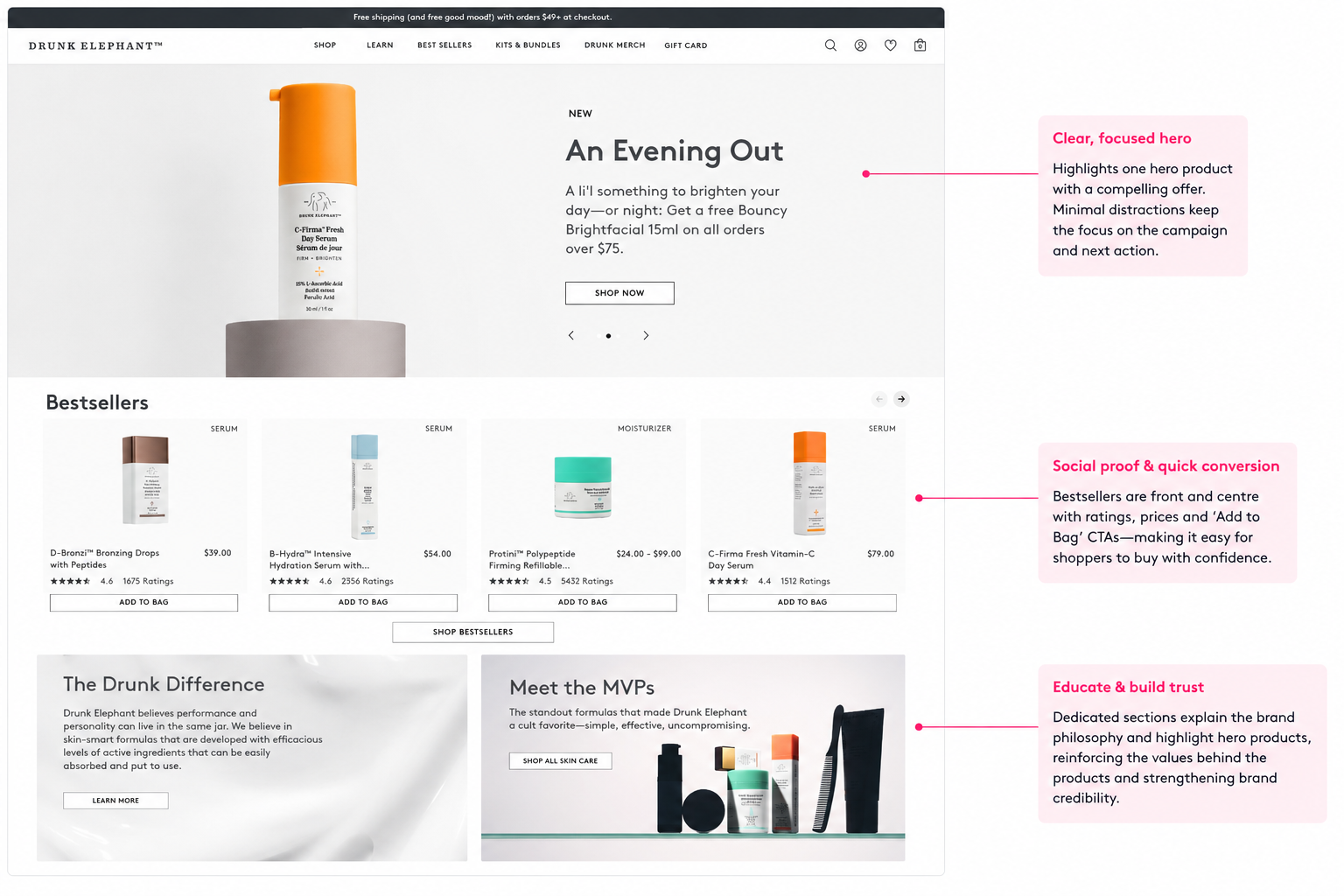
Drunk Elephant's homepage immediately communicates that this is more than just an online skincare store. Rather than overwhelming visitors with promotions or dozens of competing offers, the homepage uses clean design, generous white space and bold product photography to create a premium first impression that reflects the brand's minimalist philosophy.
One of the first things visitors notice is the prominent hero section, which showcases a single product rather than an entire collection. By focusing attention on one featured item and pairing it with a complementary promotion, Drunk Elephant avoids distracting customers while naturally directing them towards its latest campaign.
Further down the page, the homepage transitions into a Bestsellers section, making it easy for first-time visitors to discover the products customers already trust. Each product includes pricing, review ratings and a clear "Add to Bag" button, allowing shoppers to purchase directly from the homepage without needing to navigate through multiple category pages.
Unlike many ecommerce brands that fill their homepage with discount banners, Drunk Elephant invests significant space in communicating its philosophy. Sections such as "The Drunk Difference" and "Meet the MVPs" introduce visitors to the brand's approach to skincare while highlighting its hero products. This reinforces one of the biggest themes seen throughout the customer journey: education comes before selling.
The homepage also does an excellent job of balancing commerce with community. Alongside product promotions and educational content, visitors are introduced to real customer imagery through social content, helping to demonstrate products in everyday use rather than relying solely on professional photography. This creates another layer of authenticity while encouraging shoppers to engage with the brand beyond its website.
Towards the bottom of the page, Drunk Elephant includes a simple email sign-up offering 15% off a first order. Rather than interrupting the browsing experience with multiple competing offers, the incentive is positioned naturally within the customer journey, allowing visitors to engage when they're ready.
Perhaps the most striking feature of the homepage is its consistency. The same colours, typography and product photography appear throughout every section, while messaging remains focused on healthy skin, effective ingredients and simple routines. Whether a visitor lands on the homepage from Google, TikTok or Meta Ads, they're presented with exactly the same premium brand experience.
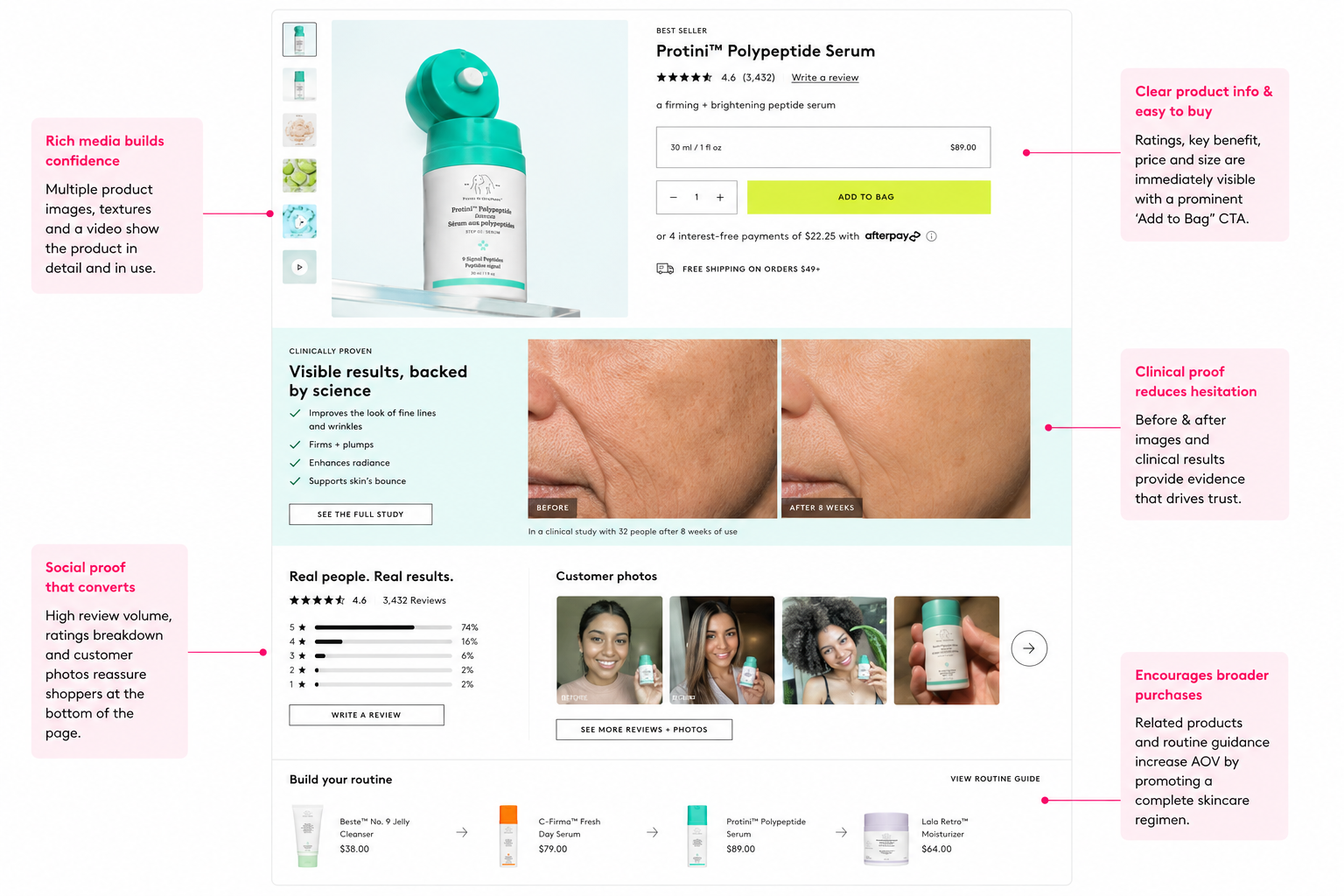
Drunk Elephant's product pages are designed to answer almost every question a customer might have before making a purchase. Rather than relying solely on attractive imagery, the page combines scientific information, customer reviews, educational content and social proof to build confidence at every stage of the buying journey.
The page opens with high-quality product imagery, multiple lifestyle photographs and videos, allowing shoppers to see the product from different angles and in real-world use. This is particularly valuable for skincare, where customers often want reassurance about texture, consistency and application before purchasing.
As visitors scroll further down, the product benefits are explained using simple, accessible language rather than overwhelming scientific terminology. Active ingredients, skincare benefits and usage instructions are clearly organised, helping customers understand not only what the product does, but why it works.
One particularly effective feature is the use of before-and-after photography alongside clinical performance data. Rather than making vague marketing claims, Drunk Elephant supports its messaging with measurable results and visual evidence, helping justify its premium pricing while strengthening customer confidence.
The page also integrates educational content throughout the experience. Videos, ingredient explanations and detailed FAQs reduce uncertainty while encouraging shoppers to spend more time engaging with the product before reaching a purchase decision.
Towards the bottom of the page, customer-generated content, image galleries and extensive verified reviews provide another layer of trust. Rather than relying solely on the brand's own voice, visitors can see how real customers use the product and what results they've achieved.
Finally, complementary product recommendations encourage customers to build a complete skincare routine rather than purchasing a single item. This not only improves the customer experience by suggesting compatible products but also helps increase average order value.
Drunk Elephant demonstrates that successful ecommerce isn't just about having great products—it's about creating a brand experience that builds trust at every stage of the customer journey.
From educational Meta Ads and creator-led TikTok campaigns to a clean, conversion-focused homepage and highly informative product pages, every touchpoint reinforces the same core message: simple, effective skincare backed by science. Rather than relying on aggressive discounts or high-pressure sales tactics, the brand consistently uses education, clinical evidence and authentic customer experiences to help shoppers feel confident in their purchasing decisions.
The website also shows how premium positioning can work alongside strong conversion optimisation. Features such as verified reviews, before-and-after imagery, routine recommendations, flexible payment options and enterprise customer support all help reduce friction while maintaining the brand's premium feel. Every element serves a clear purpose without overwhelming the customer.
One of the most impressive aspects of Drunk Elephant's strategy is its consistency. Whether discovering the brand through Google Ads, Meta, TikTok or the website itself, customers are presented with the same visual identity, messaging and skincare philosophy. That consistency strengthens brand recognition and creates a seamless experience across every marketing channel.
Of course, no brand is without its challenges. Drunk Elephant's rapid rise on social media has also attracted criticism, particularly around the "Sephora Kids" trend and the premium pricing of some products. However, these conversations have arguably reinforced the brand's visibility and demonstrate the influence it has built within the skincare industry.
For ecommerce brands, there are several valuable lessons to take away:
Ultimately, Drunk Elephant has shown that great ecommerce isn't built on one standout feature or marketing channel. It's the result of hundreds of small decisions working together—from paid advertising and product pages to customer support and post-purchase engagement. That's what turns a skincare brand into one of the most recognisable names in the industry.
If you want to identify the friction points holding back your own store, explore our ecommerce conversion rate optimisation services (CRO), combining customer journey analysis, landing-page improvements and practical testing opportunities.
