
Client: Artisan Coffee Co.
Sector: DTC coffee
Services: Google Ads
Timeframe: Three months
When we began optimising Google Ads for Artisan Coffee Co., the account was already generating sales. The problem was making sure the budget was being spent in the right places.
The existing account contained a mixture of Search, Shopping and Performance Max activity, but there were opportunities to give Google clearer signals about where budget should be allocated.
Seasonality complicated things further.
Our focus was therefore on profitable incremental growth, rather than spending more for the sake of generating a larger revenue number.
We reorganised campaigns around different product categories and levels of purchase intent, using a combination of Search, Shopping and Performance Max.
We also separated branded demand from broader acquisition activity. This gave us greater control over how much budget was being attributed to customers already searching specifically for the brand, while allowing other campaigns to focus more heavily on incremental demand. This is the same structural work we bring to every Google Ads account we take on.
[IMAGE: artisan-campaign-structure-before-after.png]
Campaign performance wasn't the only information we used.
Search-term data helped us understand the distinction between customers searching directly for the brand and those searching more broadly for coffee, gifts and related categories.
Demographic data highlighted changes in purchasing behaviour during gifting periods, while device data consistently showed that the overwhelming majority of conversions occurred on mobile. That last point matters well beyond the ad account, which is why campaign work and conversion rate optimisation are rarely worth separating.
These insights helped inform not only campaign structure and bidding, but also which products, offers and messages deserved greater visibility at different points of the year.
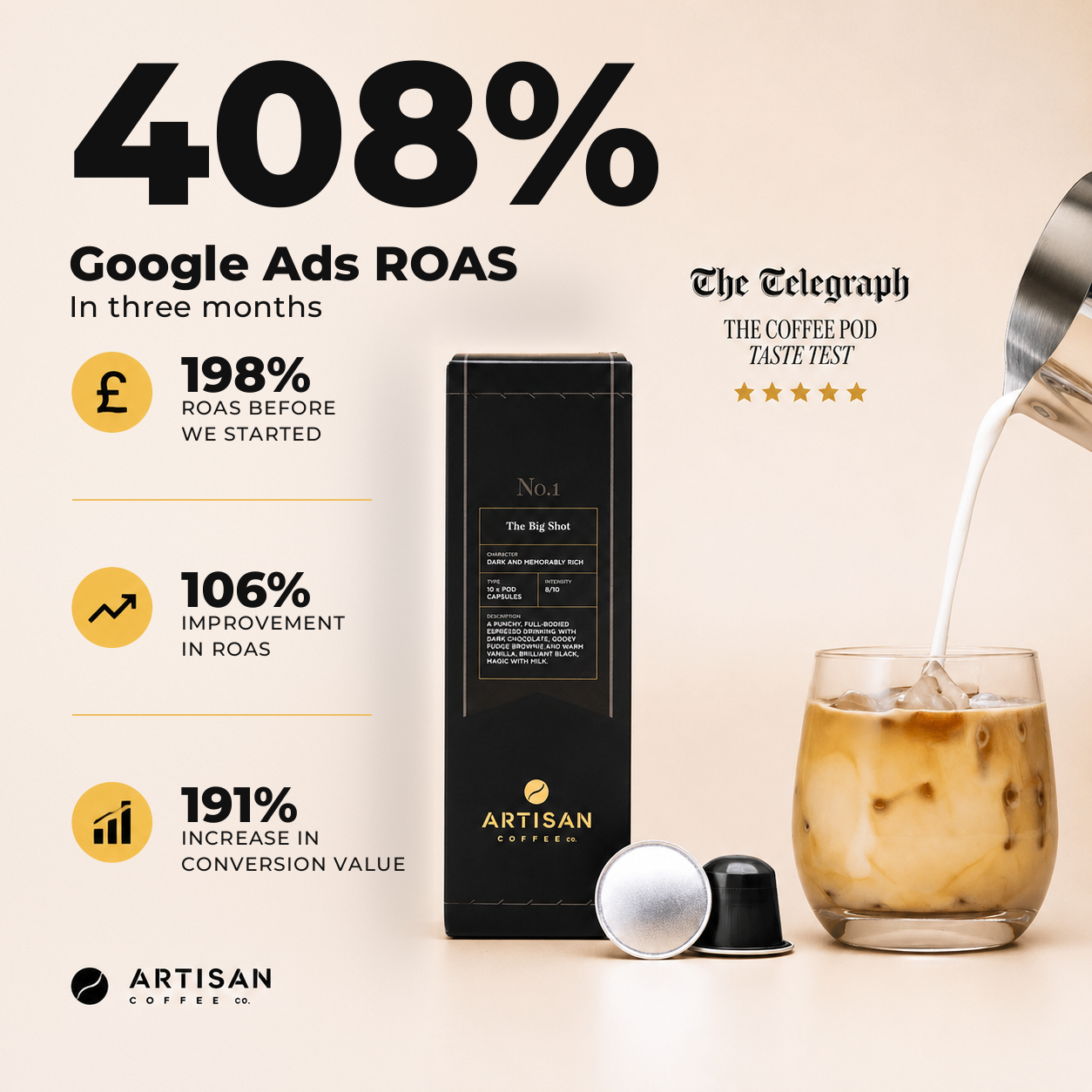
Within three months, the account was generating a 408% ROAS, up from 198% when we started. That represented a 106% improvement in ROAS, while conversion value increased by 191%.
The objective wasn't simply to spend more. It was to create a Google Ads account that could scale when the opportunity was there and become more conservative when it wasn't.
More importantly, efficiency remained considerably stronger after peak seasonal demand had disappeared.
That's ultimately what we want from paid advertising: more control over where the budget goes, less wasted spend, and the ability to scale profitable activity when the numbers justify it.
If your Google Ads account is generating sales but you're not confident the budget is going to the right places, that's usually a structural problem rather than a spending one. Happy to take a look.
