
Intro
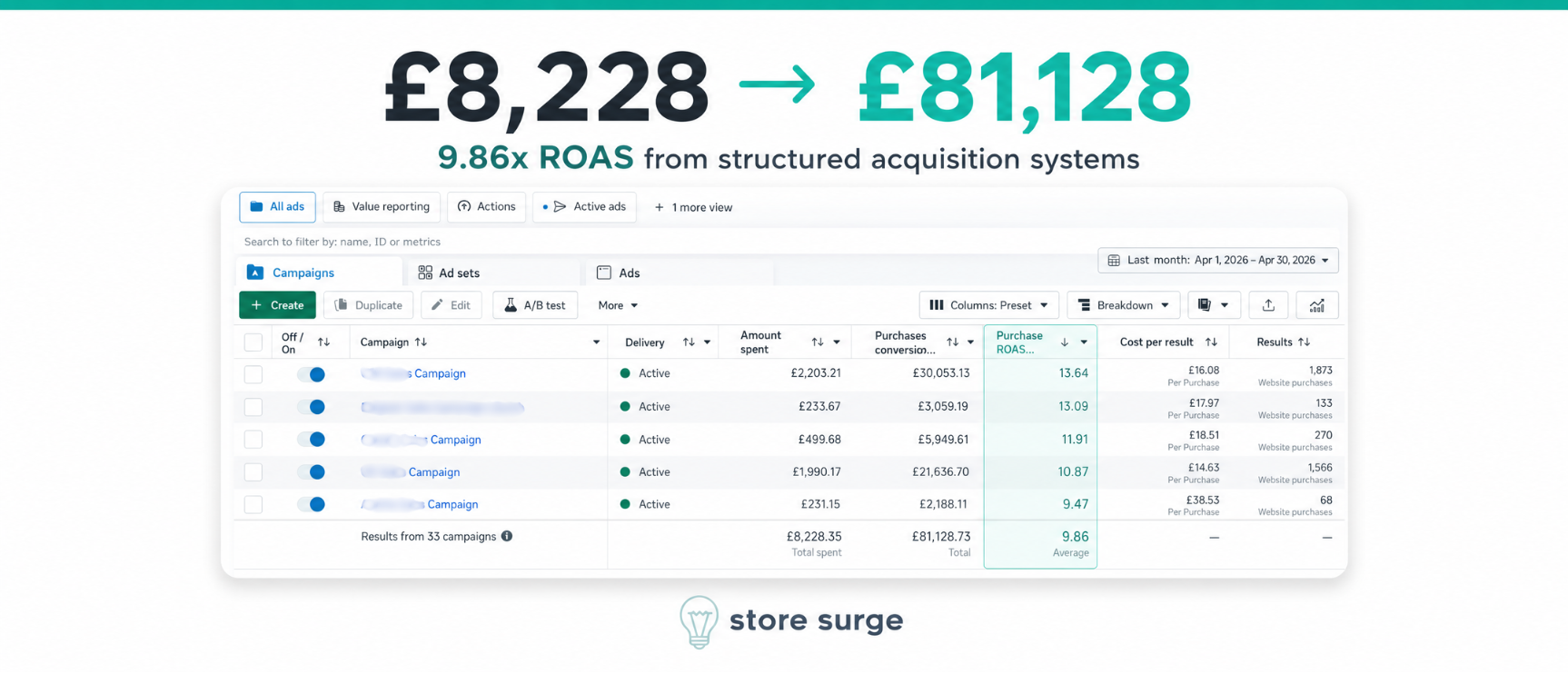
For many brands, Meta continues to be one of the most effective channels for ecommerce advertising because it combines massive reach, advanced targeting and highly visual content environments across Facebook and Instagram.
Meta Ads are particularly effective for:
One reason Meta dominates advertising in ecommerce is its ability to make ecommerce ads feel native to the platform rather than intrusive. Many high-performing brands now prioritise fast creative iteration and short-form social content over heavily polished traditional advertising.
Retargeting also remains a major advantage for advertising for ecommerce brands, allowing businesses to re-engage website visitors, abandoned carts and previous customers with highly tailored messaging.
Advantage+ Shopping Campaigns have also become increasingly important for ecommerce optimizer workflows because Meta’s machine learning systems can automate large parts of audience targeting and campaign delivery. That's why at Store Surge the focus is not simply on launching ads, but on building scalable ecommerce advertising systems that combine creative testing, data analysis and long-term growth strategy.”
However, strong Meta performance still depends heavily on creative quality, offer positioning and landing page experience because automation alone cannot compensate for weak marketing fundamentals.
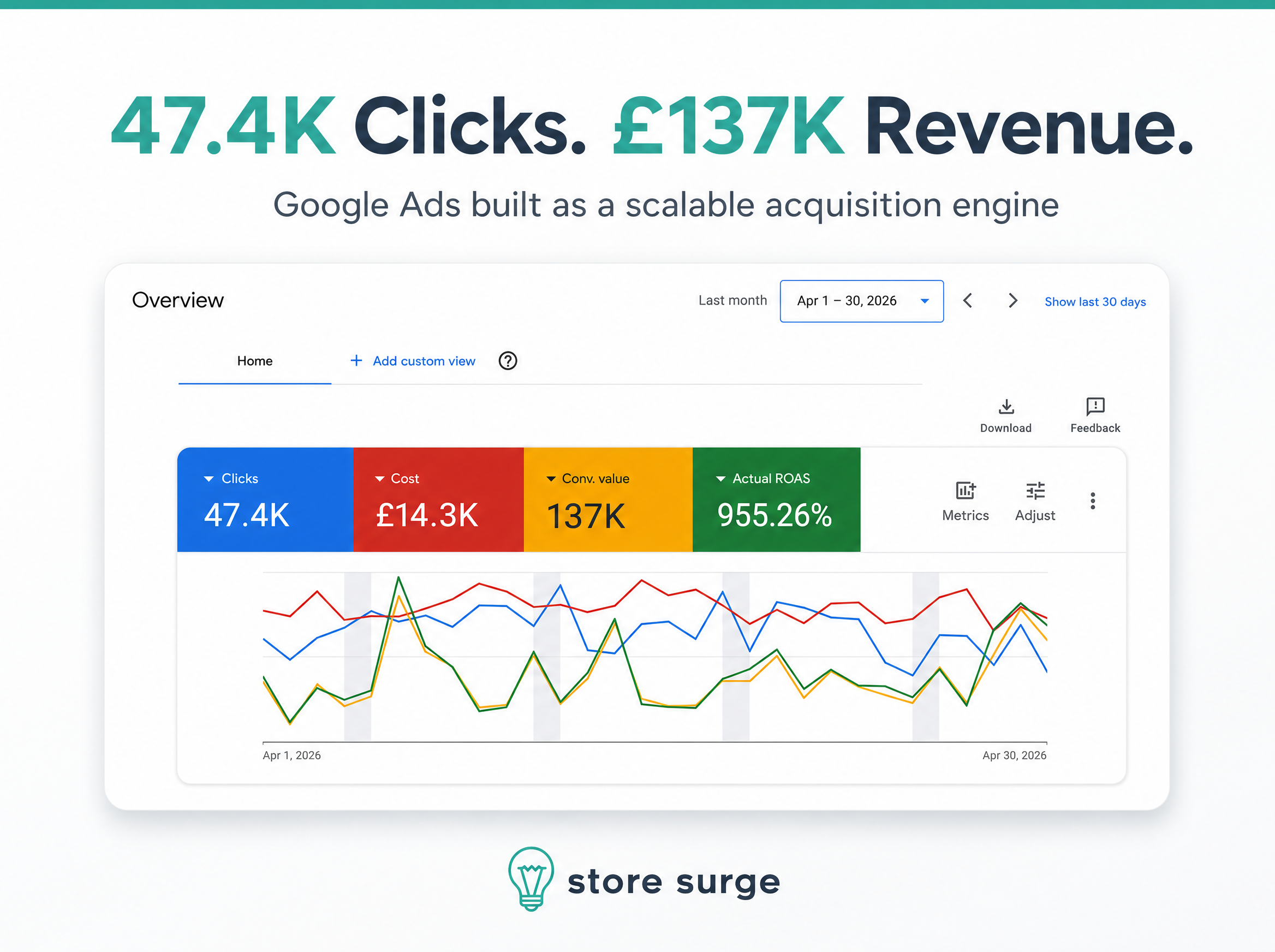
Unlike interruption-based social advertising, Google Ads allows ecommerce brands to target users who are already searching for products, solutions or purchase-ready information.
This makes Google one of the most effective channels for ecommerce advertising, particularly for brands focused on scalable, intent-driven customer acquisition.
Most modern advertising for ecommerce brands through Google is built around:
· Search Campaigns
· Shopping Ads
· Performance Max (PMAX)
· Brand Protection Campaigns
Search and Shopping campaigns help capture bottom-of-funnel traffic from users actively looking to purchase, while PMAX automates campaign delivery across Google’s wider ecosystem using machine learning and conversion signals.
Brand protection campaigns are also increasingly important because competitors often bid on branded keywords in order to intercept valuable traffic from existing brand awareness.
However, strong Google ecommerce ads performance still depends heavily on product feed quality, conversion tracking accuracy, landing page experience and offer positioning because automation alone rarely creates sustainable growth.
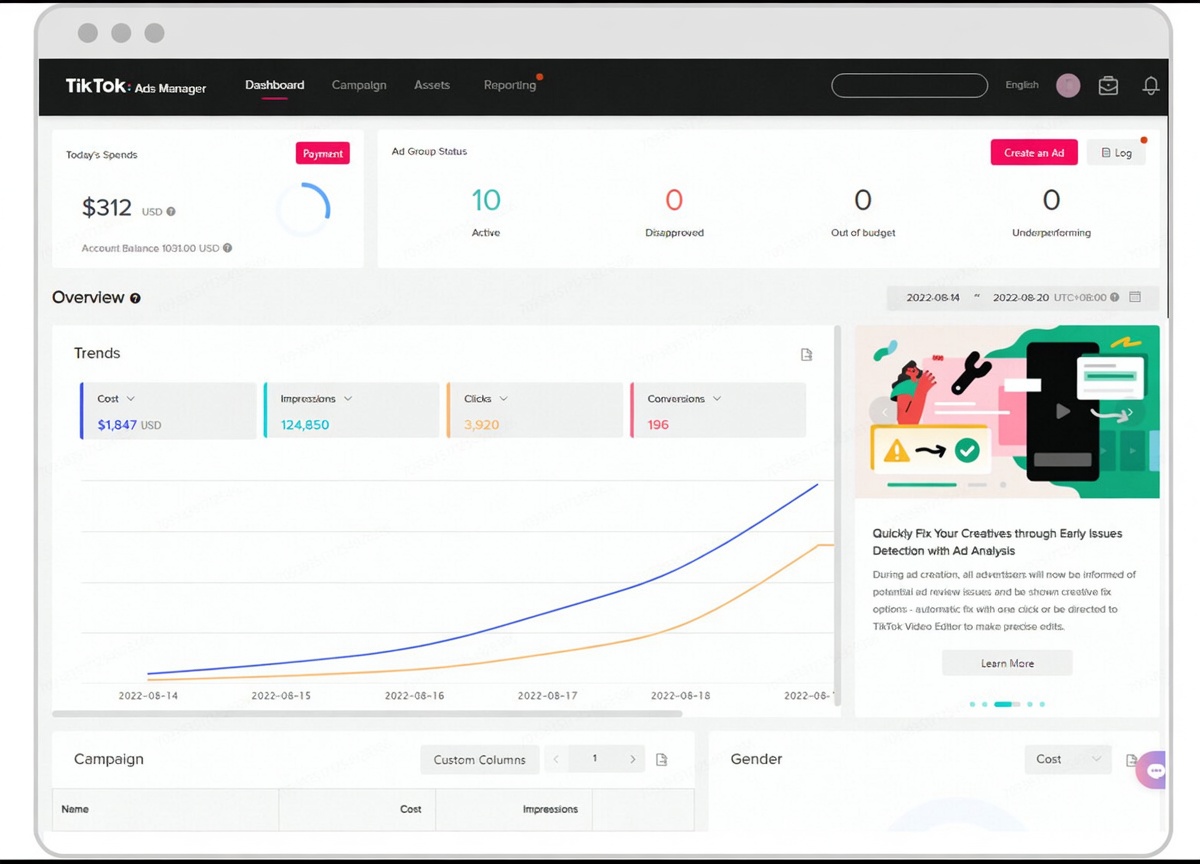
TikTok has rapidly become one of the most important platforms for modern ecommerce advertising, particularly for visually driven brands targeting younger audiences and mobile-first consumers.
Unlike traditional advertising platforms, TikTok rewards content that feels native to the platform rather than highly polished or corporate. Many of the strongest-performing ecommerce ads are simple creator-style videos filmed on smartphones with fast-paced editing and authentic presentation styles.
Successful advertising for ecommerce brands on TikTok often depends on:
Creative speed is especially important because many brands now test large volumes of short-form content every week in order to identify winning creatives more quickly than traditional advertising workflows allow.
TikTok can also offer relatively low CPMs when creatives generate strong engagement signals early, although competition across the platform has increased significantly as more ecommerce brands invest in short-form video advertising.
For many ecommerce optimizer strategies, TikTok is now less about producing perfect ads and more about building scalable systems for continuous content production, testing and creative iteration.
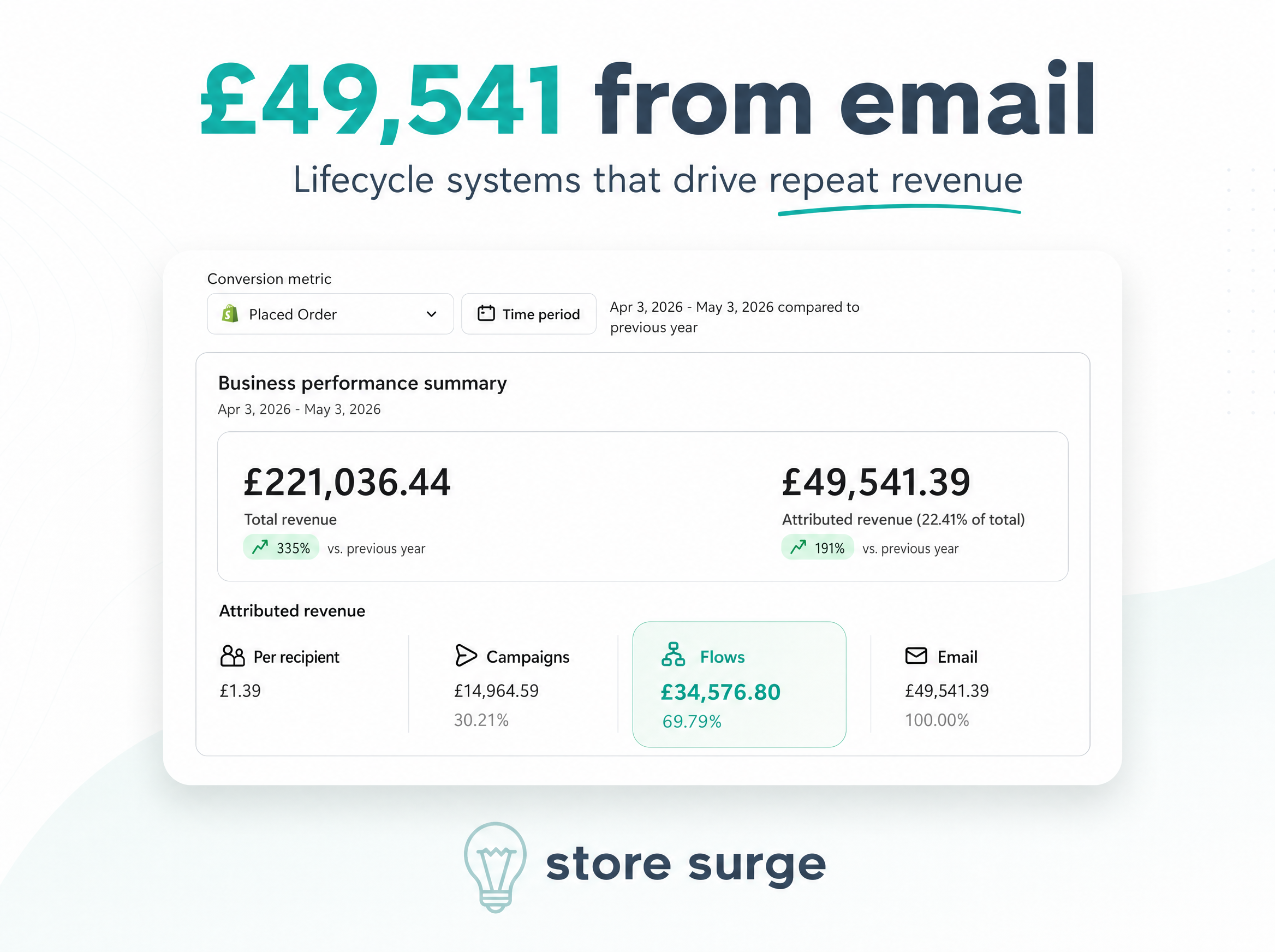
While many brands focus heavily on paid acquisition, email marketing remains one of the highest-return channels in modern ecommerce advertising because it allows businesses to build direct relationships with customers rather than relying entirely on rented audiences from advertising platforms.
Strong email marketing systems like Klaviyo are typically built around:
This is increasingly important as customer acquisition costs across Meta, Google and TikTok continue to rise. Brands that fail to retain customers often become heavily dependent on expensive paid traffic simply to maintain revenue growth.
Abandoned cart flows remain one of the most effective forms of advertising for ecommerce brands because they target users who already demonstrated purchase intent but failed to complete checkout.
Post-purchase flows are also becoming increasingly important for ecommerce optimizer strategies because successful brands now focus heavily on increasing customer lifetime value, repeat purchases and long-term brand loyalty rather than relying solely on first-time acquisitions.
Many modern ecommerce ads strategies now depend heavily on the relationship between paid acquisition and lifecycle marketing, because traffic generation alone is rarely enough to create sustainable profitability.
Modern ecommerce advertising is becoming increasingly competitive across every major platform. Rising acquisition costs, creative fatigue and platform saturation mean brands can no longer rely on simple media buying alone to scale effectively.
The strongest ecommerce brands now operate more like modern media companies. They build systems around:
rather than relying on isolated campaigns or short-term advertising tactics.
As AI tools continue to reshape advertising in ecommerce, the brands that succeed over the next few years will likely be those that combine strategic positioning, operational execution, creative iteration and commercial awareness into a repeatable growth system.
At Store Surge, the focus is not simply on running ecommerce ads.
The goal is to help brands build scalable ecommerce growth systems that combine advertising, content, retention and AI-enabled workflows into a more sustainable long-term strategy.
