
The Complete Guide to Ecommerce Advertising in 2026
• What ecommerce advertising looks like in 2026
• The best paid channels for ecommerce brands
• Why creative matters more than targeting in ecommerce ad strategy
• How scaling brands structure their ecommerce growth systems
• Common mistakes hurting ecommerce ROAS
• How AI is reshaping ecommerce performance marketing
Ecommerce advertising has changed dramatically over the past few years.
What worked in 2020 often no longer works today. Targeting has become broader, customer acquisition costs have increased, attribution is less reliable, and consumers are exposed to more ads than ever before.
At the same time, the brands scaling fastest are not necessarily the ones with the biggest budgets.
They are usually the brands with:
• Stronger creative systems and faster testing cycles
• Better offers and clearer positioning
• Stronger retention and email marketing infrastructure
• More consistent content production at scale
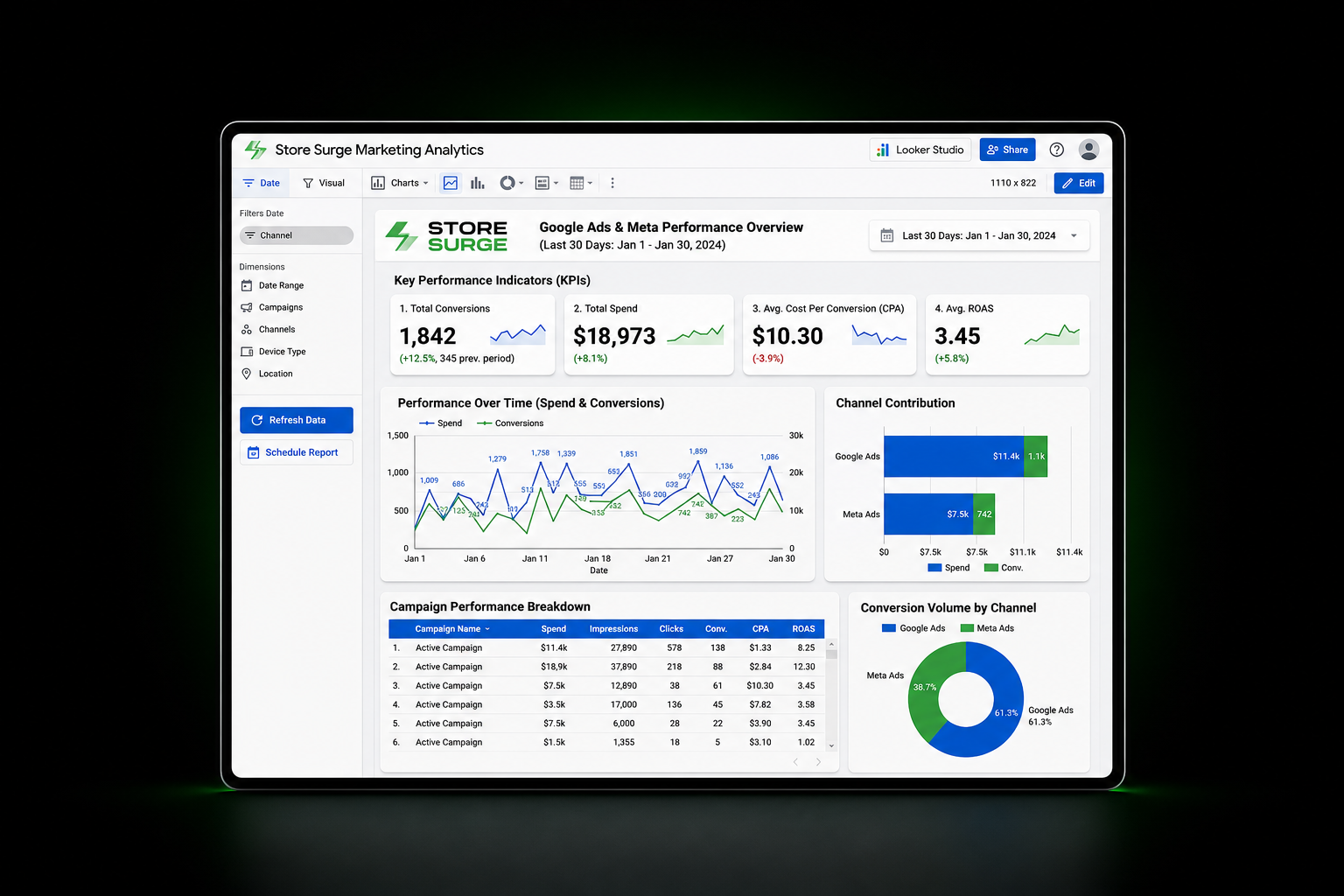
Modern ecommerce advertising is no longer simply about running Facebook or Meta ads.
It is now a combination of paid media buying, creative production, landing page optimisation, retention marketing, and AI-assisted workflows — all working together as a system.
The businesses winning in 2026 are increasingly operating like media companies. They produce short-form video, UGC, educational content, and platform-specific assets at a much faster pace than most competitors — and crucially, they build repeatable systems around that production rather than relying on one-off campaigns.
Whether you are spending £1,000 a month or £100,000+ a month on paid ads for ecommerce, the underlying principles are increasingly the same:
Better creative. Better systems. Better execution. Faster learning cycles.
That is what modern ecommerce advertising has become.
Ecommerce advertising is the process of using paid digital channels to drive traffic, conversions, and revenue for an online store.
At its most basic level, this covers platforms such as Meta, Google, TikTok, YouTube, Pinterest, and Amazon — used to promote products, offers, collections, and brand awareness campaigns.
But modern ecommerce advertising goes far beyond simply running ads. The landscape has evolved into a combination of:
• Creative production and content systems
• Paid media buying and ecommerce paid media strategy
• Landing page and conversion optimisation
• Retention marketing and lifecycle email flows
• Analytics, attribution, and AI workflows
The strongest ecommerce brands increasingly operate like media companies — continuously producing short-form video, UGC, product demonstrations, and ad creative variations, because modern paid media rewards brands capable of generating high volumes of engaging content.
Importantly, successful ecommerce advertising is not just about generating traffic. It is about generating profitable growth. That means understanding customer acquisition cost (CAC), lifetime value (LTV), contribution margin, and ecommerce conversion optimisation — not just platform-reported ROAS.
The brands scaling effectively in 2026 typically have:
• Stronger creative systems and faster testing cycles
• Clearer positioning and better operational discipline
• Stronger retention infrastructure and repeat purchase behaviour
• A growth mindset built around systems, not hacks
Five years ago, many ecommerce brands relied heavily on interest targeting, lookalike audiences, and narrow audience segmentation. That approach has become significantly less effective.
Privacy changes, increased competition, and platform automation have fundamentally changed how ecommerce advertising works. Modern platforms like Meta and TikTok now rely primarily on machine learning, broad targeting, and creative performance signals.
As a result, creative quality has become one of the most important competitive advantages in ecommerce marketing.
Many brands no longer fail because of poor targeting. They fail because:
• Their content is weak and creative testing is slow
• Their offer positioning is unclear or uncompetitive
• Their landing pages underperform after the click
• Their retention systems are underdeveloped
The emphasis has shifted decisively from audience precision to creative velocity.
Ecommerce advertising has become significantly more competitive. Several structural changes have contributed to this.
Increased Competition
More ecommerce brands are advertising online than ever before. This has driven up CPMs, CPCs, and auction competition — and accelerated creative saturation. Mediocre ads are now ignored almost instantly.
Consumer Attention Is Fragmented
Users now divide their attention across TikTok, Instagram, YouTube, podcasts, newsletters, and streaming services. Capturing attention has become harder and more expensive. This is why modern ecommerce brands increasingly prioritise:
• Stronger hooks and faster-paced creative
• Platform-native content that blends with organic feeds
• Visually engaging ecommerce ads tailored per placement
Attribution Is Less Reliable
Privacy updates and tracking limitations have reduced attribution accuracy across all major platforms. Many ecommerce businesses still rely too heavily on platform-reported ROAS without understanding broader profitability metrics. Brands increasingly need:
• Stronger first-party data and blended reporting
• Better analytics infrastructure and retention-focused growth strategies
• A clear view of contribution margin, not just ad spend returns
Creative Fatigue Happens Faster
Consumers now consume enormous amounts of content daily. Ads burn out much faster than they once did. This has forced many ecommerce brands to adopt aggressive creative testing systems and high-volume content production workflows. The brands scaling most effectively today are often those capable of producing creative consistently, rather than occasionally.
One of the biggest changes in ecommerce advertising is the shift away from hyper-granular targeting toward creative-led growth.
Modern ad platforms are increasingly algorithm-driven. Meta and TikTok are now often better at finding buyers than advertisers themselves. Because of this, the competitive advantage has shifted toward:
• Creative quality, storytelling, and offer positioning
• Strong hooks and visual identity
• Creative testing velocity and content throughput
In practical terms: a brand with excellent ecommerce creative can often outperform a competitor with better targeting but weaker content.
This is why UGC, creator-style content, founder-led content, and product demonstrations have become so central to ecommerce ad strategy. Modern ecommerce advertising increasingly rewards content that feels authentic, fast-moving, visually engaging, and platform-native.
The strongest ecommerce brands are no longer simply buying traffic. They are building scalable creative systems capable of continuously generating new content, testing new angles, and adapting quickly to changing platform behaviour.
One of the biggest mistakes ecommerce brands make is assuming there is a single best advertising platform.
In reality, successful ecommerce growth usually comes from combining multiple channels into a wider acquisition and retention system. Different platforms serve different purposes:
• Some are stronger for demand generation, others for intent capture
• Some work better for brand building, others for retention and repeat purchases
• Each platform rewards different creative styles and user behaviour
The strongest ecommerce advertising strategies typically combine awareness, acquisition, retargeting, and retention — rather than relying on one traffic source alone.
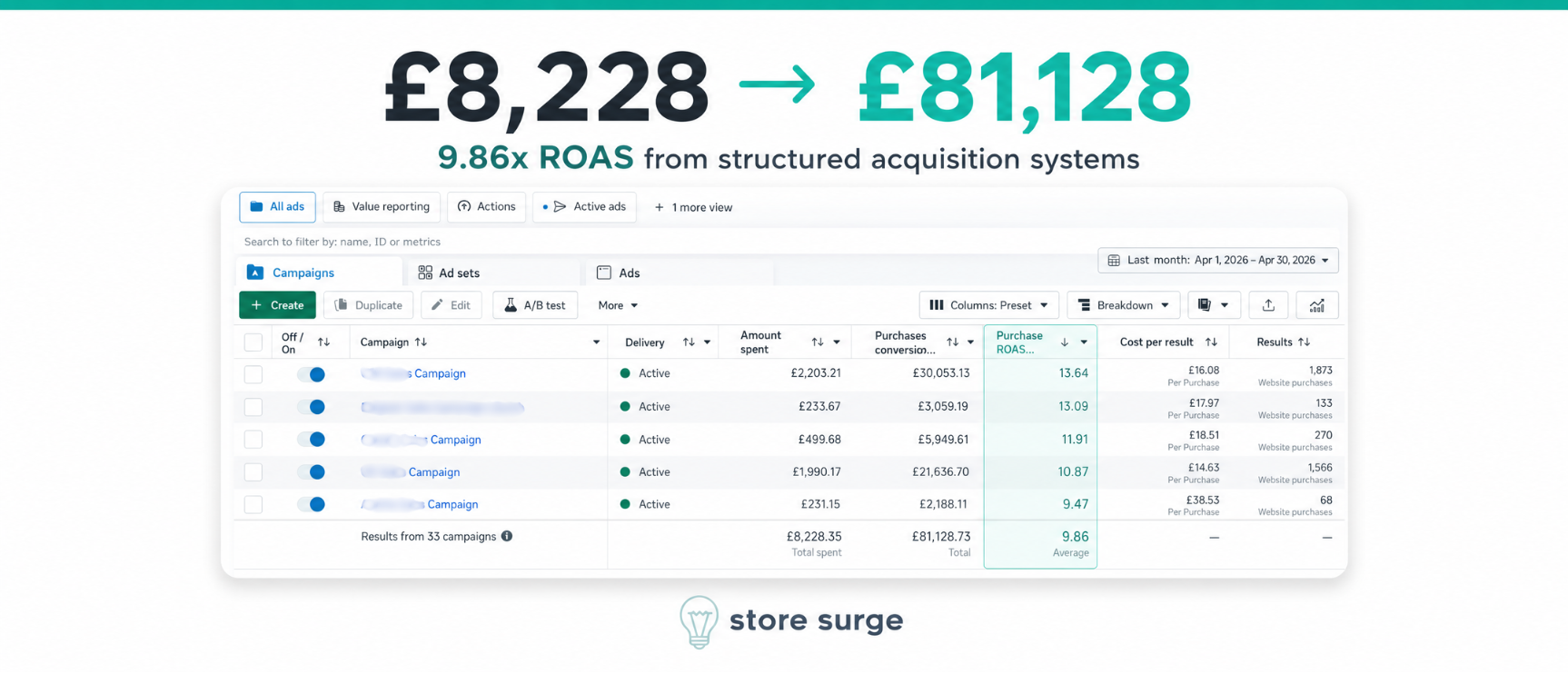
For many ecommerce brands, Meta remains one of the most powerful acquisition channels available. Despite rising competition and privacy changes, Meta still offers enormous scale, strong algorithmic optimisation, and excellent creative distribution across Facebook, Instagram, and Messenger.
Meta works particularly well for ecommerce because it sits in the middle of the consumer attention economy — users scroll through highly visual feeds for entertainment, meaning products can generate demand even when consumers were not actively searching. This makes Meta especially effective for:
• Impulse-driven and visually appealing products
• Lifestyle brands and founder-led content
• UGC-driven creative and product demonstrations
Modern Meta advertising increasingly rewards strong hooks, native-feeling content, and clear offers. Many brands still overcomplicate targeting. In reality, modern Meta campaigns increasingly perform best with broad targeting, strong creative, and consistent testing — rather than audience micromanagement.
Meta is often strongest for demand generation, scaling, and top-of-funnel acquisition — but usually works best when paired with Google Ads and email retention rather than operating in isolation.
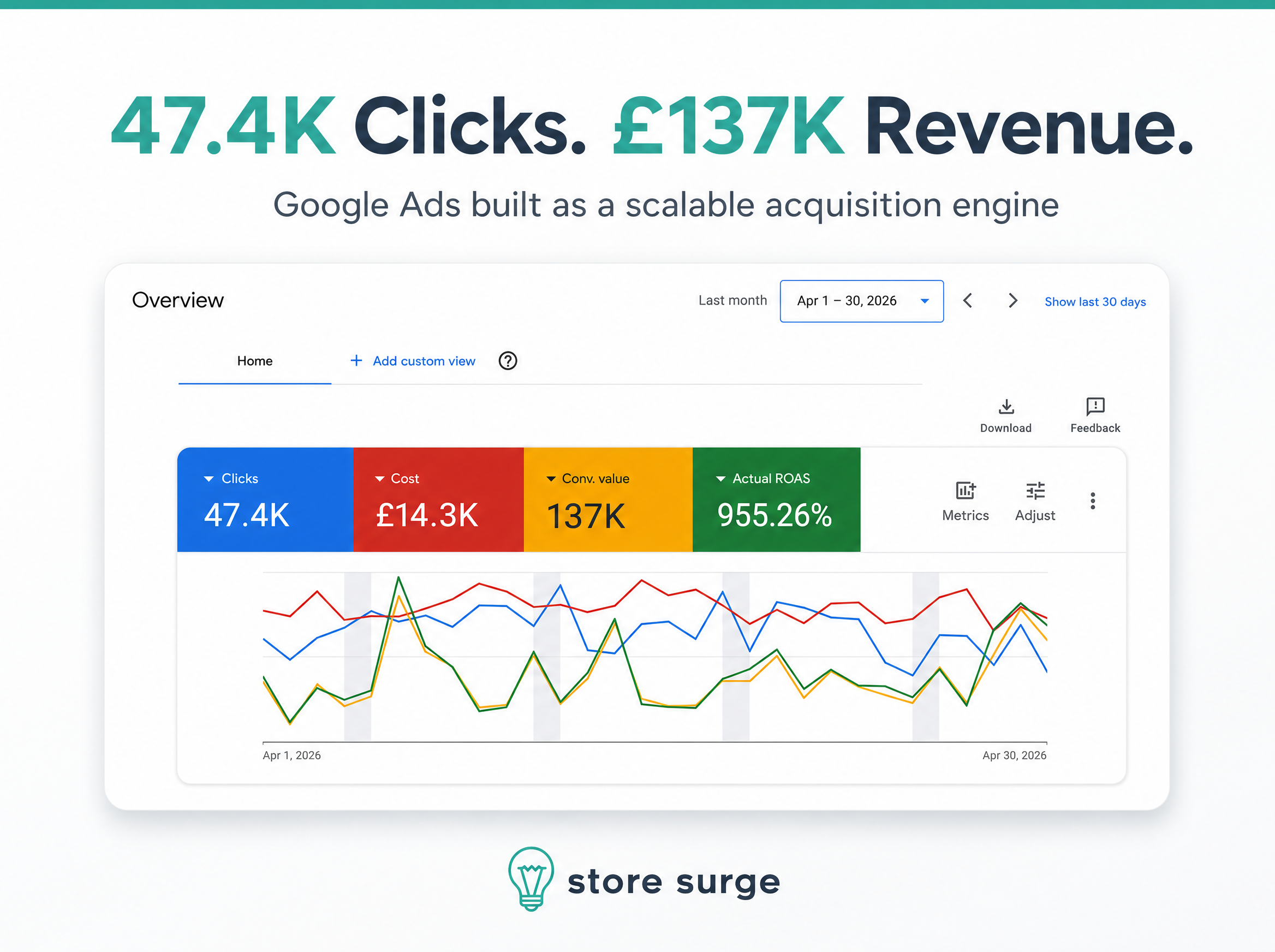
Google Ads operates very differently from Meta. Where Meta is interruption-based advertising, Google is primarily intent-based — users are actively searching for products or solutions they want.
This makes Google particularly powerful for capturing high-intent traffic, branded searches, shopping campaigns, and bottom-of-funnel conversions. For ecommerce brands, the main Google channels are typically:
• Google Shopping and Performance Max
• Search campaigns for branded and non-branded queries
• YouTube and Display retargeting
Strong Google Shopping performance often depends heavily on product feed quality, titles, images, pricing competitiveness, and reviews. Unlike Meta, where creative dominates, Google is more operationally sensitive — feed quality, tracking accuracy, and account structure matter significantly.
Many ecommerce brands underestimate branded search. As Meta, TikTok, and YouTube generate awareness, users frequently move into Google to validate, compare, and purchase. This is why strong ecommerce advertising systems often use Meta for demand generation and Google for demand capture — rather than treating them as separate ecosystems.
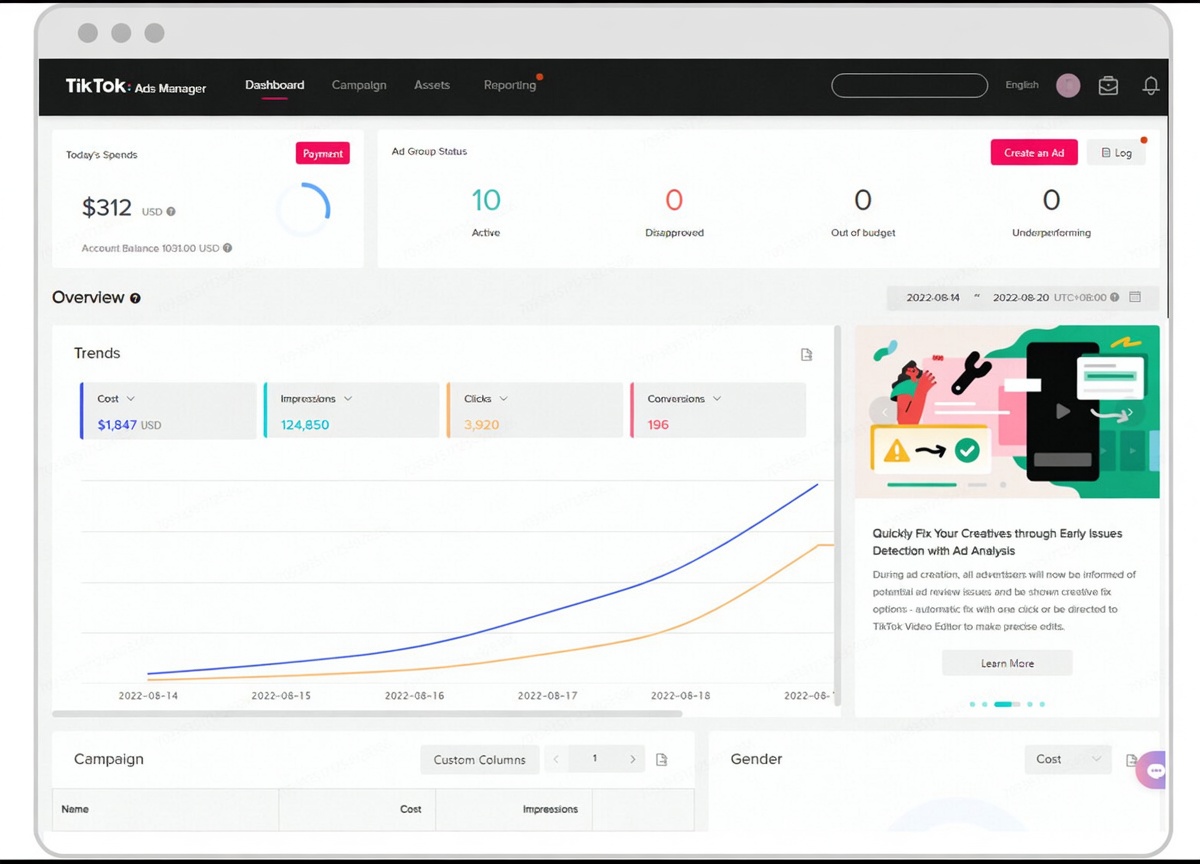
TikTok has fundamentally changed ecommerce advertising. The platform rewards entertainment, speed, authenticity, and platform-native creative far more aggressively than polished traditional advertising.
Many ecommerce brands fail on TikTok because they try to create ads rather than content. The strongest TikTok ecommerce campaigns often resemble organic videos, creator reviews, demonstrations, and tutorials — rather than highly polished commercials.
TikTok can be extremely effective for:
• Consumer products and trend-driven items
• Visually demonstrable products and impulse purchases
• Founder-led brands and viral product momentum
However, TikTok demands very high creative output and rapid testing cycles — creative fatigue often happens faster here than on other platforms. Brands succeeding on TikTok usually have aggressive content production systems, creator partnerships, and fast editing workflows.
Increasingly, TikTok content is repurposed across Meta Reels, YouTube Shorts, email campaigns, and landing pages — making it one of the most leverageable ecommerce content systems.
YouTube occupies a unique position within ecommerce advertising because it combines entertainment, education, search intent, and long-form attention. Unlike short-form platforms, YouTube often allows brands to build deeper trust and stronger product understanding.
This makes YouTube particularly effective for educational products, premium and technical products, and storytelling-heavy brands. YouTube ads are commonly used for:
• Product demonstrations and explainer videos
• Customer testimonials and educational content
• Remarketing and consideration-stage marketing
One of YouTube's biggest advantages is intent layering — users actively search for product reviews, comparisons, tutorials, and buying advice before making purchase decisions. YouTube also integrates strongly with broader Google advertising systems, particularly Performance Max and branded search behaviour.
For many brands, YouTube is less about immediate conversions and more about trust-building, brand authority, and education. Its impact is often underreported inside attribution platforms.
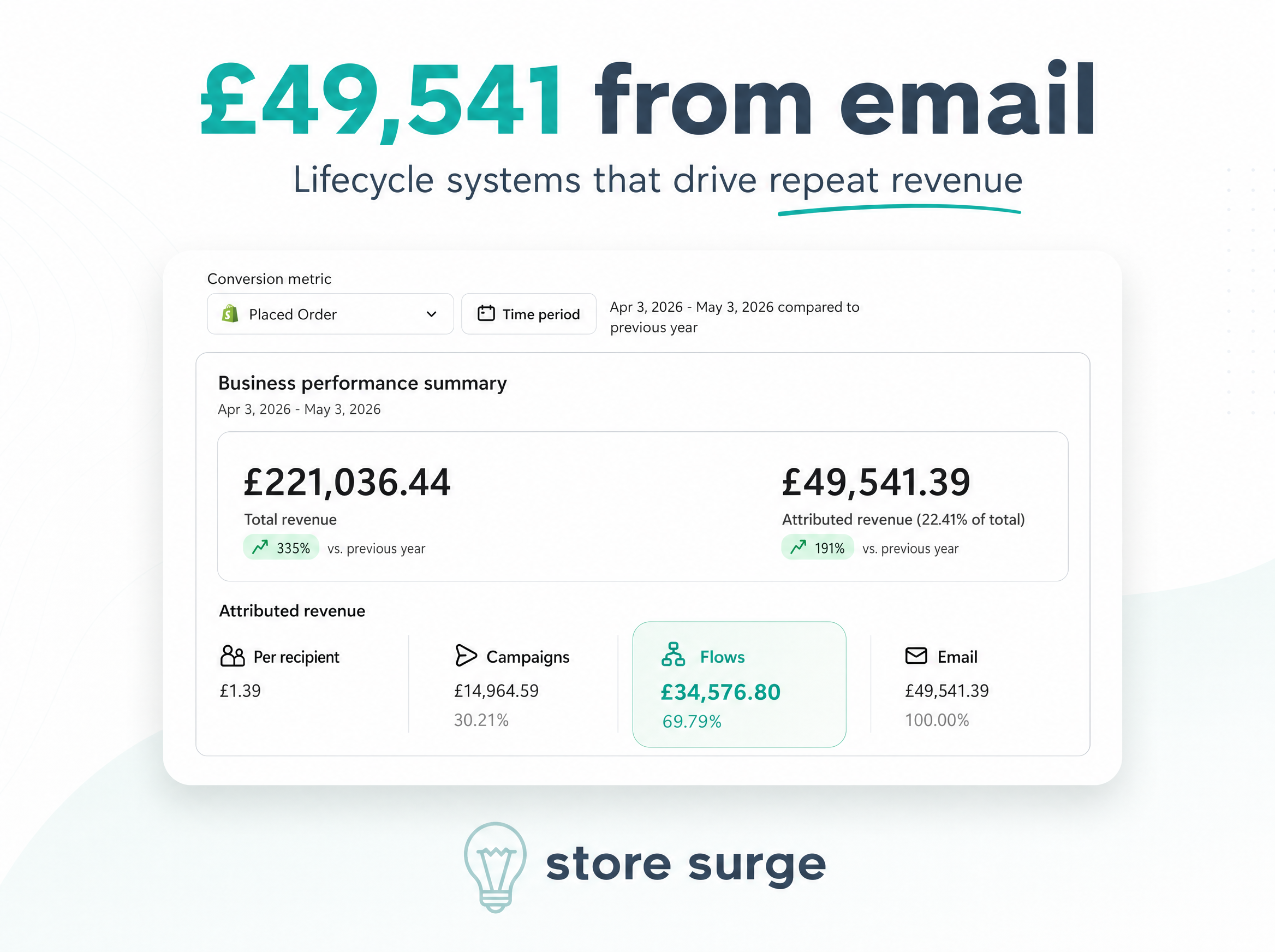
Many ecommerce brands focus almost entirely on acquisition while neglecting retention. This is often a major strategic mistake.
As acquisition costs rise, profitability increasingly depends on repeat purchases, email flows, and lifetime value expansion — not just initial conversions. Strong ecommerce retention systems typically include:
• Abandoned checkout and welcome sequences
• Post-purchase education and replenishment flows
• Upsell campaigns and VIP or loyalty offers
Email marketing remains one of the highest ROI channels available to ecommerce brands because it targets owned audiences rather than rented platform traffic. Modern ecommerce retention increasingly overlaps with SMS, loyalty systems, community building, and creator-led communication.
The strongest ecommerce brands think in terms of customer journeys, lifecycle marketing, and audience ownership — because sustainable ecommerce growth depends on maximising lifetime value rather than endlessly purchasing new traffic.
One of the biggest misconceptions in ecommerce advertising is that scaling comes from finding a winning ad.
In reality, successful ecommerce growth comes from building repeatable systems. The brands that scale consistently are rarely relying on one viral ad, one audience, or one platform. Instead, they build operational structures capable of:
• Testing rapidly and learning quickly
• Producing creative consistently at scale
• Improving conversion rates and increasing customer lifetime value
• Building analytics and operational feedback loops
This is why many high-performing ecommerce brands increasingly operate more like media companies than traditional advertisers. The structure behind the campaigns matters just as much as the campaigns themselves.
A few years ago, many ecommerce advertisers relied heavily on narrow interests, stacked behaviours, and hyper-specific targeting. That approach has become far less important.
Modern advertising platforms — particularly Meta and TikTok — are now heavily algorithm-driven and perform best when advertisers provide strong creative and clear conversion signals rather than excessive targeting restrictions.
As a result, many successful ecommerce brands now run campaigns using broad targeting, minimal audience segmentation, and algorithm-led optimisation. The reasoning is straightforward: modern algorithms are often better at finding buyers than advertisers manually selecting interests.
That said, broad targeting only works when paired with:
• Strong creative and compelling offers
• Clear messaging and effective landing pages
• Consistent conversion data and clean tracking
Many advertisers blame targeting when the real issue is creative quality. A weak ad shown to a perfect audience is still a weak ad.
Creative testing has become one of the most important components of modern ecommerce advertising. In many cases, the difference between a profitable and unprofitable campaign is not targeting or campaign structure — it is creative quality.
Modern ecommerce creative testing systems involve rapidly testing multiple hooks, opening scenes, creators, offers, and ad lengths — rather than producing a single perfect ad. This matters because creative fatigue happens quickly, platform behaviour changes constantly, and audience attention shifts rapidly.
The strongest ecommerce teams think in terms of testing velocity, creative throughput, and iteration speed. Many scaling brands produce:
• UGC and customer testimonials continuously
• Founder-led content and creator collaborations
• Reaction-style videos and educational content
Increasingly, AI tools are also accelerating this process through video repurposing, script generation, editing assistance, and workflow automation. The brands that scale fastest are often those capable of producing and testing ecommerce creative faster than competitors.
Many ecommerce brands underestimate the importance of the offer itself. Even strong creative cannot consistently save a weak offer.
Offer positioning — including pricing, bundles, guarantees, urgency, and perceived value — is what makes an ecommerce ad feel compelling rather than resistible. Strong offers reduce friction. Weak offers force advertisers to rely on increasingly expensive persuasion.
High-performing ecommerce brands often test:
• Bundle offers and free shipping thresholds
• Limited launches, bonuses, and subscriptions
• Seasonal angles and creator collaborations
Offer positioning also heavily influences click-through rate, conversion rate, average order value, retention, and overall profitability. This is one reason why many brands with mediocre products still scale effectively — their offer positioning is significantly stronger.
Many ecommerce campaigns fail after the click rather than before it. Brands often focus heavily on ads and creative while neglecting the landing page experience.
In reality, ecommerce advertising performance and landing page quality are deeply connected. Strong ecommerce landing pages typically include:
• Clear product positioning, fast loading speed, and strong imagery
• Social proof, reviews, and visible trust signals
• Clear CTAs, mobile optimisation, and easy navigation
The transition between ad creative, landing page, and checkout should feel seamless. If an ad creates one expectation and the landing page delivers another, conversion rates will suffer.
Modern ecommerce landing pages increasingly incorporate video, UGC, creator content, comparison sections, and FAQs — because consumers increasingly expect validation before purchasing. Even relatively small improvements in conversion rate can dramatically improve profitability across paid channels.
One of the most common ecommerce advertising mistakes is over-focusing on acquisition while underinvesting in retention.
As acquisition costs rise, retention becomes increasingly important. Many ecommerce brands can afford higher customer acquisition costs because they have stronger email systems, repeat purchase behaviour, and post-purchase flows — not simply cheaper ads.
Strong retention systems typically include:
• Welcome flows and abandoned checkout sequences
• Post-purchase education and replenishment reminders
• Upsell campaigns, launch emails, and loyalty systems
Retention also increasingly overlaps with content marketing, SMS marketing, creator content, and community building. The strongest ecommerce brands don't just ask how to acquire customers — they ask how to maximise customer value over time. That mindset shift is often what separates scalable ecommerce businesses from brands trapped in constant acquisition pressure.
Many ecommerce brands assume better advertising performance comes from more budget, better targeting, or campaign restructuring. In reality, most modern ecommerce performance problems are creative problems.
Platforms like Meta and TikTok increasingly optimise delivery automatically. Which means the real competitive advantage in ecommerce performance marketing now comes from:
• Attention, storytelling, and positioning
• Creative execution and speed of iteration
• Authentic content that communicates value fast
The brands scaling most effectively today are usually not producing one perfect advert. They are producing large volumes of content, multiple creative angles, constant variations, and fast testing cycles. Understanding what actually makes ecommerce ads convert is now one of the most important skills in ecommerce growth.
The hook is often the single most important part of an ecommerce advert. If the opening fails to capture attention, the rest of the content rarely matters — especially on TikTok, Instagram Reels, Meta feeds, and YouTube Shorts, where users scroll extremely quickly.
Strong hooks interrupt scrolling behaviour. They create curiosity, emotional response, surprise, relatability, or urgency. Effective ecommerce hooks often include:
• Strong opinions or unexpected problem statements
• Visual contrast, demonstrations, or transformation moments
• Instantly clear value propositions within the first few seconds
The strongest hooks usually communicate what the product is, why it matters, and why the viewer should keep watching — all within seconds. Many ecommerce brands lose performance simply because introductions are too slow, branding appears too early, or pacing is weak. Modern attention spans reward speed and clarity.
UGC (user-generated content) has become one of the dominant creative formats in ecommerce advertising. Consumers increasingly trust creators, customers, demonstrations, and testimonials more than polished corporate advertising — which is why UGC often outperforms traditional studio-style content.
Effective UGC commonly includes:
• Product demonstrations and before-and-after scenarios
• Reviews, reactions, and tutorials
• Problem/solution storytelling and day-in-the-life content
One of the biggest mistakes brands make with UGC is overproducing it. Once content feels overly scripted or excessively polished, performance often drops. The strongest ecommerce UGC feels natural, fast-paced, believable, and emotionally genuine.
Increasingly, brands are building creator networks to maintain high creative output across platforms — allowing them to continuously test new hooks, new personalities, new editing styles, and new messaging angles at scale.
Founder-led content has become increasingly powerful within ecommerce advertising. Consumers are increasingly drawn toward transparency, personality, storytelling, authenticity, and human connection — and founder content helps brands feel more trustworthy, more relatable, and less corporate.
Strong founder-led content often includes:
• Product development insights and behind-the-scenes content
• Opinions, educational content, and brand mission storytelling
• Customer interactions and industry observations
Founder content tends to work particularly well for premium brands, challenger brands, niche products, and expertise-led businesses — because it creates stronger emotional attachment. Importantly, it is also highly repurposable. A single founder video can become Meta ads, TikTok clips, email content, landing page assets, and YouTube Shorts — creating a scalable content ecosystem rather than isolated ads.
Consumers rarely want to feel like they are taking unnecessary risks when buying online. Social proof reduces uncertainty and increases trust — which is why successful ecommerce brands heavily incorporate it throughout their advertising systems.
Social proof can appear in many forms:
• Review overlays, UGC clips, and customer testimonials
• Creator endorsements and press mentions
• Usage statistics and before-and-after results
Strong social proof increases trust, credibility, conversion rate, and perceived legitimacy. Importantly, modern social proof often performs best when integrated naturally into content rather than presented as overly polished corporate messaging. Consumers increasingly trust signals that feel organic, casual, believable, and platform-native.
As ecommerce advertising becomes more competitive, visual identity becomes increasingly important. Many brands underestimate how much colour, typography, editing style, motion, framing, and pacing influence consumer perception.
Strong visual identity helps brands become recognisable, memorable, and differentiated. The strongest ecommerce brands maintain consistency across:
• Ad creative, website design, and email campaigns
• Social content, packaging, and landing pages
• All touchpoints throughout the customer journey
Premium-looking brands often command significantly higher perceived value even when products are relatively similar. Importantly, visual consistency should not become creative rigidity — brands still need variation, testing, and experimentation while maintaining recognisable brand characteristics.
Creative velocity is increasingly one of the biggest competitive advantages in ecommerce advertising. Many brands still operate with slow approval systems, infrequent shoots, and limited creative output — which creates major problems because modern platforms reward testing, iteration, freshness, and content volume.
Creative fatigue now happens quickly. Ads that perform well today may decline significantly within weeks. The strongest ecommerce brands therefore build systems capable of:
• Producing large volumes of creative and rapid variations
• Continuous testing and fast editing cycles
• Generating new hooks, angles, and creators at speed
Brands capable of generating new hooks, new edits, new angles, and new offers at speed often outperform brands with larger budgets but slower systems.
Increasingly, ecommerce advertising is becoming less about producing a few great ads and more about building scalable creative infrastructure capable of adapting continuously to changing platform behaviour and audience attention.
Many ecommerce brands assume poor advertising performance is caused by platform changes, rising CPMs, or bad luck. In reality, most underperforming ecommerce campaigns suffer from a relatively small number of recurring operational problems.
What makes this difficult is that these issues are usually interconnected. Weak creative reduces conversion rates, rising acquisition costs reduce scaling flexibility, and poor ecommerce retention marketing then destroys profitability further. Many brands end up treating symptoms rather than fixing underlying structural issues.
The strongest ecommerce brands focus on systems, testing, retention, and creative infrastructure — rather than chasing short-term advertising hacks. Understanding these mistakes can often improve ecommerce ROAS faster than launching entirely new campaigns.
One of the most common ecommerce advertising mistakes is scaling budget before campaigns have proven stable. Many brands increase spend aggressively after a few profitable days or a temporary performance spike — which often leads to rising CPAs, algorithm disruption, and poor profitability.
Modern advertising platforms require sufficient conversion data, creative stability, and operational consistency before scaling tends to work reliably. Successful scaling usually depends on:
• Stable conversion rates and repeatable creative systems
• Healthy margins and effective ecommerce retention marketing
• Strong landing pages and a clear view of blended profitability
The strongest ecommerce brands scale more methodically — testing creative continuously, gradually increasing spend, and expanding creative variation — rather than simply forcing higher budgets into unstable campaigns. Attempting to scale before systems are ready usually creates volatility rather than sustainable growth.
Most ecommerce advertising problems are ultimately creative problems. Brands often spend enormous amounts of time adjusting targeting, changing campaign structures, and testing bidding strategies — while neglecting the quality of the actual content.
Modern platforms increasingly reward strong hooks, engaging visuals, native-feeling content, and emotional storytelling. Weak creative typically results in low CTRs, rising CPMs, higher acquisition costs, and rapid creative fatigue.
In modern ecommerce advertising, creative is no longer a one-time asset — it is an ongoing operational system. The strongest brands maintain:
• Creator networks and continuous UGC pipelines
• Regular content shoots and fast editing workflows
• Aggressive ecommerce creative testing systems
Importantly, strong ecommerce creative is not always highly polished. In many cases, authenticity, pacing, relatability, and storytelling matter far more than production budget.
Many ecommerce brands focus almost entirely on customer acquisition while neglecting retention — often one of the biggest profitability mistakes in ecommerce. As acquisition costs continue rising, retention becomes increasingly important.
Strong ecommerce retention marketing allows brands to recover acquisition costs faster, improve customer lifetime value, and scale more aggressively without relying entirely on new customer acquisition. Yet many brands still operate with weak welcome flows, poor abandoned checkout systems, and limited post-purchase communication — creating enormous revenue leakage.
Strong ecommerce retention systems typically include:
• Welcome sequences and abandoned checkout flows
• Post-purchase education and replenishment reminders
• Upsell campaigns, launch emails, and loyalty offers
Retention also improves advertising performance indirectly. Brands with stronger lifetime value can often afford higher acquisition costs and more aggressive testing than competitors relying purely on first-purchase profitability.
Tracking problems create major operational issues for ecommerce brands. Many businesses make decisions using incomplete or misleading data — a problem made worse by privacy changes, attribution limitations, and cross-device behaviour.
Modern ecommerce brands increasingly require blended reporting, first-party data, and server-side tracking rather than relying solely on platform dashboards. Poor tracking often leads to incorrect scaling decisions, wasted budget, and false conclusions about ecommerce performance marketing.
Many brands also focus too heavily on platform-reported ROAS while ignoring:
• Contribution margin and retention profitability
• Blended customer acquisition cost (CAC) across channels
• Lifetime value and operational efficiency metrics
The strongest ecommerce operators increasingly evaluate performance holistically rather than through isolated platform metrics. Tracking is no longer simply a technical setup — it is part of strategic decision-making.
One of the fastest ways to weaken an ecommerce brand is blindly copying competitors across ad creative, landing pages, offers, and messaging. While learning from successful brands is valuable, imitation without strategic understanding usually leads to weak differentiation, generic positioning, and creative sameness.
Modern consumers are exposed to enormous volumes of similar-looking ecommerce content. The brands that stand out are usually those with distinct positioning, recognisable visual identity, clear opinions, and unique storytelling — rather than those endlessly copying whatever currently appears popular.
Many trends in ecommerce advertising also become saturated extremely quickly. By the time a format becomes widely copied, performance often begins declining. The strongest ecommerce brands focus on:
• Adaptation, experimentation, and iteration
• Building original positioning and brand personality
• Learning from successful campaigns without cloning them
AI is rapidly transforming how ecommerce brands create, manage, and scale advertising systems. Just a few years ago, many ecommerce marketing teams relied heavily on manual content production, traditional editing workflows, static reporting, and slow campaign iteration.
That landscape is changing quickly. AI is now influencing almost every part of ecommerce advertising — from creative production and copywriting to analytics, workflow automation, and content repurposing. Importantly, AI is not simply making existing workflows faster. It is changing what is operationally possible.
Small ecommerce teams can now produce larger volumes of creative, more content variations, and faster campaign iterations without requiring massive internal teams. AI is becoming less of a tool and more of an operational layer across ecommerce growth systems.
Creative production has historically been one of the biggest bottlenecks in ecommerce advertising. Producing videos, graphics, copy, and ad variations traditionally required significant time, coordination, and production budget. AI is changing this rapidly.
Modern AI tools can now assist with image generation, video editing, script generation, hook creation, ad copy, subtitle generation, and voiceovers — allowing ecommerce brands to dramatically increase creative output. The biggest advantage is not necessarily lower cost. It is increased ecommerce creative testing velocity.
Brands capable of generating more hooks, more edits, and more creative concepts can learn faster than competitors. AI creative tools are also helping brands:
• Localise content and resize assets for different placements
• Repurpose footage into platform-specific edits
• Accelerate production workflows and creative ideation
However, AI-generated content still requires human direction. The strongest ecommerce creative combines AI-assisted production with human strategic oversight, brand understanding, platform-native instincts, and real customer psychology. AI can accelerate production — it cannot fully replace strong creative judgment.
One of the most powerful uses of AI in ecommerce advertising is content repurposing. Historically, brands often created content for a single platform or campaign. Today, leading ecommerce brands build systems where one piece of content can become Meta ads, TikTok videos, YouTube Shorts, email content, landing page assets, blog content, and organic social posts.
AI tools now make repurposing significantly easier through transcription, summarisation, clipping, automated formatting, and content extraction. For example, a single founder video can now become a TikTok clip, a Meta ad, a blog article, an email campaign, and a YouTube Short — within a relatively short production cycle.
This system-based approach is becoming increasingly important because modern ecommerce advertising depends heavily on:
• Content volume and creative freshness across platforms
• Maximising the ROI of every piece of content produced
• Distribution at scale without proportional production costs
Brands that maximise content leverage often outperform brands constantly producing isolated assets from scratch.
Reporting and analytics have traditionally consumed significant time within ecommerce marketing teams. Many businesses still rely on manual spreadsheets, fragmented dashboards, and disconnected platform reporting. AI is increasingly helping automate these workflows.
Modern reporting systems can now aggregate platform data, identify trends, summarise performance, highlight anomalies, and generate insights automatically — reducing operational friction and allowing teams to focus more heavily on strategy, creative, and ecommerce conversion optimisation.
However, automation does not remove the need for strategic interpretation. The advantage increasingly comes from:
• Understanding the right metrics and interpreting patterns correctly
• Connecting data to operational and creative decisions
• Building blended reporting across channels rather than relying on platform ROAS
One of the biggest long-term shifts in ecommerce advertising is the emergence of integrated AI workflow systems. Rather than using isolated tools, many ecommerce brands are beginning to build interconnected operational systems that connect content production, paid media, email marketing, analytics, reporting, and creative workflows into unified pipelines.
The biggest ecommerce advantage AI creates is often not better ads — it is faster execution. The brands winning in modern ecommerce growth marketing are increasingly those capable of producing content faster, testing faster, learning faster, and adapting faster than competitors.
Over the coming years, the gap between brands with integrated AI systems and brands relying entirely on manual workflows is likely to widen significantly. The ecommerce brands that combine:
• Strong creative instincts and operational systems
• AI-assisted workflows and rapid testing culture
• Platform-native understanding and commercial discipline
...will likely hold major competitive advantages as advertising platforms continue evolving.
Successful ecommerce advertising is not built on a single platform or tool. The strongest brands typically operate using an integrated stack that combines acquisition, retention, analytics, creative production, reporting, and workflow systems.
Modern ecommerce growth is increasingly operational. Brands that scale effectively usually have cleaner systems, better visibility, stronger workflows, and tighter feedback loops — rather than simply larger advertising budgets. Importantly, tools alone are not the advantage. The advantage comes from how systems are connected, how quickly teams can execute, and how effectively insights become action.
For many ecommerce brands, Meta remains the core acquisition platform. Meta is particularly effective because it combines enormous scale, algorithmic optimisation, highly visual placements, and fast creative testing environments — across Facebook, Instagram, Reels, and Stories.
Modern Meta ads for ecommerce increasingly depend on creative quality, testing velocity, and clean conversion signals — rather than highly complex audience targeting. Many successful ecommerce brands now run simplified account structures focused heavily on broad targeting, strong creative systems, and rapid iteration. The platform rewards brands capable of continuously producing:
• Fresh hooks and new creator content at scale
• Product demonstrations and platform-native assets
• UGC-driven creative and founder-led content
Google plays a very different role within the ecommerce advertising stack. Where Meta primarily generates demand, Google often captures existing intent. For ecommerce brands, Google Ads ecommerce performance is typically strongest for Shopping campaigns, branded search, high-intent searches, and bottom-of-funnel traffic.
A strong Google setup usually includes Google Merchant Center, Shopping campaigns, branded search campaigns, Performance Max, conversion tracking, and clean product feeds. Feed quality is especially important — product titles, descriptions, imagery, and pricing heavily influence results.
Google also becomes increasingly important as brands grow, because consumers often search for reviews, compare pricing, and validate trust before purchasing. Strong ecommerce brands treat Meta and Google as complementary systems:
• Meta for demand generation and top-of-funnel awareness
• Google for demand capture and high-intent conversion
• Both channels informing each other through shared audience behaviour
As acquisition costs rise, retention becomes increasingly important — which is why email marketing platforms like Klaviyo are now central to many ecommerce growth systems. Klaviyo allows ecommerce brands to build automated flows, segmentation systems, and full customer lifecycle automation.
Many ecommerce brands still dramatically underutilise email marketing, which is often a major profitability issue. As paid acquisition becomes more expensive, retention increasingly determines customer lifetime value, scaling flexibility, and cash flow efficiency. Strong Klaviyo systems typically include:
• Welcome flows and abandoned checkout sequences
• Post-purchase flows, replenishment reminders, and win-back campaigns
• VIP segmentation, launch campaigns, and loyalty offers
Klaviyo also integrates strongly with Shopify, Meta, and product feeds — allowing brands to create increasingly personalised customer journeys. The strongest ecommerce businesses build full lifecycle communication systems rather than simply sending email campaigns.
Many ecommerce brands make decisions using incomplete or misleading data — a problem that becomes increasingly dangerous as advertising complexity grows. Modern ecommerce advertising spans multiple platforms, multiple devices, multiple attribution models, and fragmented user journeys.
A strong ecommerce analytics stack often includes Google Analytics 4, server-side tracking, Google Tag Manager, blended reporting, and first-party data collection. One of the biggest ecommerce mistakes is focusing solely on front-end metrics while ignoring:
• Contribution margin and retention profitability
• Blended customer acquisition cost across all channels
• Cohort tracking, lifecycle analysis, and operational efficiency
The strongest operators use analytics to guide creative decisions, improve retention, identify profitable customer segments, and optimise operational systems — rather than simply monitoring ad spend.
Creative production is increasingly becoming the operational bottleneck within ecommerce advertising. As platforms reward freshness, testing, iteration, and content velocity, brands require systems capable of producing ecommerce creative consistently.
AI creative tools are becoming particularly important because they dramatically increase content throughput, testing speed, and production efficiency. The strongest ecommerce brands build creative systems around:
• UGC pipelines and creator networks
• AI-assisted editing and repurposing workflows
• Rapid iteration cycles rather than traditional production shoots
Importantly, tools alone are not enough. The strongest creative systems still depend on strong strategic direction, customer understanding, platform-native instincts, and fast operational execution. AI and creative tooling are amplifiers — they work best when paired with strong positioning, clear messaging, and disciplined ecommerce creative testing.
Many ecommerce agencies focus heavily on reporting, meetings, and surface-level optimisation — while failing to address the underlying systems that actually drive long-term growth.
At Store Surge, ecommerce growth is approached differently. The focus is not simply running ads, increasing spend, or launching campaigns. The focus is building scalable ecommerce growth systems.
Modern ecommerce performance increasingly depends on how effectively brands combine creative production, paid media, retention, analytics, and workflow systems — rather than relying on isolated tactics. This is why many ecommerce brands struggle even when products are strong and budgets increase: the operational infrastructure behind growth is often weak. Sustainable ecommerce advertising requires:
• Strong creative systems and consistent ecommerce creative testing
• Clear positioning, fast execution, and operational discipline
• Strong retention infrastructure and commercially intelligent scaling
The brands scaling most effectively today are usually the brands capable of learning and adapting faster than competitors. That requires systems, not just campaigns.
One of the biggest problems in modern ecommerce marketing is the disconnect between strategy, execution, and operational reality. Many brands work with agencies where communication is filtered through account managers, execution is fragmented, and reporting replaces meaningful strategy.
Operator-led marketing is different. It means working with people who actively manage campaigns, understand platform behaviour, work directly inside ad accounts, analyse creative performance, and think commercially rather than theoretically.
Modern ecommerce advertising changes extremely quickly — platform behaviour shifts constantly, creative trends evolve rapidly, and consumer attention changes continuously. At Store Surge, the emphasis is on:
• Hands-on growth systems and rapid creative iteration
• Operational clarity and commercially intelligent ecommerce ad strategy
• Practical execution experience, not generic marketing theory
The goal is not simply traffic. It is profitable ecommerce growth.
Many ecommerce brands do not necessarily lack ideas. They lack operational systems capable of executing consistently — and this is increasingly one of the biggest differentiators in ecommerce growth.
Modern ecommerce performance depends heavily on content velocity, testing speed, workflow efficiency, retention infrastructure, and operational feedback loops. The strongest brands build systems around content production, ad testing, creative iteration, email marketing, and AI workflows — rather than treating each activity separately.
At Store Surge, the focus is building integrated growth infrastructure rather than isolated campaigns. That may include:
• Meta advertising, Google Ads ecommerce, and Klaviyo retention systems
• AI-assisted workflows and content repurposing pipelines
• Creative testing infrastructure, reporting dashboards, and landing page optimisation
Execution speed matters. The ecommerce brands capable of testing faster, producing creative faster, and learning faster often outperform competitors with significantly larger budgets.
Many ecommerce brands still treat creative as an occasional production task. In reality, creative has become one of the central operational functions within modern ecommerce advertising. Platforms increasingly reward creative freshness, engagement, storytelling, platform-native content, and testing velocity.
One of the biggest issues many ecommerce businesses face is inconsistent creative production — running the same ads too long, producing content too infrequently, and lacking proper ecommerce creative testing systems. As competition increases, this becomes a major weakness.
The brands scaling most effectively today operate high-volume creative systems built around:
• UGC, creator content, and founder-led content
• AI-assisted production and rapid editing workflows
• Content repurposing systems that maximise every asset created
AI allows brands to accelerate production, repurpose content, generate variations, and increase testing velocity without requiring enormous internal teams. But technology alone is not the advantage. The real advantage comes from combining systems, execution, creative strategy, and operational discipline into a scalable ecommerce growth engine.
That is increasingly what modern ecommerce advertising requires.
Ecommerce advertising has changed dramatically. The era of simple targeting hacks, isolated ad campaigns, and minimal creative requirements is largely over.
Modern ecommerce growth increasingly depends on creative systems, operational efficiency, retention, testing velocity, content infrastructure, and AI-assisted workflows. The brands winning in 2026 are typically not the brands with the biggest budgets — they are often the brands with better systems, stronger ecommerce creative, faster execution, and higher testing velocity.
Successful ecommerce advertising is no longer simply about buying traffic. It is about building a scalable growth engine capable of continuously producing content, testing ideas, learning from data, improving ecommerce conversion optimisation, and increasing customer lifetime value.
As platforms become increasingly algorithm-driven, the competitive advantage continues shifting toward creative quality, operational speed, workflow infrastructure, and content systems. The ecommerce brands that adapt fastest to this reality are likely to hold major advantages over the coming years.
For businesses willing to invest in creative infrastructure, systems, retention, and operational execution, the opportunities remain enormous.
Better creative. Better systems. Better execution. Faster learning cycles.
That is what modern ecommerce advertising has become.
