
Key Takeaways
B2B SaaS growth has become significantly more competitive over the past few years. Customer acquisition costs continue rising across paid channels, while buyers are spending longer researching products before speaking to sales teams.
As a result, many SaaS companies are shifting away from relying entirely on short-term paid acquisition and focusing more heavily on scalable inbound systems.
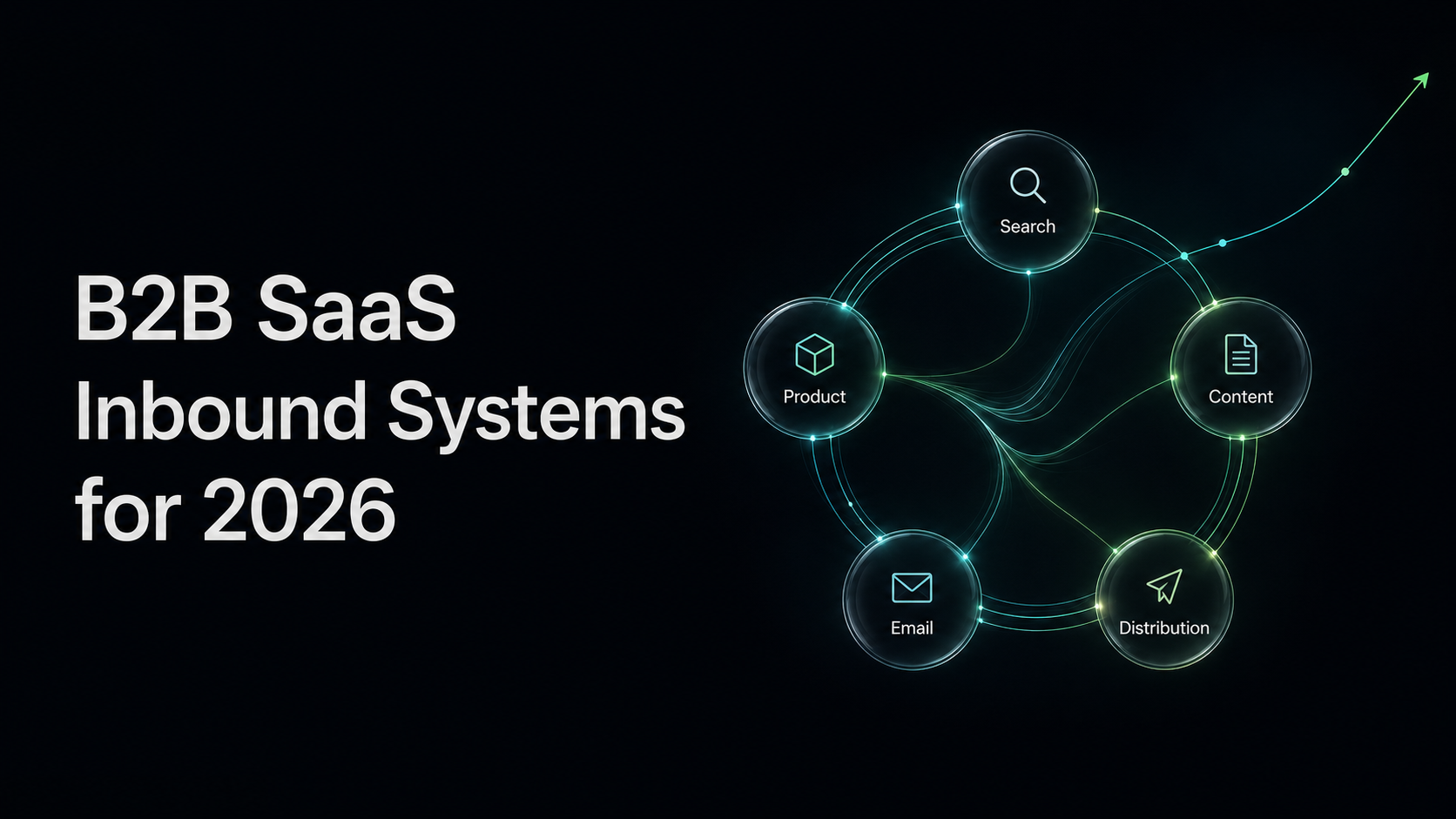
Modern inbound marketing is no longer just about publishing blog posts. The strongest SaaS brands are building connected growth engines that combine content, SEO, distribution, lifecycle marketing and product positioning into a repeatable acquisition framework.
This shift is particularly important for lean SaaS teams looking to generate consistent pipeline growth without endlessly increasing advertising spend.
An inbound system is a structured marketing framework designed to consistently attract, educate and convert potential customers over time.
Rather than relying on isolated blog posts or one-off campaigns, effective SaaS inbound marketing connects multiple channels into a single growth engine.
This often includes:
The goal is to create a system where content, acquisition and customer communication continuously support each other instead of operating separately.
Customer acquisition in B2B SaaS is becoming increasingly competitive, expensive and saturated. Paid media costs continue rising across platforms like Google, LinkedIn and Meta, while many outbound channels are delivering weaker response rates than they did only a few years ago. At the same time, buyers are becoming more selective about which companies they trust.
The rapid growth of AI-generated content has also created a wave of repetitive, low-quality material across search engines and social platforms. Simply publishing more content is no longer enough to differentiate a SaaS brand or build meaningful authority.
Modern SaaS buyers now spend significant time researching products independently before booking sales calls. This often involves reading comparison articles, reviewing case studies, consuming founder-led content and exploring educational product resources long before speaking with a salesperson.
As a result, trust, positioning and authority are becoming increasingly important within modern SaaS inbound marketing strategies.
Search-focused content helps SaaS companies generate compounding inbound traffic over time. This typically includes:
The goal is to attract buyers already searching for solutions.
Traffic alone is rarely enough. Strong inbound systems convert visitors into subscribers through:
This creates an owned audience that can be nurtured over time.
Many SaaS companies underutilise their own product within marketing content.
High-performing brands often create:
This helps shorten the gap between discovery and activation.
Trust plays a major role in B2B SaaS conversion, particularly when buyers are evaluating multiple competing platforms. Strong authority assets such as customer success stories, performance data, industry research and founder insights can help strengthen credibility and reduce perceived risk during the buying process.
Inbound acquisition does not stop after the initial conversion. Effective lifecycle automation helps SaaS companies improve activation, retention, customer engagement and expansion revenue through ongoing communication and onboarding flows. In many cases, this is where substantial long-term SaaS growth is created.
Strong SaaS inbound systems maximise the value of every asset produced. A single piece of content can often be repurposed across LinkedIn, email campaigns, SEO articles and short-form video, allowing smaller teams to maintain consistent output without dramatically increasing production workload.
Many SaaS companies assume inbound marketing requires a large content team, expensive production setup or substantial ongoing budget. In reality, some of the most effective inbound systems are built by small, highly efficient teams focused on consistent execution and lightweight workflows.
AI-assisted tools are making this significantly easier. Smaller SaaS teams can now batch content production, repurpose assets across multiple channels and maintain a steady publishing schedule without dramatically increasing workload or operational complexity.
A single founder interview, webinar or product walkthrough can often be transformed into LinkedIn posts, SEO blog articles, email campaigns and short-form video content. This type of repurposing allows lean teams to maximise output while maintaining consistent messaging across platforms.
Founder-led content is also becoming increasingly valuable within B2B SaaS marketing. B
uyers often respond more strongly to authentic operational insights, product thinking and real-world experience than heavily polished corporate messaging.
Many SaaS companies invest heavily into content production but still struggle to generate meaningful inbound growth. In many cases, the issue is not a lack of activity, but a lack of strategic structure.
Some of the most common SaaS inbound marketing mistakes include:
Another common issue is treating SEO separately from product marketing. The strongest SaaS inbound strategies connect search intent, customer pain points and product positioning into a unified system rather than operating each channel independently.
The strongest SaaS brands are no longer treating inbound marketing as a secondary channel or isolated content function. Instead, they are building scalable inbound systems designed to compound over time and support long-term growth.
As customer acquisition becomes increasingly competitive, SaaS companies need connected growth infrastructure that combines SEO, content strategy, lifecycle marketing and product positioning into a repeatable acquisition engine rather than relying entirely on short-term campaigns.
This is particularly important for lean SaaS teams looking to generate sustainable pipeline growth without endlessly increasing advertising spend or expanding internal marketing resources.
At Store Surge, the focus is not simply on producing more content. The goal is to help SaaS brands build practical inbound systems that improve positioning, strengthen authority and create more efficient customer acquisition over time.
