In This Guide
What Is SaaS Inbound Marketing?
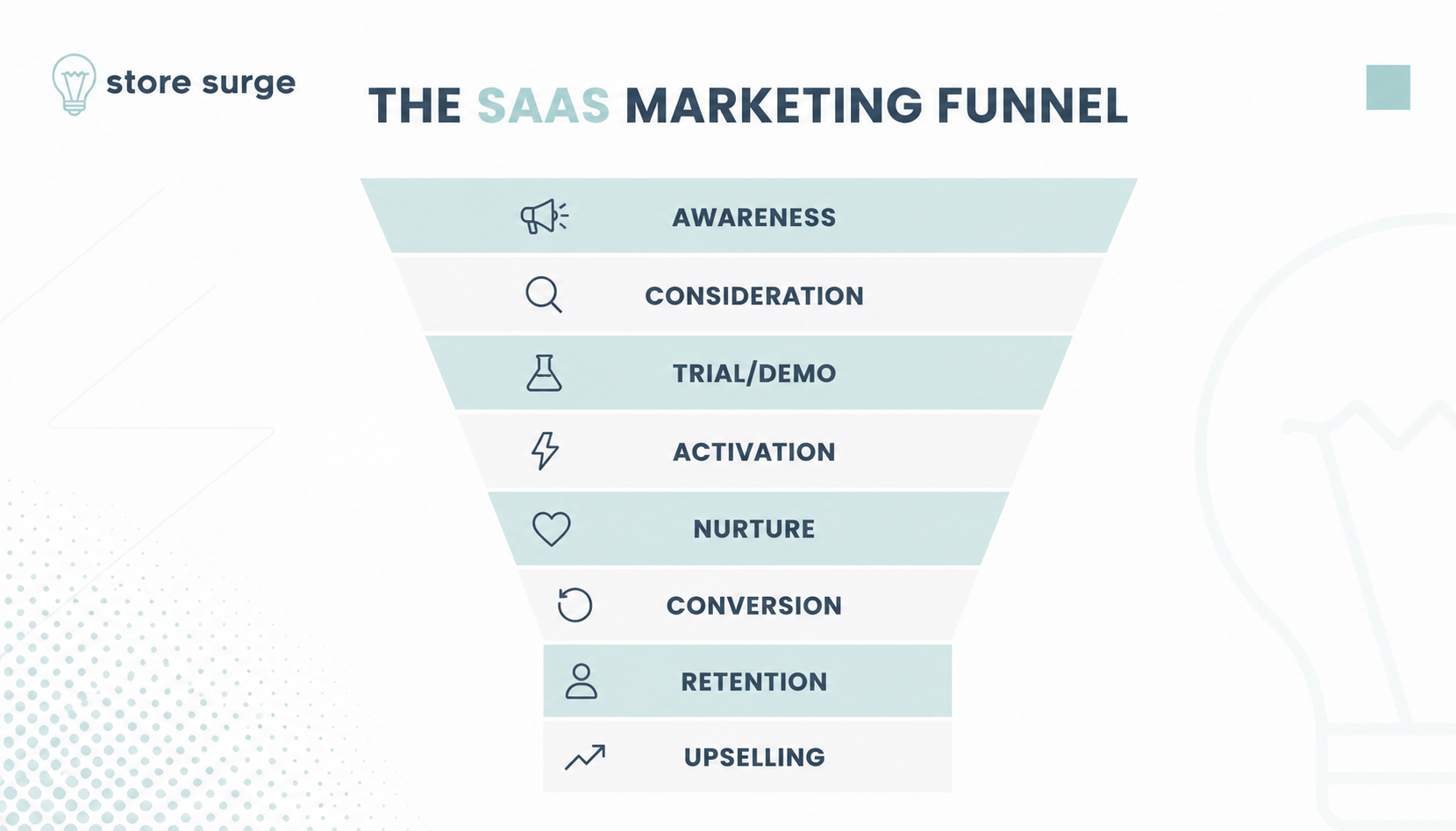
For a long time, inbound marketing was treated almost like a formula.
Write blog posts. Rank on Google. Capture emails. Nurture leads. Convert customers.
And to be fair, that approach worked surprisingly well for years.
The problem is that most SaaS markets now look completely different. Search results are saturated with AI-generated content, paid acquisition costs have risen sharply, and buyers are far more sceptical than they were even a few years ago. Publishing generic educational content is no longer enough to build a meaningful growth engine.
Modern SaaS inbound marketing has evolved far beyond “content marketing.”
Today, the strongest SaaS brands use inbound to build an interconnected acquisition system combining SEO, product positioning, lifecycle email, customer education, social proof and AI-assisted workflows. The companies growing efficiently are not simply producing more content than everyone else. They are building better systems around distribution, trust and retention.
That distinction matters.
Because most SaaS businesses still approach inbound as a content task rather than an operational advantage.
Definition of Inbound Marketing for SaaS
At its core, inbound marketing for SaaS is about attracting customers through valuable experiences instead of relying entirely on interruption-based advertising.
But in practice, modern inbound now stretches across almost the entire customer journey.
A potential customer might first discover a SaaS company through a Google search, a founder’s LinkedIn post, a comparison article, a YouTube tutorial or even an AI-generated search result. Over the following days or weeks, they may consume multiple pieces of content, join an email sequence, compare competitors, watch demos and gradually build confidence in the product before ever speaking to sales.
That process is very different from the old idea of inbound marketing being “just blogging.”
For many software companies, the product itself has become part of the inbound strategy. Companies like Notion, for example, do not simply market a productivity tool. They have built an ecosystem around templates, workflows, creator education and community-driven content. The product becomes embedded inside the educational layer of the business.
This is one of the reasons modern SaaS growth increasingly overlaps with media, education and product marketing.
The best SaaS brands are no longer just selling software.
They are building authority ecosystems around customer problems.
Why SaaS Acquisition Differs From Ecommerce

One mistake many businesses make is assuming that inbound marketing works identically across every industry.
It does not.
Ecommerce acquisition is often driven by immediacy. The buying cycle is usually shorter, emotional triggers play a larger role, and direct-response advertising can produce results very quickly. A customer might discover a product on Instagram and purchase it within minutes.
SaaS behaves differently.
Software purchases usually involve more uncertainty, more comparison and significantly more trust-building. Even lower-cost SaaS products often require users to change workflows, migrate systems or commit to recurring payments. The friction is naturally higher.
That changes the role content plays in the acquisition process.
In ecommerce, content often supports the transaction.
In SaaS, content frequently becomes part of the transaction itself.
A strong inbound strategy is not just attracting visitors. It is actively reducing uncertainty. The article explaining a workflow, the comparison page breaking down competitors, the onboarding email sequence and the tutorial video are all contributing to conversion long before a sales conversation happens.
This is why SaaS inbound marketing tends to place much greater emphasis on:
rather than simply driving traffic at scale.
The strongest SaaS brands understand that acquisition does not end when somebody signs up.
In many cases, it starts there.
The Shift From Campaigns to Systems
One of the biggest changes in modern digital marketing is the movement away from isolated campaigns and toward integrated acquisition systems.
Many SaaS businesses still operate in silos. SEO sits in one department, paid ads in another, lifecycle email somewhere else, while product marketing and customer success barely interact with the wider growth strategy.
The companies scaling most efficiently are increasingly doing the opposite.
They are connecting every part of the acquisition process into a single system.
A useful LinkedIn post becomes the basis for a long-form SEO article. That article feeds an email nurture sequence. Customer objections discovered through onboarding calls influence future content production. Search data informs paid campaigns. Product tutorials are repurposed into YouTube content and lifecycle emails.
Over time, these loops begin compounding.
The important shift is that inbound marketing is no longer being treated as a standalone channel. It is becoming the infrastructure layer connecting acquisition, education, onboarding and retention together.
This is also where AI is starting to reshape SaaS marketing most aggressively.
Not because AI magically produces better strategy, but because it dramatically increases execution speed. Teams can now repurpose content faster, test messaging faster, analyse search intent faster and scale production faster than before.
The advantage is no longer simply creating content.
It is building systems capable of continuous iteration.
Why Inbound Compounds Over Time
One reason SaaS companies continue investing heavily into inbound marketing despite rising competition is because strong inbound systems compound in a way most paid channels do not.
Paid acquisition is transactional. The moment spending slows, traffic often disappears with it.
Inbound behaves differently.
A high-performing SaaS article can continue generating search traffic, backlinks, email subscribers and demo requests years after publication. A well-structured content ecosystem gradually strengthens the authority of the entire domain, making future content easier to rank. Lifecycle email flows continue improving activation and retention long after they are built.
Over time, these assets begin stacking on top of one another.
That compounding effect becomes especially powerful when content is supported by:
This is one reason many mature SaaS businesses eventually become less dependent on paid acquisition over time. Not because paid ads stop working, but because inbound gradually creates proprietary growth assets that competitors cannot easily replicate.
An ad budget can be copied.
A trusted brand ecosystem is far harder to reproduce.
That distinction is becoming increasingly important as AI-generated content floods search results and customer acquisition costs continue rising across most major channels.
Modern SaaS inbound marketing is no longer simply a traffic strategy.
For many software companies, it is becoming the foundation of long-term growth.
The Core Components of a Modern SaaS Inbound System
One of the reasons so many SaaS inbound strategies underperform is because companies still think in channels instead of systems.
SEO sits in one corner of the business. Paid ads sit somewhere else. Product marketing is disconnected from content. Email marketing becomes a newsletter nobody reads. The result is usually a large amount of activity producing surprisingly little momentum.
The strongest SaaS brands operate differently.
They build inbound systems where each component strengthens the others. Search drives discovery, positioning improves conversion, lifecycle email increases activation, customer proof builds trust, and distribution keeps the entire engine moving. Over time, these layers begin compounding.
That compounding effect is what separates sustainable SaaS growth from temporary acquisition spikes.
Modern inbound marketing is no longer about publishing articles and hoping traffic arrives. It is about building a structured ecosystem around customer attention, trust and retention.
SEO and Topical Authority
SEO is still one of the most valuable acquisition channels in SaaS, but the mechanics of ranking have changed significantly.
A few years ago, many companies could generate meaningful traffic simply by publishing large numbers of keyword-focused articles. Most of those strategies are becoming less effective. AI has flooded search results with repetitive content, and Google has become far better at distinguishing genuine expertise from scaled content production.
As a result, topical authority matters far more than isolated keyword targeting.
Search engines increasingly reward websites that demonstrate deep understanding around a subject rather than shallow coverage across dozens of unrelated terms. This is why many successful SaaS companies now build entire content ecosystems around the operational problems their products solve.
A company selling email automation software, for example, should not only rank for terms directly related to email marketing. It should gradually build authority around retention, segmentation, customer journeys, lifecycle messaging, attribution and ecommerce growth. Over time, this creates contextual relevance across the entire domain.
This is one reason companies like Ahrefs and HubSpot continue performing so strongly in organic search. Their content strategies are not built around isolated blog posts. They are built around owning categories.
The distinction is important because modern SaaS SEO is becoming increasingly difficult to fake. Publishing generic AI-written content at scale may still generate impressions, but it rarely builds authority, links or sustained commercial traffic.
The companies winning organic search today tend to combine:
into a cohesive system.
Product Marketing
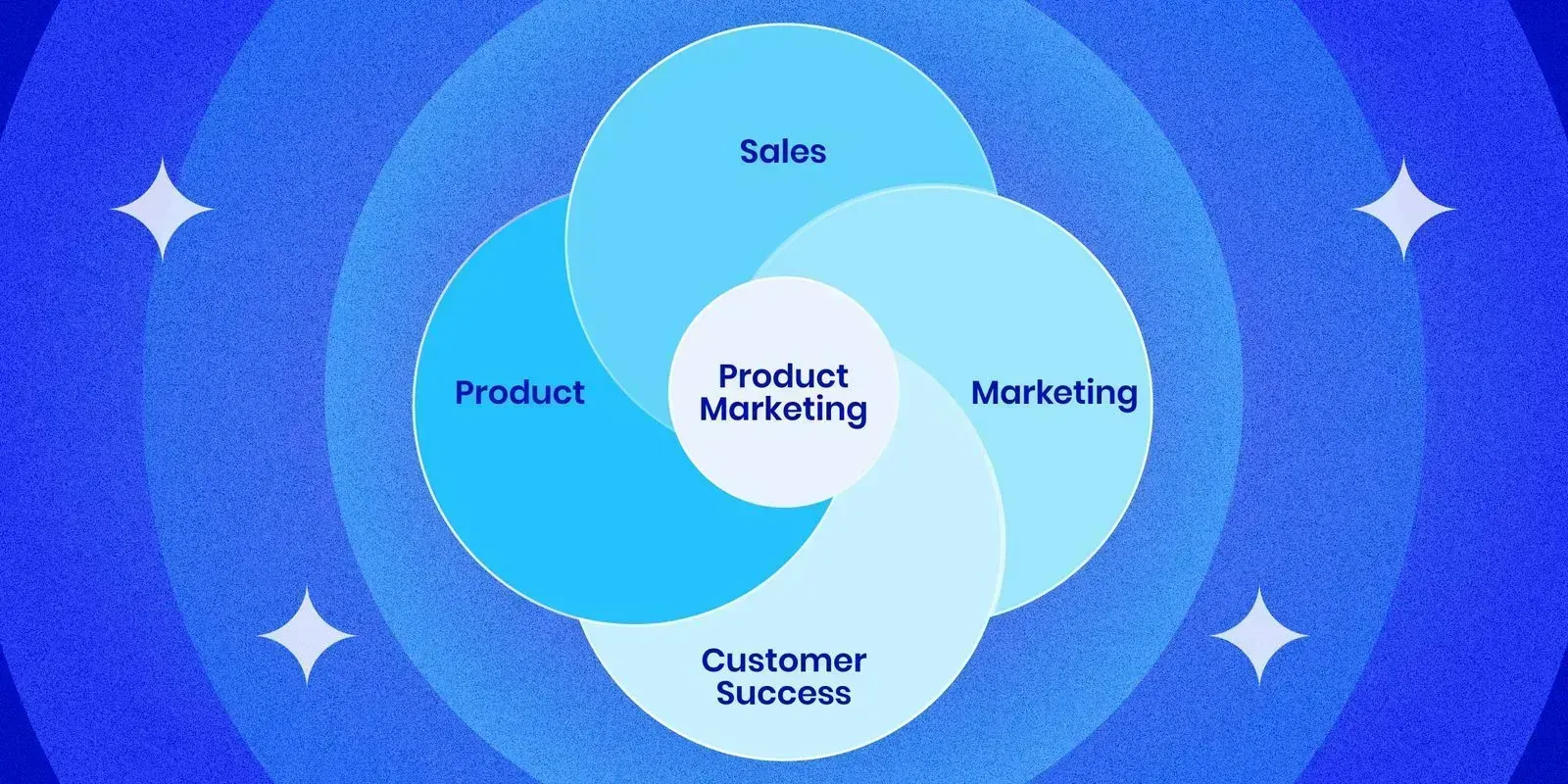
Many SaaS companies assume their growth problem is a traffic problem when it is actually a positioning problem.
This happens constantly in software markets because feature parity is becoming increasingly common. Most SaaS products now offer similar functionality on paper. As categories mature, differentiation often becomes less about capability and more about perception.
That is where product marketing becomes critical.
Strong product marketing shapes how the market understands a product. It influences the language used across landing pages, onboarding flows, sales conversations, ads and content. More importantly, it gives potential customers a reason to care.
This is one reason some SaaS brands grow despite having objectively weaker products than competitors. Their positioning is clearer, sharper and easier to understand.
Companies like Notion did not grow purely because of feature innovation. They built a compelling narrative around flexibility, creativity and workflow ownership at a time when many productivity tools felt rigid and corporate. The messaging itself became part of the product experience.
The same principle applies across almost every SaaS category.
Inbound marketing performs dramatically better when the positioning is strong because every part of the acquisition journey becomes more effective. Ads become easier to click, content becomes easier to share, SEO traffic converts more efficiently and onboarding feels more coherent.
Without clear positioning, inbound systems often generate traffic without creating momentum.
Content Distribution
One of the most common inbound marketing mistakes is assuming that publishing content automatically creates visibility.
It does not.
Even genuinely useful content frequently underperforms because there is no structured distribution system behind it. Businesses spend days producing articles, publish them once and then move on to the next topic as though the work is finished.
In reality, publishing is usually the starting point.
The strongest SaaS growth teams treat every content asset as something that can be expanded, repurposed and redistributed across multiple channels. A single article might become:
This dramatically increases the return generated from each piece of content.
Distribution also improves inbound performance indirectly because repeated exposure builds familiarity. Buyers rarely convert after a single interaction anymore, particularly in competitive SaaS markets. They may encounter the same company through search, social content, podcasts, newsletters and customer conversations before finally becoming users.
The companies dominating inbound today are usually not invisible between blog posts.
They remain consistently present across multiple surfaces.
That consistency creates authority.
Email Lifecycle Marketing
Email remains one of the most powerful channels in SaaS because software adoption rarely happens immediately.
Most users require onboarding, education and repeated engagement before they fully commit to a platform. This is especially true in SaaS categories involving workflow changes, operational complexity or recurring billing.
Lifecycle marketing exists to reduce that friction.
Strong lifecycle systems guide users through the moments where most SaaS businesses lose momentum:
The important shift is that modern lifecycle marketing is becoming increasingly behavioural rather than broadcast-driven. Instead of sending identical newsletters to every user, SaaS companies now build flows reacting dynamically to customer actions, engagement patterns and product usage.
This creates significantly more relevant communication.
A new user struggling to complete onboarding requires completely different messaging from a long-term customer exploring advanced features. Treating those users identically usually leads to disengagement.
Companies like Klaviyo helped popularise behavioural automation within ecommerce, but the broader principle now sits at the centre of many successful SaaS growth strategies.
Email is no longer just a retention channel.
It has become part of the product experience itself.
Social Proof Systems
As SaaS markets become more crowded, trust is becoming increasingly valuable.
Almost every software company now claims to save time, automate workflows, improve productivity or leverage AI. Buyers have become highly conditioned to these promises, which means generic marketing claims carry less weight than they once did.
Evidence matters more.
This is why social proof has evolved from a simple testimonials section into a much broader credibility system embedded throughout the customer journey.
The strongest SaaS brands continuously reinforce trust through:
What makes this effective is repetition. Prospective customers encounter evidence consistently across articles, onboarding flows, sales pages and social content rather than only at the point of purchase.
This matters because modern SaaS buying behaviour is heavily validation-driven. Most customers are unconsciously looking for signals that reduce perceived risk.
Strong social proof does exactly that.
AI-Assisted Workflows
AI is already changing inbound marketing, but probably not in the way many businesses originally expected.
The biggest advantage is not that AI can produce unlimited content cheaply. In fact, generic AI content is rapidly becoming one of the biggest problems in search. The internet is now flooded with articles that technically answer questions while offering almost no genuine insight.
The companies benefiting most from AI are using it differently.
Instead of replacing strategy, they are using AI to increase operational speed. Research becomes faster. Repurposing becomes faster. Testing becomes faster. Content production cycles become dramatically shorter.
This changes what small SaaS teams are capable of achieving.
A lean team can now operate with a level of publishing velocity, workflow automation and content iteration that previously required significantly larger departments. A webinar can become an article, a LinkedIn thread, multiple email sequences and short-form video assets within hours.
But AI only creates leverage when the underlying strategy is strong.
Without clear positioning, customer understanding and editorial direction, AI tends to accelerate mediocrity rather than quality.
That distinction is becoming increasingly important as search results become saturated with low-value content.
The SaaS companies benefiting most from AI are not simply automating production.
They are building faster, smarter inbound systems around human insight.
SaaS SEO Strategy in 2026
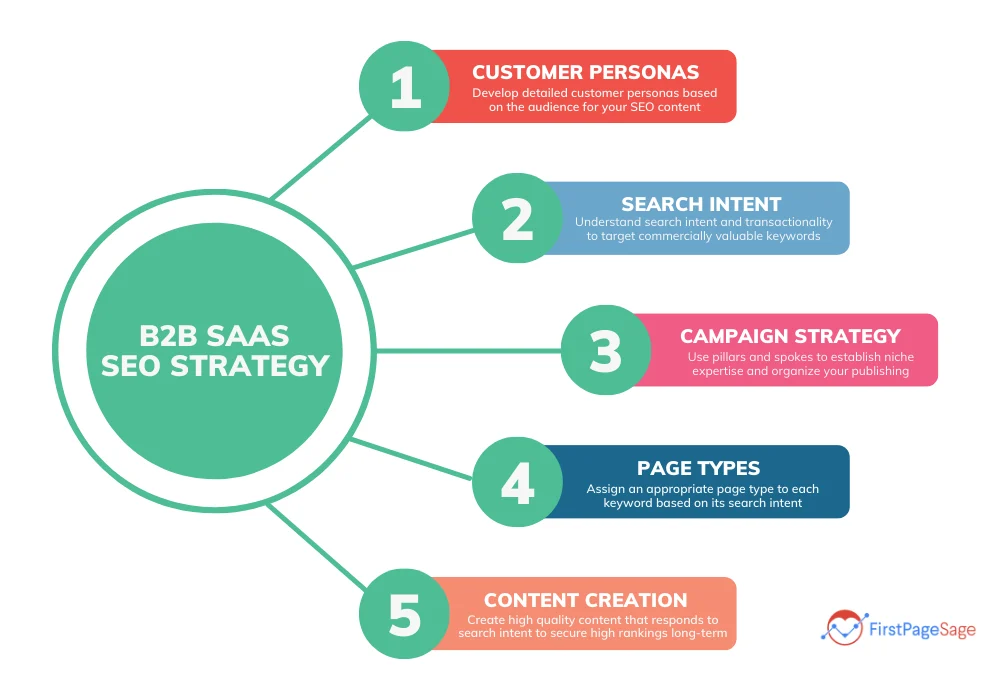
SaaS SEO has become significantly more difficult over the past few years.
Not because SEO is dying, but because the barrier to producing content has collapsed. AI tools can now generate thousands of articles in days, which means volume alone is no longer a competitive advantage. Most search results are becoming saturated with content that is technically optimised but commercially empty.
As a result, the companies continuing to win organic search are approaching SEO very differently.
Instead of treating SEO as a publishing exercise, they are treating it as a strategic authority-building system connected directly to product positioning, customer intent and revenue generation.
That distinction matters because traffic by itself has become far less valuable. A SaaS company attracting 300 highly commercial visitors often outperforms one attracting 30,000 informational clicks that never convert.
Modern SaaS SEO is increasingly about relevance, trust and intent alignment rather than sheer output volume.
Topic Clusters vs Isolated Articles
One of the clearest shifts in modern SEO is the movement away from isolated blog posts toward topic ecosystems.
Many SaaS websites still publish content in a fragmented way. One article about CRM software. Another about email automation. Another about lead scoring. None of them properly connected together.
Search engines are becoming far better at understanding this lack of depth.
In contrast, the strongest SaaS brands build tightly connected topic clusters around the operational problems their customers are trying to solve. Instead of writing random keyword-targeted posts, they gradually construct entire content ecosystems reinforcing expertise around a category.
This improves SEO performance for several reasons.
First, internal linking becomes far stronger and more contextual. Second, users move deeper into the website instead of bouncing after reading a single page. Third, search engines gain clearer signals about what the brand genuinely specialises in.
This is why companies like HubSpot dominate such large portions of the marketing SERPs. Their authority does not come from one high-ranking article. It comes from years of building interconnected content around sales, CRM, marketing automation, customer acquisition and business growth.
The important shift is that modern SEO increasingly rewards depth over randomness.
Publishing 100 disconnected articles is often less effective than building 20 genuinely comprehensive, strategically connected assets.
Commercial Intent Keyword Targeting
One of the biggest mistakes SaaS companies make with SEO is over-prioritising traffic volume while under-prioritising commercial intent.
Large informational keywords often look attractive inside SEO tools because the search volumes appear impressive. The problem is that many of those searches have weak buying intent. They generate visitors, but very little pipeline.
This is why many SaaS brands end up with strong traffic numbers and surprisingly poor revenue attribution.
The highest-performing SaaS SEO strategies increasingly focus on commercial-intent searches instead:
These keywords typically generate lower traffic volumes but significantly higher conversion potential.
Someone searching:
“best AI email platform for Shopify”
is far closer to becoming a customer than somebody searching:
“what is email marketing?”
The difference in intent is enormous.
This is also why bottom-of-funnel content is becoming more valuable than ever. As AI-generated informational content floods search results, highly commercial searches are becoming some of the few remaining areas where expertise, positioning and trust still create meaningful differentiation.
For SaaS companies, this often means SEO should be treated less like a media business and more like a sales infrastructure layer.
The objective is not simply attracting visitors.
It is attracting buyers.
Building Topical Authority
Topical authority has become one of the defining concepts in modern SEO because search engines increasingly reward sites demonstrating sustained expertise within a subject area.
This is particularly important in SaaS where trust matters heavily.
A company publishing occasional articles across unrelated topics rarely builds strong authority signals. In contrast, brands consistently producing high-quality content around a tightly defined category tend to accumulate:
over time.
The compounding nature of this is important.
Once a SaaS company becomes recognised as a credible source within a niche, future content tends to rank more easily. Distribution improves, backlinks become more natural and branded search volume increases. The domain gradually develops momentum.
This is one reason why focused SaaS brands often outperform larger companies with broader but weaker content strategies.
Authority is becoming increasingly concentrated.
The strongest SEO strategies therefore tend to revolve around owning specific categories deeply before expanding outward.
Programmatic SEO Opportunities
Programmatic SEO is becoming increasingly important for SaaS businesses because many software products naturally generate scalable search opportunities.
This typically involves creating large numbers of highly structured landing pages targeting repeatable search patterns. Examples might include:
When executed properly, programmatic SEO can create enormous search coverage while remaining genuinely useful for users.
The important phrase there is “when executed properly.”
Many programmatic SEO strategies fail because they produce thin, repetitive pages with minimal value. Search engines are becoming much better at identifying this kind of scaled low-quality content.
The SaaS companies succeeding with programmatic SEO usually combine automation with meaningful usefulness. Pages are enriched with real examples, templates, tutorials, screenshots or product-specific insights rather than simply swapping keywords dynamically.
Companies like Zapier have been particularly effective at this by creating large ecosystems around integrations, workflows and automation use cases.
The key lesson is that scalable SEO only works sustainably when the pages genuinely deserve to exist.
Bottom-of-Funnel Content and Comparison Pages
Some of the highest-converting SaaS SEO pages are often not traditional blog articles at all.
They are:
These pages perform well because they capture users much closer to decision-making.
Someone searching:
“Klaviyo vs Mailchimp”
is already evaluating platforms.
Someone searching:
“best email platform for ecommerce retention”
is likely preparing to buy.
This is why comparison content has become increasingly important within SaaS SEO strategies. Strong comparison pages allow companies to position themselves directly within active buying conversations rather than waiting for users to discover them organically.
The best comparison pages are rarely aggressive.
Instead, they focus on clarity, transparency and use-case differentiation. Overly biased comparison pages often reduce trust rather than improving conversions.
This is particularly important in SaaS because buyers are usually researching multiple options simultaneously. Credibility matters heavily during this stage of the journey.
AI Search Optimisation
One of the biggest changes happening in SEO right now is the rise of AI-driven search experiences.
Search is gradually moving beyond traditional blue links toward summarised answers, conversational interfaces and AI-generated recommendations. This changes how SaaS brands need to think about visibility.
Traditional SEO focused heavily on rankings alone.
Modern SEO increasingly involves becoming part of the broader information layer that AI systems pull from.
This is one reason brand authority, structured content and entity recognition are becoming more important. AI systems tend to favour sources that appear trustworthy, well-structured and repeatedly referenced across the web.
As a result, SaaS brands increasingly need content that:
rather than simply targeting keywords mechanically.
The brands likely to perform best in AI-driven search environments are those building recognisable authority ecosystems rather than relying entirely on traditional SEO tactics.
Entity-Based SEO
SEO is becoming increasingly entity-driven rather than purely keyword-driven.
Search engines now understand relationships between:
with far greater sophistication than before.
This means modern SaaS SEO increasingly benefits from building strong contextual associations around a brand.
A company consistently mentioned alongside concepts like:
gradually strengthens its relevance within those thematic areas.
This is one reason strategic internal linking, structured data, digital PR and consistent topical focus matter so much. Search engines are not simply analysing individual pages anymore. They are evaluating broader contextual relationships across the web.
For SaaS companies, this creates a major long-term advantage for brands building genuine authority around clearly defined categories.
The future of SEO is becoming less about isolated keyword rankings and more about becoming recognised as a trusted entity within a commercial ecosystem.
Why Product Marketing Is Central to SaaS Inbound Success
A large percentage of SaaS inbound marketing problems are not actually acquisition problems.
They are positioning problems.
This is one of the reasons many SaaS companies become frustrated with SEO, paid ads or content marketing. Traffic increases, impressions rise and content output improves, yet growth still feels slower than expected. The issue is often not visibility. It is that the market does not clearly understand why the product matters.
Inbound marketing becomes dramatically more effective when positioning is sharp.
Because the moment somebody lands on a website, reads an article or watches a demo, they immediately begin asking themselves three questions:
Strong product marketing answers all three almost instantly.
Weak product marketing leaves the customer doing unnecessary mental work.
Messaging and Positioning
Most SaaS categories have become saturated with nearly identical language.
Every platform claims to:
After a while, the messaging becomes indistinguishable.
The companies standing out are usually the ones communicating a much clearer point of view around the customer problem itself.
Ahrefs is a strong example of this. Much of its growth came from positioning itself as a serious SEO platform for practitioners rather than simply another generic marketing tool. The tone, educational content and product depth all reinforced that perception consistently.
Likewise, Klaviyo built strong positioning around ownership of customer data and sophisticated segmentation at a time when many ecommerce email platforms felt simplistic or limiting.
Neither company grew purely because of features.
They grew because the market understood exactly what they represented.
That clarity improves every part of inbound marketing. SEO traffic converts more effectively, ads feel more relevant and content becomes easier to distribute because the messaging already carries a strong identity.
Differentiation in Crowded Categories
One of the biggest challenges in SaaS today is that most products are becoming increasingly similar.
Features that once felt differentiated are now copied rapidly. AI is accelerating this even further. Entire categories are beginning to converge around the same capabilities, interfaces and claims.
This means differentiation is shifting away from functionality alone.
Increasingly, the companies winning attention are those building stronger product narratives around how they want customers to feel.
Notion did this exceptionally well. The platform positioned itself less like traditional enterprise software and more like a flexible creative workspace. That distinction influenced everything from the visual design to the creator ecosystem surrounding the product.
The result was that the software felt culturally different, not just technically different.
That matters because inbound marketing is heavily influenced by memorability. Generic positioning produces generic engagement. Distinct positioning creates recall, discussion and sharing.
This is one reason founder-led SaaS brands often outperform larger competitors despite having fewer resources. They communicate with more conviction and more specificity.
Feature-Led vs Outcome-Led Marketing
Many SaaS websites spend far too much time describing functionality and nowhere near enough time describing outcomes.
Customers rarely buy software because they are excited about another dashboard or integration. They buy software because they want:
The strongest product marketing translates technical functionality into business impact.
HubSpot historically executed this extremely well. Rather than marketing itself purely as CRM software, the company consistently framed its products around growth, scalability and customer relationships. The software therefore felt strategically important rather than operationally technical.
That distinction has a major impact on inbound performance because outcome-led messaging tends to:
Feature lists explain products.
Outcome-led positioning creates momentum.
Product Narratives and Customer Psychology
Software purchasing decisions are far less rational than many SaaS founders initially expect.
Buyers are heavily influenced by perception, trust and identity. They want to feel confident they are choosing the “right” platform, not simply the most technically capable one.
This is where product narratives become powerful.
Some SaaS companies position themselves around speed and simplicity. Others position around sophistication and control. Some lean into creative freedom, while others emphasise reliability and operational structure.
These narratives shape how customers interpret the product long before they experience the software itself.
This is also why founder-led positioning has become increasingly effective within inbound marketing. Audiences are becoming more sceptical of polished corporate messaging and more interested in hearing directly from operators, builders and technical founders.
When founders consistently publish:
they gradually build trust around both themselves and the company.
That trust compounds over time.
The strongest inbound systems today are not simply attracting traffic.
They are building perception.
AI and the Future of SaaS Inbound Marketing
AI is already changing inbound marketing at an enormous pace, but much of the conversation around it is still surprisingly shallow.
Most discussions focus on content generation.
That is arguably the least interesting part.
The internet is already saturated with AI-written articles. Publishing generic AI content is rapidly becoming one of the fastest ways to disappear into the noise. The real advantage AI creates is not unlimited content production.
It is operational leverage.
The SaaS companies benefiting most from AI are using it to accelerate research, repurposing, testing and execution speed rather than simply automating blog posts.
That distinction is becoming increasingly important.
Because AI by itself is unlikely to become a durable advantage.
Faster learning systems probably will.
AI-Assisted Content Operations
One of the clearest impacts AI has had on inbound marketing is the collapse of production friction.
Tasks that once consumed entire teams can now happen dramatically faster:
This allows lean SaaS teams to operate with much greater speed than before.
But speed only matters if the strategic direction is strong.
Many companies are discovering that AI can produce large amounts of technically acceptable content while still failing to create meaningful authority or differentiation. The issue is not the technology itself. The issue is that AI tends to amplify whatever strategic quality already exists underneath it.
Strong positioning combined with AI becomes powerful.
Weak positioning combined with AI usually produces faster mediocrity.
AI Content Repurposing
Repurposing is quickly becoming one of the highest-leverage applications of AI within SaaS marketing.
A single webinar can now become:
within hours.
This fundamentally changes the economics of inbound marketing because companies can extract significantly more value from every original idea.
The strongest SaaS brands are increasingly building systems where content flows continuously between channels rather than existing as isolated assets.
A founder interview becomes social content. Social content becomes SEO content. SEO content informs onboarding flows. Customer objections discovered during onboarding shape future comparison pages.
The workflow becomes interconnected.
That interconnectedness is where much of the real leverage now exists.
AI Research and SEO Workflows
AI is also reshaping the speed at which SaaS teams can analyse and respond to search opportunities.
Research tasks that previously required extensive manual work can now happen significantly faster:
This matters because SaaS search landscapes evolve constantly. Teams capable of iterating faster often gain disproportionate advantages simply through execution speed.
The important point is that AI is not replacing strategic thinking.
It is compressing the distance between insight and action.
Dynamic Content and Personalisation
One of the most important long-term shifts AI is likely to create is more adaptive inbound experiences.
Historically, most inbound systems have been relatively static. Every visitor sees roughly the same landing page, the same onboarding sequence and the same messaging regardless of intent or context.
That is beginning to change.
Increasingly, SaaS companies are experimenting with:
This allows inbound systems to become significantly more context-aware over time.
The companies likely to benefit most from AI are probably not the ones producing the most content.
They are the ones building the fastest, smartest and most adaptive operational systems around customer intent.
uilding a SaaS Content Engine That Actually Converts
Most SaaS companies do not have a content shortage.
They have a relevance shortage.
They publish regularly, fill out editorial calendars, chase keyword volumes and still end up with content that does very little for pipeline, product adoption or customer trust. The problem is not always effort. In many cases, the problem is that the content is too disconnected from the buying journey.
A proper SaaS content engine should not exist simply to attract traffic. It should help a potential customer understand their problem more clearly, trust the company more deeply and move closer to using the product.
That requires a different mindset.
Instead of asking, “What can we rank for?”, stronger SaaS teams ask, “What does the customer need to believe before they are ready to buy?”
That one question changes the entire content strategy.
A high-performing SaaS content engine usually contains a mix of educational, commercial and product-led assets. Broad educational content can still play a role, but it should not dominate the strategy. Content with clearer buying intent, such as comparison pages, implementation guides, integration pages, workflow tutorials and migration content, often produces far more commercial value.
The difference is intent.
A visitor searching for a broad definition is usually early in the journey. A visitor searching for how to connect two tools, compare two platforms or solve a specific workflow problem is much closer to action.
This is why the best SaaS content rarely feels like generic “thought leadership.” It feels like useful decision support.
Founder-led content can also play an important role here, especially for younger SaaS brands without huge domain authority. Buyers are often more willing to trust a clear point of view from a founder or operator than another polished company blog post. A founder explaining why the product was built, what the company believes about the market or what customers are getting wrong can create a level of trust that conventional content often struggles to achieve.
The same applies to case studies.
Weak case studies read like sales brochures. Strong case studies show the operational reality. They explain what the customer was struggling with, why previous solutions failed, how the product was implemented and what changed afterwards. The more specific they are, the more persuasive they become.
Product-led tutorials are equally valuable because they bridge the gap between education and conversion. A tutorial does not need to aggressively sell the product. It simply needs to show the customer how a problem can be solved, while making the product feel like the natural route to that solution.
This is where many SaaS brands miss an opportunity.
They separate “content” from “product,” when the strongest content often sits between the two. A good tutorial, demo walkthrough or workflow breakdown can educate, convert and reduce onboarding friction at the same time.
A useful way to think about this is through a content repurposing pyramid.
At the top sits the core idea: a detailed article, webinar, case study, founder insight or product tutorial. That asset then gets broken down into smaller pieces for LinkedIn, email, short video, ads and sales enablement.
The direction of travel might look like this:
Blog → LinkedIn → Email → Short video → Ads → Sales enablement
But the point is not simply to copy and paste the same message everywhere.
The point is to make one strong idea work harder across the entire acquisition system.
A detailed article can become a founder post. A founder post can become an email. An email can become a short video script. A short video can become a retargeting ad. Customer objections from sales calls can become the next article.
This is what separates a content engine from a publishing schedule.
A publishing schedule produces assets.
A content engine creates momentum.
Lifecycle Marketing and Email Automation for SaaS
SaaS buyers rarely move in a straight line.
They discover a product, leave the website, come back later, compare alternatives, start a trial, get distracted, ignore onboarding emails, return again, watch a tutorial and eventually decide whether the product is worth keeping.
That messy journey is exactly why lifecycle marketing matters.
Without a proper lifecycle system, too much inbound demand leaks away. People visit the site but never return. Trial users sign up but never activate. Customers use one feature but never discover the workflows that would make the product valuable long term.
Email automation helps close those gaps, but only when it is treated as more than a newsletter channel.
The strongest SaaS lifecycle systems are built around behaviour. They respond to what users actually do, not just when they joined a list.
A new lead who downloads a guide needs education and trust-building. A trial user who has not completed setup needs guidance. A customer who has used one feature repeatedly may be ready to discover a more advanced workflow. A previously active user who suddenly stops logging in may need re-engagement before they churn.
Each of those moments requires a different message.
This is where many SaaS companies go wrong. They build one generic welcome flow and assume they have lifecycle marketing covered. In reality, lifecycle email should support the whole customer journey, from first touch through activation, retention and expansion.
The early stage is about confidence. The user needs to understand what the product does, why it matters and how to get value quickly. This is especially important during free trials, where the window for creating momentum is short.
A good trial conversion flow does not simply remind someone that their trial is ending. It helps them experience value before the deadline arrives.
That might mean guiding them toward the first meaningful setup step, showing a simple use case, sharing a short demo or highlighting how similar customers use the product. The goal is not to send more emails. The goal is to remove friction.
Once a user becomes a customer, the role of email changes again.
At that point, lifecycle marketing should deepen product usage. It should help users discover features, build habits and understand more advanced use cases. This is where retention and expansion begin to overlap.
The more value a customer gets from the product, the more likely they are to stay, upgrade or recommend it.
AI will make these systems more adaptive over time. Instead of relying only on fixed segments, SaaS companies will increasingly use behaviour, engagement and product data to personalise communication more intelligently. The promise is not just “more automation.” It is better timing, better relevance and better prioritisation.
But the principle remains the same.
Lifecycle marketing works when it helps the user move forward.
Not when it fills their inbox.
For SaaS companies, this makes email automation one of the most important parts of the inbound system. It turns attention into activation, activation into retention and retention into long-term revenue.
SaaS Inbound Metrics That Actually Matter
One of the biggest problems in SaaS marketing is that many teams measure activity instead of impact.
Traffic increases, impressions rise, content output grows and social engagement improves, yet revenue barely moves. The business ends up surrounded by dashboards full of encouraging numbers without a clear understanding of whether the inbound system is actually becoming more effective.
This is especially common in content-led SaaS businesses because inbound marketing naturally produces a huge amount of surface-level data:
None of these are useless, but they can become distracting when disconnected from commercial performance.
The strongest SaaS companies eventually become much more disciplined about the metrics they prioritise. They stop treating inbound as a publishing exercise and start evaluating it as a revenue system.
That shift changes everything.
Customer Acquisition Cost (CAC)
Customer acquisition cost remains one of the most important metrics in SaaS because it reveals how efficiently the business is converting spend into customers.
But CAC becomes particularly interesting when viewed through the lens of inbound marketing.
Paid acquisition is usually linear. Spend more, acquire more customers. Reduce spend, acquisition slows. Inbound behaves differently because strong content systems continue generating value long after publication.
This creates an important long-term advantage.
A SaaS company heavily dependent on paid acquisition often experiences constant pressure to maintain efficiency while advertising costs rise across search and social platforms. In contrast, companies with strong inbound ecosystems gradually reduce their dependence on paid traffic because more of the acquisition system becomes owned rather than rented.
This is one reason mature SaaS businesses often begin allocating larger portions of budget toward SEO, lifecycle marketing and content infrastructure over time. The upfront investment can feel slower initially, but the compounding efficiency becomes difficult to ignore once authority builds.
The important point is not that paid acquisition is bad.
It is that inbound can gradually improve CAC resilience in ways many short-term growth strategies cannot.
LTV and the Quality of Acquired Customers
One mistake many SaaS companies make is evaluating acquisition purely through signup volume.
Not all customers carry equal value.
Some users churn within weeks, require extensive support or never meaningfully adopt the product. Others become long-term customers, expand usage and generate significant downstream revenue over time.
This is where lifetime value becomes critical.
Strong inbound marketing often attracts higher-quality customers because the buying journey itself tends to be more educational. By the time somebody converts through a mature inbound system, they may already understand:
That context usually produces stronger alignment between customer expectations and product reality.
It is one reason content-driven SaaS businesses often see stronger retention compared with companies relying heavily on aggressive outbound acquisition alone. The customer has effectively been pre-qualified through the content ecosystem before entering the product.
This is also why inbound should not only be evaluated through lead volume.
The quality and durability of acquired customers matters just as much.
Payback Period
As acquisition costs continue rising, payback period is becoming increasingly important in SaaS economics.
A business may technically acquire customers profitably while still creating major cash-flow pressure if recovery takes too long. This becomes especially relevant for venture-backed SaaS companies attempting to scale aggressively while maintaining operational efficiency.
Inbound marketing can improve payback periods in several ways.
First, strong educational content tends to reduce friction during the buying process because customers arrive more informed. Second, onboarding content and lifecycle systems can improve activation rates, allowing users to reach value faster. Third, strong positioning often increases conversion efficiency across the entire funnel.
The result is that inbound does not only influence top-of-funnel discovery.
It can materially affect the speed at which acquisition spend converts into realised customer value.
This is one reason many SaaS operators increasingly view inbound as infrastructure rather than simply marketing.
Activation Rate
Activation is one of the most overlooked metrics in SaaS growth despite being one of the strongest indicators of long-term retention.
A user signing up means very little if they never experience meaningful value from the product.
This is why many SaaS businesses now obsess over identifying the specific actions that correlate with successful long-term usage. Those actions become activation milestones.
For one product, activation may mean integrating a data source. For another, it may mean publishing the first campaign, inviting teammates or completing an onboarding workflow.
The exact milestone varies by product, but the principle remains the same:
users who reach value quickly are far more likely to stay.
Inbound marketing plays a surprisingly important role here because the acquisition process shapes customer expectations before signup even occurs.
Good inbound content attracts the right users and prepares them for success. Weak inbound content often generates curiosity without qualification, producing signups with poor intent alignment.
This is another reason traffic alone is such an unreliable growth metric.
The wrong traffic frequently creates weak activation.
SQL Conversion Rates and Funnel Quality
Many SaaS businesses generate large numbers of leads that never become meaningful sales opportunities.
This usually happens because acquisition is optimised for volume instead of fit.
Inbound systems become far more effective when content is aligned with genuine commercial intent. Somebody reading implementation guides, comparison pages or workflow-specific tutorials is usually much closer to becoming a qualified opportunity than somebody casually consuming broad educational content.
This is why SQL conversion rates often reveal more about inbound quality than raw lead volume does.
A smaller number of highly aligned leads can create significantly more commercial value than a large volume of loosely interested traffic.
The strongest SaaS inbound systems are therefore designed not just to attract attention, but to attract the correct attention.
That distinction becomes increasingly important as AI-generated content floods search results and broad informational traffic becomes easier to acquire but harder to monetise.
Pipeline Attribution and Content-Assisted Revenue
One of the most difficult parts of inbound marketing is attribution.
Very few SaaS customers convert through a single touchpoint anymore.
A buyer may:
before finally converting.
This makes simplistic attribution models increasingly unreliable.
The problem is that many SaaS companies still evaluate inbound through last-click reporting, which often undervalues content dramatically. An article may never appear as the final conversion source while still playing a major role in moving the customer toward trust and readiness.
This is why more mature SaaS teams increasingly focus on pipeline influence and content-assisted revenue rather than isolated attribution events.
They ask questions like:
This creates a much more realistic view of how inbound actually contributes to growth.
Because in modern SaaS acquisition, content rarely functions as a single conversion event.
It functions as a trust-building system spread across the entire buying journey.
Common SaaS Inbound Marketing Mistakes
One of the reasons inbound marketing frustrates so many SaaS companies is because the surface-level advice often sounds deceptively simple.
Publish content consistently. Improve SEO. Build an email list. Post on LinkedIn.
None of those things are wrong, but they also do not explain why some SaaS companies build compounding inbound engines while others spend years producing content that generates very little commercial impact.
In most cases, the difference comes down to strategic mistakes that quietly weaken the entire acquisition system underneath the surface.
And increasingly, those mistakes are becoming more expensive because competition across SaaS search and content channels has intensified dramatically.
Publishing Generic AI Content
This is probably the most obvious problem emerging across SaaS marketing right now.
The internet is becoming flooded with AI-generated content that is technically acceptable but commercially empty. The structure often looks polished, the grammar is fine and the SEO basics are present, yet the content says almost nothing memorable.
You can usually recognise it immediately.
It repeats consensus opinions, avoids strong viewpoints, overexplains basic concepts and sounds detached from real operational experience. The result is content that may rank temporarily but rarely builds trust, links or meaningful authority.
This is becoming a serious issue because many SaaS companies are mistaking content velocity for strategic advantage.
AI can absolutely improve inbound systems, but mainly by increasing workflow efficiency:
The advantage is not generic AI output itself.
In fact, as more businesses flood search with low-value content, genuinely insightful content becomes more valuable, not less.
The SaaS companies benefiting most from AI are usually combining automation with:
Without those layers, AI tends to accelerate mediocrity rather than quality.
No Distribution Strategy
Many SaaS companies still treat publishing as though it automatically creates visibility.
A detailed article gets uploaded to the blog, shared once on LinkedIn and then effectively abandoned while the team moves onto the next topic.
This is one of the biggest reasons otherwise strong content underperforms.
Modern inbound marketing depends heavily on amplification. Search alone is often too slow and too competitive for content to succeed in isolation. The strongest SaaS growth teams therefore build distribution directly into the content process itself.
A useful article should not exist only as an article.
It should feed:
This repeated exposure matters because SaaS buying journeys are increasingly multi-touch. Very few buyers discover a product once and convert immediately. They encounter the company repeatedly across search, social, email and community discussions before trust forms.
Strong inbound systems therefore focus just as heavily on distribution as creation.
Weak Positioning
A surprising number of inbound problems are actually positioning problems disguised as traffic problems.
The content may be ranking. Visitors may be arriving. Paid campaigns may even be performing reasonably well.
But if the messaging feels generic, unclear or interchangeable with competitors, the inbound system struggles to convert attention into momentum.
This is particularly common in crowded SaaS categories where companies begin sounding almost identical:
After a while, none of it feels differentiated.
Strong positioning gives the market a reason to remember the product. It creates clarity around:
Without that clarity, even technically strong inbound systems tend to produce weak commercial outcomes.
This is one reason founder-led SaaS brands often outperform larger competitors early on. Conviction creates memorability.
Generic positioning rarely does.
Ignoring Conversion Architecture
Some SaaS companies focus heavily on acquisition while barely thinking about what happens after the click.
Traffic grows, but conversion rates remain weak because the surrounding infrastructure is poorly aligned:
Inbound marketing does not end when somebody reaches the website.
In many ways, that is where the real work begins.
The strongest SaaS inbound systems carefully connect:
into a coherent experience.
This is especially important because SaaS buyers usually require reassurance throughout the journey. Every point of friction introduces uncertainty, and uncertainty slows conversion.
Many companies therefore underestimate how much conversion architecture influences inbound performance.
Good SEO can attract attention.
Good conversion systems turn that attention into customers.
No Content Refresh Process
One of the biggest differences between mature SaaS SEO operations and weaker content strategies is that mature teams treat content as infrastructure rather than static assets.
Many businesses publish articles once and never revisit them again. Over time:
The content gradually loses relevance even if rankings initially perform well.
The strongest SaaS content systems continuously refresh important assets:
This matters even more now because AI-generated content is increasing the overall volume of competing material online. Freshness, usefulness and depth are becoming increasingly important differentiators.
Strong inbound systems evolve continuously.
Static content libraries gradually decay.
Writing Only Top-of-Funnel Content
One of the most common SaaS SEO mistakes is overproducing broad informational content while neglecting commercial intent entirely.
Top-of-funnel content still has value, particularly for building topical authority, but many SaaS companies lean on it too heavily because large search volumes look attractive inside SEO tools.
The issue is that informational traffic often converts poorly.
Some of the highest-converting SaaS content usually sits much closer to decision-making:
These searches may attract fewer visitors, but the commercial intent is dramatically stronger.
This is one reason many mature SaaS SEO strategies increasingly prioritise bottom-of-funnel assets despite lower traffic projections.
Inbound marketing becomes significantly more effective when content aligns with actual buying behaviour rather than vanity traffic goals.
Treating SEO Separately From Product Marketing
One of the most damaging structural mistakes in SaaS marketing is treating SEO as a completely separate function from product marketing.
When this happens, SEO teams often optimise around keywords while product teams focus on messaging independently. The result is content that ranks but fails to reinforce positioning or commercial differentiation.
The strongest SaaS companies integrate the two.
SEO content reinforces product narratives. Product positioning shapes keyword strategy. Customer objections influence editorial direction. Onboarding insights inform search content.
Everything becomes connected.
This matters because modern SaaS SEO is increasingly influenced by perception and authority, not just technical optimisation. The companies performing best organically are usually those building cohesive ecosystems around customer problems and product identity simultaneously.
Ignoring Customer Insights
Many SaaS content strategies fail because they are built almost entirely from keyword tools instead of customer conversations.
Search data is useful, but it rarely reveals the full emotional or operational context behind why somebody is searching in the first place.
The strongest inbound content often comes directly from:
This is where genuinely useful content ideas emerge.
A support question asked repeatedly by customers is often more valuable than a random keyword with high search volume because it reflects real friction experienced by real users.
Companies deeply connected to customer behaviour tend to produce much stronger inbound content because the writing feels grounded in operational reality rather than abstract SEO targeting.
And increasingly, that realism is becoming one of the clearest differentiators in SaaS inbound marketing.
A Realistic SaaS Inbound Workflow for Lean Teams
A lot of SaaS inbound advice quietly assumes the company has:
Most SaaS companies do not operate like that.
Many are trying to build inbound systems with a founder, a marketer and perhaps one generalist juggling multiple responsibilities at once. This is one reason so much inbound advice feels disconnected from reality. The strategy itself may sound good, but the operational demands are completely unrealistic for smaller teams.
The good news is that AI and modern workflow tooling have genuinely changed what lean SaaS teams are capable of achieving.
But only if the workflow itself is structured properly.
Because one of the biggest mistakes small teams make is trying to behave like scaled media companies. They attempt to publish constantly across every channel, create entirely new content every day and maintain unrealistic production schedules until consistency eventually collapses.
The strongest lean SaaS teams usually operate very differently.
They focus less on volume and more on systems.
Small Teams Need Operational Leverage
A lean inbound system should minimise unnecessary complexity.
That sounds obvious, but many SaaS workflows become bloated surprisingly quickly:
The result is usually inconsistency.
For smaller teams, consistency matters far more than attempting to dominate every platform simultaneously.
This is why many successful SaaS companies initially focus on building around a relatively small number of high-leverage assets:
Those assets can then feed multiple distribution layers over time.
The important shift is moving away from thinking:
“What should we post today?”
toward:
“What system allows us to produce useful content continuously without exhausting the team?”
That mindset creates much more sustainable inbound growth.
AI-Assisted Workflows Change the Economics of Execution
One of the most important changes AI has created is not just faster content generation.
It is faster workflow movement.
Research, outlining, repurposing, transcript extraction, summarisation and content restructuring can now happen dramatically faster than before. This allows smaller SaaS teams to spend less time on repetitive production tasks and more time on:
That distinction matters because the quality bottleneck in SaaS content is rarely typing speed.
It is usually:
AI works best when it accelerates execution around strong strategic direction.
The lean SaaS teams benefiting most from AI are therefore not fully automating their content operation. They are selectively removing friction from the workflow itself.
The result is faster iteration without losing strategic coherence.
Content Batching and Repurposing
One of the easiest ways for lean teams to burn out is constantly creating from scratch.
The strongest inbound systems avoid this wherever possible.
Instead of producing isolated pieces of content continuously, many successful SaaS teams now work in batches. A founder interview, webinar, customer conversation or long-form article becomes the source material for multiple downstream assets.
This dramatically improves efficiency because the strategic thinking only needs to happen once.
A single detailed article might later become:
This creates significantly more output from the same underlying insight.
More importantly, it reinforces the same positioning repeatedly across different channels, which is critical in SaaS where customers often require multiple touchpoints before converting.
The strongest lean teams are rarely creating dramatically more ideas than competitors.
They are extracting more value from each idea.
Editorial Calendars Should Be Strategic, Not Performative
Many SaaS content calendars exist primarily to maintain the appearance of consistency.
Articles get published because the schedule says something must go live that week, not because the topic meaningfully supports the acquisition strategy.
Over time, this often creates bloated content libraries filled with low-value material.
A stronger approach is building editorial systems around:
rather than arbitrary publishing frequency.
This usually produces fewer but significantly more valuable assets.
For lean teams especially, quality concentration matters far more than publishing volume. One genuinely useful bottom-of-funnel article can often outperform dozens of broad informational posts.
The goal is not simply maintaining activity.
It is creating assets that continue generating commercial value long after publication.
Lightweight Production Stacks
One reason modern SaaS inbound has become more accessible to smaller teams is that production infrastructure has become dramatically lighter.
A lean SaaS company can now run a surprisingly sophisticated inbound operation using relatively simple tooling:
The important point is not building a huge stack.
It is building a workflow that removes friction.
Many companies overcomplicate their operations by constantly introducing new tools without improving the underlying system itself. Inbound performance rarely improves because of software alone. It improves when the workflow becomes easier to sustain consistently.
This is particularly important in SaaS because inbound is fundamentally cumulative.
The companies that win are usually not the ones producing occasional bursts of activity.
They are the ones capable of maintaining strategic consistency for years.
And increasingly, the lean teams succeeding at inbound are doing so not because they have more resources than competitors, but because they operate with less friction.
Final Thoughts
Inbound marketing is entering a very different phase.
For years, many SaaS companies could generate strong growth simply by publishing SEO content consistently and scaling paid acquisition alongside it. That environment is changing quickly. AI has dramatically increased the amount of content being produced online, search results are becoming more competitive and buyers are becoming more selective about what they trust.
As a result, the companies likely to perform best over the next few years will not necessarily be the ones producing the most content.
They will be the ones building the strongest systems.
That means creating inbound ecosystems where positioning, SEO, lifecycle marketing, customer education and distribution all reinforce one another instead of operating in isolation. The strongest SaaS growth engines are becoming increasingly interconnected, with each part of the system improving the performance of the others over time.
This is also why execution quality matters more than ever.
AI can accelerate research, production and iteration, but technology alone is unlikely to create a durable competitive advantage. The real advantage comes from combining:
into a system that compounds over time.
At Store Surge, this is the direction we believe SaaS inbound marketing is moving toward. Less emphasis on disconnected marketing activity, and far more focus on building commercially aligned inbound systems designed to scale sustainably as acquisition channels become more competitive.
Because the SaaS brands that win over the next five years will not simply publish more content.
They will build better inbound systems.
